Travel in Niue: when to go, places and advice
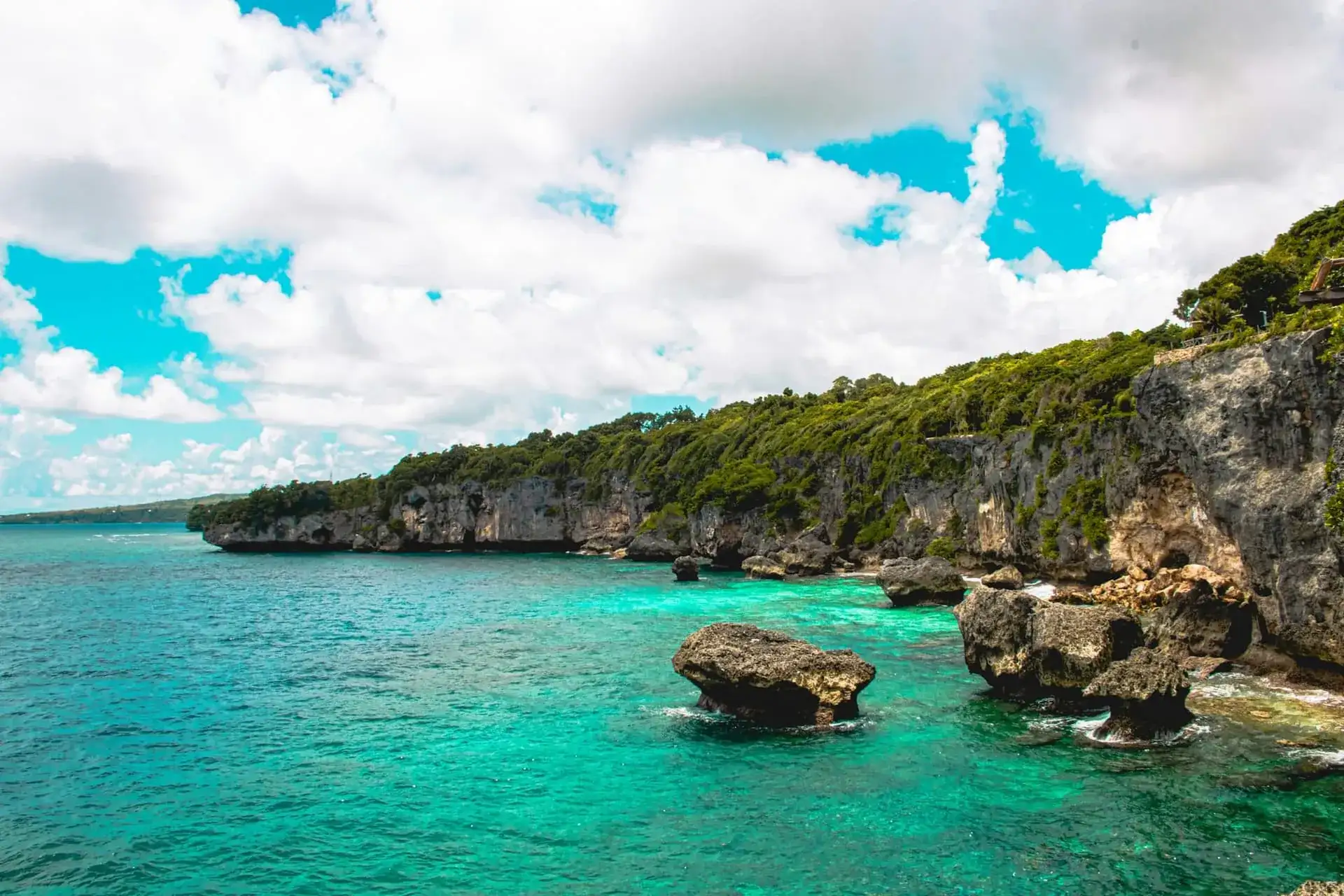
The "Rock of Polynesia": Niue is one of the smallest states in the world, an uplifted coral atoll sitting alone in the middle of the South Pacific, without a beach but riddled with natural pools, chasms and sea caves of unreal clarity, with 80 m of underwater visibility. You swim with humpback whales from July to October, pass more coconut palms than inhabitants and live at the village's rhythm. The end of the world, with Polynesian hospitality on top.
- Capital
- Alofi
- Currency
- New Zealand dollar (NZ$)
- Language
- Niuean, English
- Direct flight
- No direct flight, weekly flight from Auckland
- Time difference
- -12 hr in winter, -13 hr in summer
Itineraries
Our trip ideas in Niue
The itineraries in Niue are in the works: the day-by-day programme, named hotels, tickets to book flagged in advance. Leave your address to be notified when they come out.
Got it. You will be notified at the next release.
The sign-up could not be completed. Try again in a moment.
Your address is only used for these release announcements. Privacy policy
The right season
When to go in Niue?
From May to October, the dry season offers stable weather, a glassy sea and the event of the year: the humpback whales that come to calve in the calm waters from July to October, so close you can hear them singing from the shore. From November to April, the air turns hot and humid with a cyclone risk from January to March, but the island stays welcoming and even greener.
- January : In-between
- February : In-between
- March : In-between
- April : Pleasant
- May : Ideal
- June : Ideal
- July : Ideal
- August : Ideal
- September : Ideal
- October : Ideal
- November : Pleasant
- December : In-between
- Ideal
- Pleasant
- In-between
- Avoid
Quick guide
Understanding Niue
Getting around
A rental car is essential, the island loops in two hours on its circular road. You get your local Niuean licence in a few minutes, souvenir included. No public transport.
Money
The New Zealand dollar (NZ$). A single ATM on the island: bring cash, even if cards are gaining ground. Everything closes on Sunday, a strictly observed day of rest.
Language
Niuean and English, spoken by all. "Fakaalofa lahi atu" is the local hello, and delivering it with a smile instantly makes you a guest.
Useful apps
The prepaid wifi is slow and precious: download maps and tide tables before departure. The weekly Air New Zealand timetable app is your only link with the world.
Accommodation
A few motels, cottages and the island's only hotel, all to book long in advance: the weekly plane naturally limits the number of visitors.
Etiquette
Sunday is sacred: no noisy swimming, no fishing, proper dress if you attend the service, magnificent singing guaranteed. Wave to every car you pass, it is the island's unwritten rule.
The iconic places
Talava Arches
North-west coast
Coral arches raised above translucent water, reached by a forest trail and then a cave: the jewel of Niue.
Matapa Chasm
Hikutavake
The bathing chasm of the ancient kings, a slot of fresh and salt water between two cliffs, of absolute calm and clarity.
Limu Pools
Namukulu
Turquoise natural pools in the reef, multicoloured fish and harmless sea snakes: the island's best snorkelling.
Togo Chasm
South-east coast
After a forest of razor-sharp coral pinnacles, a ladder descends into a canyon of white sand and its coconut palms: an end-of-the-world setting.
Avaiki Cave
West coast
The cave of the kings and its electric-blue pool beneath the limestone vault: a royal swim at low tide.
Alofi
Alofi
The tiny capital facing the wharf where the whales pass a few metres away: morning market, singing churches and perfect sunsets.
Tap a dot, or browse the list below the map.
- Talava Arches : The coral arches of the north
- Matapa Chasm : The bath of the kings
- Limu Pools : The turquoise pools of the reef
- Avaiki Cave : The blue pool beneath the vault
- Alofi : The capital facing the whales
- Togo Chasm : The sand canyon of the pinnacles