Travel in France: when to go, places and advice
The most visited country in the world, France can be rediscovered endlessly: Paris and its monument-museums, the Loire châteaux, Mont-Saint-Michel set on its bay, the cliffs of Étretat, the Verdon gorges, the villages of Alsace and two seas to finish. Few countries offer such a density of landscapes, heritage and tables within a few hours by train. The ideal playground for precision itineraries, weekend and grand tour alike.
- Capital
- Paris
- Currency
- Euro (€)
- Language
- French
- Direct flight
- Not applicable, TGV across the whole country
- Time difference
- None from mainland Europe; UK -1 hr
Itineraries
Our trip ideas in France
The itineraries in France are in the works: the day-by-day programme, named hotels, tickets to book flagged in advance. Leave your address to be notified when they come out.
Got it. You will be notified at the next release.
The sign-up could not be completed. Try again in a moment.
Your address is only used for these release announcements. Privacy policy
The right season
When to go in France?
May-June and September are the crowning months: long days, open terraces, sites still calm. July-August concentrate the crowds on the coasts but open up the high mountains. Autumn gilds the vineyards, winter lights the Alsatian Christmas markets and the ski resorts. In truth, every region has its season: France can be visited all year round.
- January : In-between
- February : In-between
- March : Pleasant
- April : Pleasant
- May : Ideal
- June : Ideal
- July : Pleasant
- August : Pleasant
- September : Ideal
- October : Pleasant
- November : In-between
- December : In-between
- Ideal
- Pleasant
- In-between
- Avoid
Quick guide
Understanding France
Getting around
The TGV puts Lyon 2 hr from Paris, Bordeaux 2 hr 10, Marseille 3 hr. For the countryside, gorges and villages, a car remains essential. In the cities, metros, trams and shared bikes do the job.
Money
The euro (€). Cards work everywhere, contactless is universal. Markets and small producers appreciate cash. Service is included at restaurants, a tip remains a nice gesture.
Language
French, of course. English gets you by in the tourist areas, but a few words of French remain the best passport, including with the French themselves.
Useful apps
SNCF Connect for the trains, Citymapper in the big cities, Waze on the road and TheFork to book restaurants.
Accommodation
Characterful guesthouses, château-hotels, rural gîtes and palaces: the whole range exists. Book early for the South in summer and during French school holidays.
Etiquette
Say bonjour when entering a shop, always. The meal is a ritual: no rushed main course, and cheese before dessert.
The iconic places
Eiffel Tower
Paris
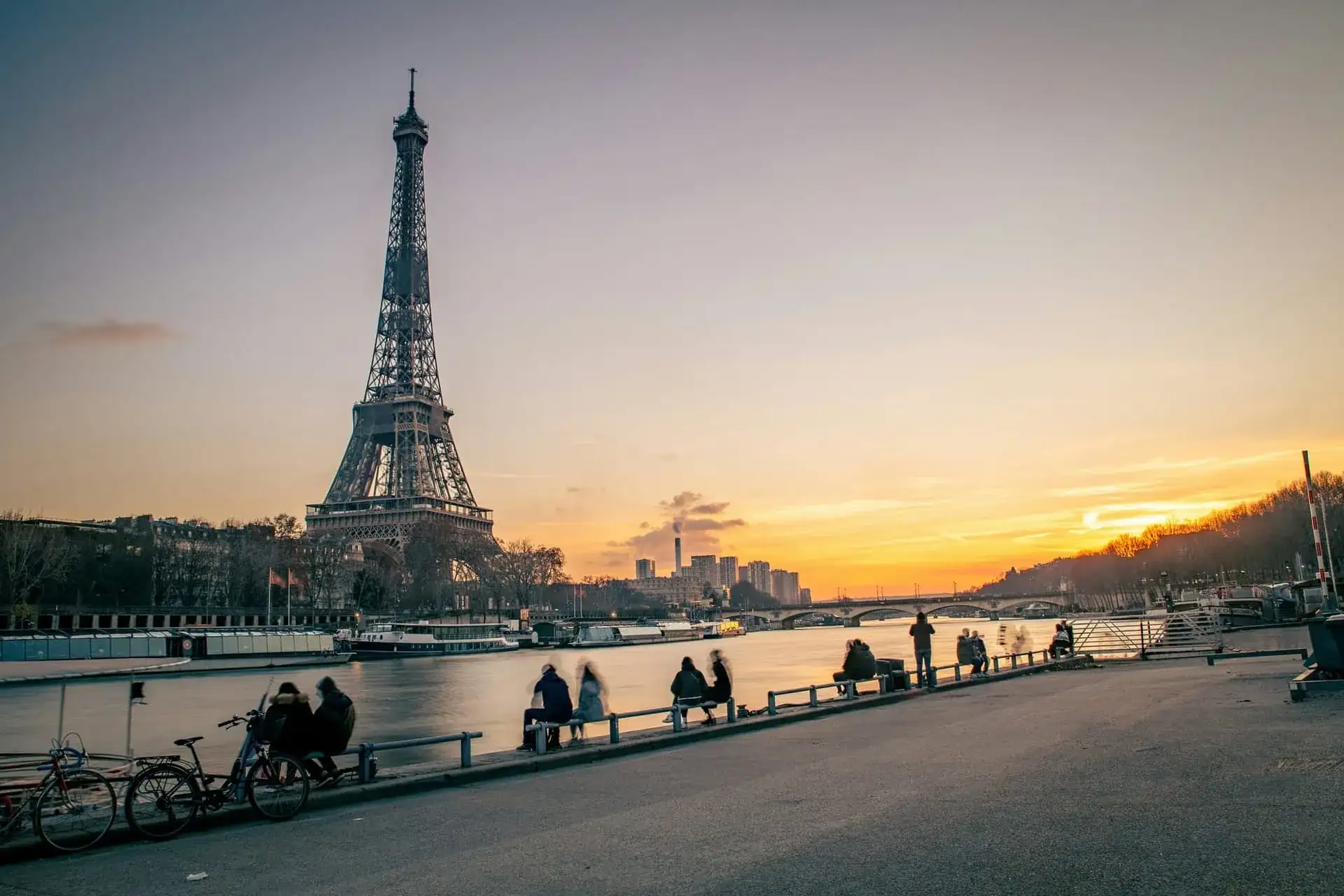
330 m of puddled iron turned national symbol. Go up at sunset, then watch it sparkle on the hour.
Mont-Saint-Michel
Normandy
The thousand-year-old abbey raised on its islet, ringed by the greatest tides in Europe. Cross the bay on foot with a guide.
Château de Chambord
Loire Valley
François I's dream in stone, its double-helix staircase and its 440 rooms set in the middle of Europe's largest enclosed forest park.
Cliffs of Étretat
Normandy
White chalk arches and a 70 m needle plunging into the Channel, immortalised by Monet. A vertiginous coastal path.
Verdon Gorges
Provence
The French grand canyon: 700 m of limestone cliffs above emerald water, best explored by kayak or on the Blanc-Martel trail.
Dune du Pilat
Arcachon Bay
The highest dune in Europe, 100 m of sand between pine forest and ocean. The barefoot climb at sundown is a rite.
Tap a dot, or browse the list below the map.
- Eiffel Tower : The symbol of Paris
- Mont-Saint-Michel : The abbey between sky and tides
- Étretat : Chalk cliffs and the hollow needle
- Saint-Malo : The corsair city and its ramparts
- Chambord : The great château of the Loire
- Colmar : Half-timbering and canals of Alsace
- Chamonix : At the foot of Mont Blanc
- Dune du Pilat : The highest dune in Europe
- Carcassonne : The fortified medieval city
- Pont du Gard : The three-tiered Roman aqueduct
- Verdon Gorges : The French grand canyon
- Place de la Bourse : Bordeaux and its water mirror