Travel in Bolivia: when to go, places and advice
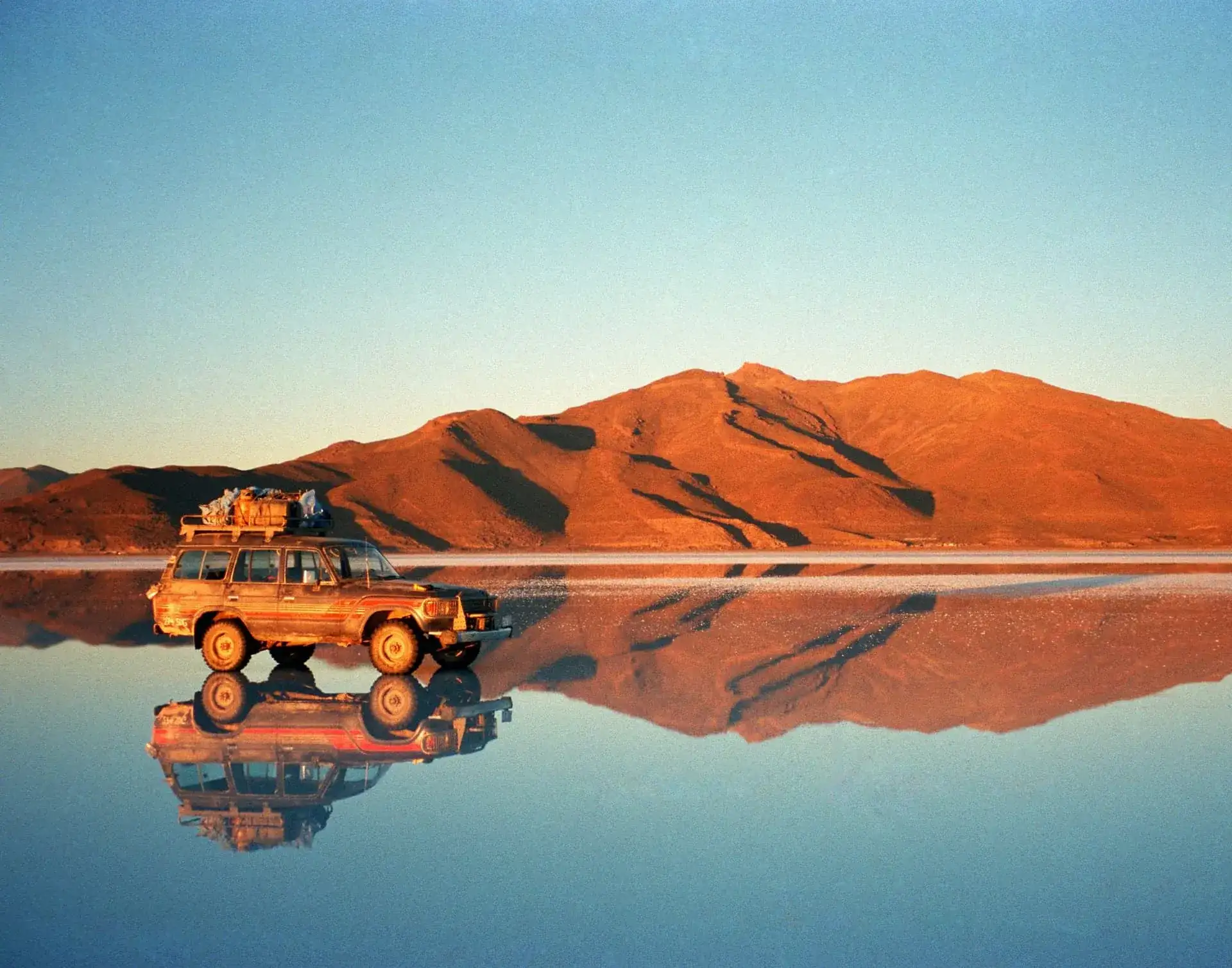
The most dizzying country in South America: the Uyuni salt flat, the largest in the world, turned into an infinite mirror in the rainy season, the red and green lagoons of Sud Lipez peopled with flamingos, La Paz hanging at 3,600 m beneath its cable cars, the sunny side of Lake Titicaca and Aymara markets overflowing with colour. Rough, authentic and cheap, Bolivia is the Andean adventure in its purest state.
- Capital
- Sucre, seat of government in La Paz
- Currency
- Boliviano (BOB)
- Language
- Spanish, Quechua, Aymara
- Direct flight
- No direct flight, via Madrid or Lima
- Time difference
- -5 hr in winter, -6 hr in summer
Itineraries
Our trip ideas in Bolivia
The itineraries in Bolivia are in the works: the day-by-day programme, named hotels, tickets to book flagged in advance. Leave your address to be notified when they come out.
Got it. You will be notified at the next release.
The sign-up could not be completed. Try again in a moment.
Your address is only used for these release announcements. Privacy policy
The right season
When to go in Bolivia?
From May to October, the dry season brings skies of absolute blue over the Altiplano: the ideal window for Uyuni in its white-desert version and for Sud Lipez, with freezing nights in June-July. From January to March, the rains turn the salar into a perfect mirror, the other face of the trip, at the price of tracks sometimes cut. April and November make excellent compromises.
- January : Pleasant
- February : Pleasant
- March : Pleasant
- April : Ideal
- May : Ideal
- June : Ideal
- July : Ideal
- August : Ideal
- September : Ideal
- October : Ideal
- November : Pleasant
- December : In-between
- Ideal
- Pleasant
- In-between
- Avoid
Quick guide
Understanding Bolivia
Getting around
Three-day 4x4 tours are the norm for Uyuni and Sud Lipez. The overnight cama buses link the cities; La Paz's cable car network, the longest urban one in the world, is an attraction in itself.
Money
The boliviano (BOB). Cash is king everywhere, withdraw in town before the remote areas. Uyuni tours are negotiated and often paid in cash. Among the cheapest budgets on the continent.
Language
Spanish, with Quechua and Aymara very much alive on the Altiplano. English is rare: basic Spanish is close to essential.
Useful apps
Offline maps (the signal vanishes fast), a translator, the Mi Teleférico app in La Paz and a head torch on your phone: power cuts happen.
Accommodation
Salt hotels at the edge of the salar, spartan refuges of Sud Lipez, colonial hotels in Sucre and Potosí. Comfort is simple at altitude, the blankets numerous.
Etiquette
Respect the Pachamama and her offerings, always ask before photographing, cholitas especially, and chew the coca offered against soroche without ceremony.
The iconic places
Salar de Uyuni
Potosí
10,582 km² of pure salt: a white desert in winter, a perfect mirror between January and March. Sunrise from the cactus island is unreal.
Sud Lipez
Altiplano
Blood-red Laguna Colorada, emerald Laguna Verde, geysers and flamingos at 4,500 m: three days of 4x4 out of this world.
La Paz
La Paz
The highest capital in the world, the witches' market, wrestling cholitas and cable cars flying over an endless urban canyon.
Isla del Sol
Lake Titicaca
The sacred island of the Incas on Titicaca: terraces, ridge paths and sunsets over the Cordillera Real, without a single car.
Sucre
Chuquisaca
The constitutional capital, white and colonial, the gentlest of Bolivian cities, UNESCO. Perfect for catching your breath and learning Spanish.
Valley of the Moon
La Paz
A labyrinth of eroded clay spires at the gates of La Paz, worth wandering at sundown when the ochre catches fire.
Tap a dot, or browse the list below the map.
- Salar de Uyuni : The largest mirror in the world
- Incahuasi : The salar's giant cactus island
- Laguna Colorada : The red lake of the flamingos
- Laguna Verde : The emerald at the foot of Licancabur
- La Paz : Cable cars and the witches' market
- Valley of the Moon : Clay spires at sundown
- Isla del Sol : The sacred island of Titicaca
- Copacabana : The sanctuary of Lake Titicaca
- Sucre : The white city, UNESCO
- Potosí : The Cerro Rico and its silver mines