Travel in Yemen: when to go, places and advice
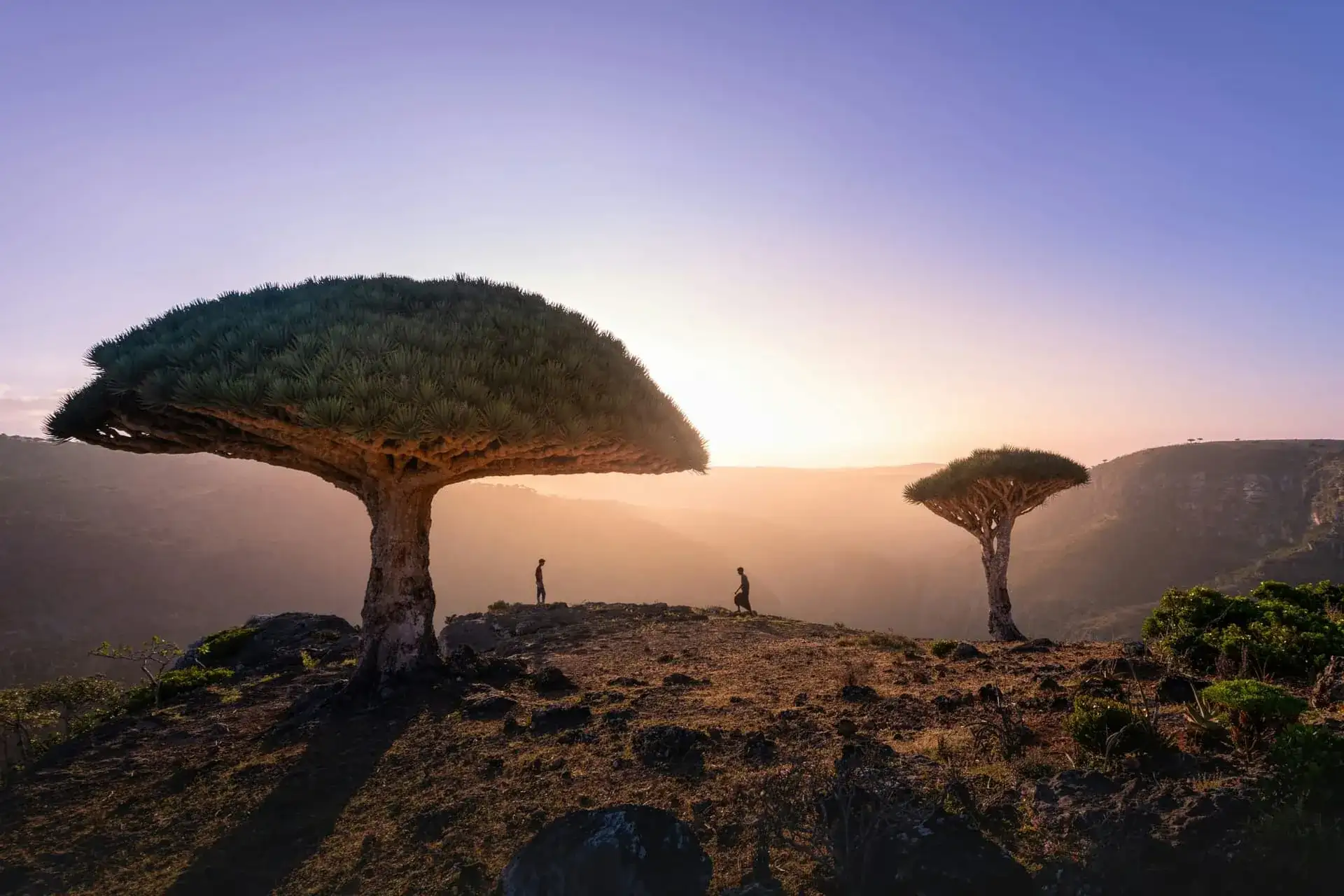
The Arabia Felix of the Ancients holds unique wonders: the rammed-earth towers of old Sanaa, Shibam the "Manhattan of the desert" and above all Socotra, an island laboratory of evolution where umbrella-shaped dragon's blood trees and desert roses grow. The mainland remains closed to tourism by the conflict; only tightly organised tours now reach Socotra by special flight. Be sure to follow the official advice before considering this exceptional journey.
- Capital
- Sanaa
- Currency
- Yemeni rial (YER)
- Language
- Arabic
- Direct flight
- No direct flight, Socotra via Abu Dhabi
- Time difference
- +2 hr in winter, +1 hr in summer
Itineraries
Our trip ideas in Yemen
The itineraries in Yemen are in the works: the day-by-day programme, named hotels, tickets to book flagged in advance. Leave your address to be notified when they come out.
Got it. You will be notified at the next release.
The sign-up could not be completed. Try again in a moment.
Your address is only used for these release announcements. Privacy policy
The right season
When to go in Yemen?
Socotra is visited from October to April: calm seas, 25 to 30 °C, dragon's blood trees under a limpid sky. From June to September, the summer monsoon sweeps the island with violent winds that suspend almost all activity, and the heat crushes the mainland. February-March offer the most turquoise lagoons and the most pleasant camps.
- January : Ideal
- February : Ideal
- March : Ideal
- April : Pleasant
- May : In-between
- June : Avoid
- July : Avoid
- August : Avoid
- September : Avoid
- October : Ideal
- November : Ideal
- December : Ideal
- Ideal
- Pleasant
- In-between
- Avoid
Quick guide
Understanding Yemen
Getting around
Socotra is reached by the weekly Abu Dhabi flight, as part of a compulsory organised tour. On the island, everything is done by 4x4 with a driver-guide, between tracks, beaches and plateaus.
Money
The Yemeni rial (YER), but the Socotra tours are paid in cash dollars or euros, in advance or on the spot. No reliable ATM: leave with the entire budget in cash.
Language
Arabic, with the Soqotri dialect on the island, a unique South Arabian language. The guides speak English; a few words of Arabic always please.
Useful apps
Almost no signal outside Hadibo: offline maps, photos of your documents and messages scheduled before departure. On Socotra, you live disconnected.
Accommodation
On Socotra, tented camps facing the beaches or homestays, with a few simple guesthouses in Hadibo. Comfort is rustic, the landscapes make you forget it.
Etiquette
A deeply conservative country: very covering dress for everyone, absolute discretion on politics and religion, and always ask before photographing anyone, women especially.
The iconic places
Diksam Plateau
Socotra
The forest of umbrella dragon's blood trees at the edge of the Dirhur gorges: the island's most extraterrestrial landscape, at sundown above all.
Detwah Lagoon
Qalansiyah
A spit of white sand between turquoise lagoon and cliffs, regularly ranked among the most beautiful beaches in the world.
Arher Dunes
Socotra
White dunes pressed by the wind against the cliffs, at the edge of a limpid sea. You camp there and climb to the top at dawn.
Old city of Sanaa
Sanaa
Thousands of rammed-earth tower houses with gypsum windows, a UNESCO jewel inhabited for 2,500 years. Inaccessible while the conflict lasts.
Shibam
Hadhramaut
The Manhattan of the desert: 500 eight-storey mud-brick buildings packed behind their 16th-century ramparts, UNESCO.
Hoq Cave
Socotra
Three kilometres of galleries adorned with formations and ancient inscriptions, above the island's north-east coast.
Tap a dot, or browse the list below the map.
- Diksam Plateau : The dragon's blood tree forest of Socotra
- Detwah Lagoon : The beach-lagoon of Qalansiyah
- Arher Dunes : White dunes against the cliffs
- Hoq Cave : 3 km of formations and inscriptions
- Hadibo : The little capital of Socotra
- Old city of Sanaa : The rammed-earth tower houses, UNESCO
- Shibam : The Manhattan of the desert, UNESCO
- Al-Mukalla : The white port of the Hadhramaut