Travel in Colombia: when to go, places and advice
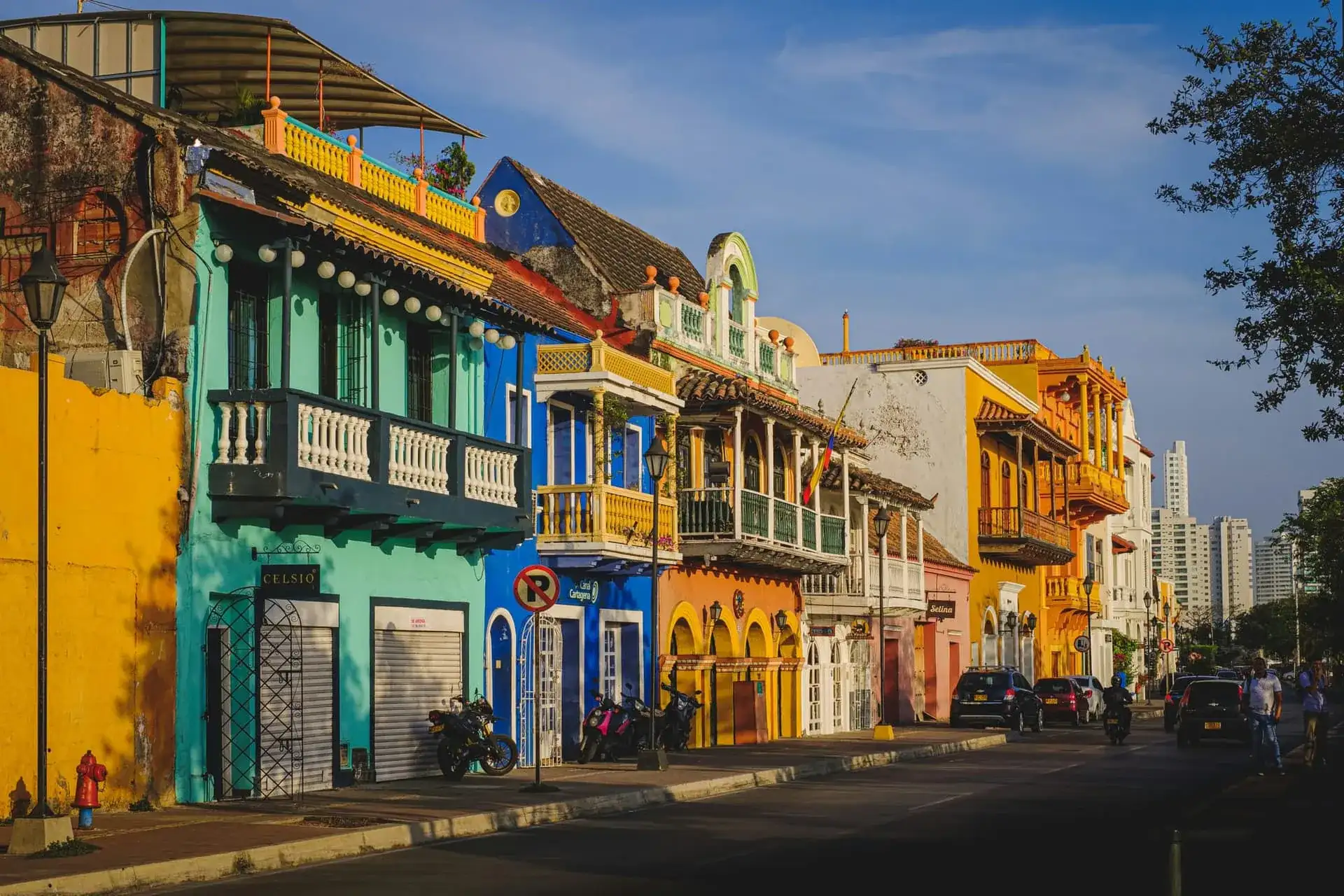
Colombia has changed its face and the world is noticing: flamboyant colonial Cartagena facing the Caribbean, resurrected Medellín turned urban laboratory, the coffee region and its valleys of giant palms, the wild beaches of Tayrona park, the Lost City at the end of four days of jungle and the red desert of the Tatacoa. Exuberant nature, two oceans and the most enthusiastic welcome on the continent: the rising country, and rightly so.
- Capital
- Bogotá
- Currency
- Colombian peso (COP)
- Language
- Spanish
- Direct flight
- ≈ 11 hr to Bogotá
- Time difference
- -6 hr in winter, -7 hr in summer
Itineraries
Our trip ideas in Colombia
The itineraries in Colombia are in the works: the day-by-day programme, named hotels, tickets to book flagged in advance. Leave your address to be notified when they come out.
Got it. You will be notified at the next release.
The sign-up could not be completed. Try again in a moment.
Your address is only used for these release announcements. Privacy policy
The right season
When to go in Colombia?
An equatorial country, Colombia has no seasons but altitude zones: it is always mild in Medellín, hot in Cartagena, cool in Bogotá. The driest spells, December-March then July-August, are ideal for Tayrona, the Lost City and the coffee region. April-May and October-November, wetter, keep fine windows between showers.
- January : Ideal
- February : Ideal
- March : Ideal
- April : In-between
- May : In-between
- June : Pleasant
- July : Ideal
- August : Ideal
- September : Pleasant
- October : In-between
- November : In-between
- December : Ideal
- Ideal
- Pleasant
- In-between
- Avoid
Quick guide
Understanding Colombia
Getting around
Domestic flights (Avianca, LATAM) are essential over the long mountainous distances. The buses, everywhere, wind along slowly. In town, Uber and the app taxis replace the hailed cab.
Money
The Colombian peso (COP), with dizzying amounts: 50,000 pesos make about a dozen euros. Card in the cities, cash in the countryside and on the coast. Never change money in the street.
Language
Spanish, said to be the clearest in Latin America: the perfect place to practise it. English remains rare outside Cartagena and the hotels.
Useful apps
Uber, Cabify or inDrive depending on the city, Rappi to have anything delivered, and Redbus for the coaches. Download offline maps for the coffee region.
Accommodation
Colonial casonas of Cartagena and Villa de Leyva, coffee fincas where you sleep among the plantations, ecolodges of Tayrona. The value is excellent.
Etiquette
Take time for small talk before any business, dance when invited, even badly, and follow the local rule: "no dar papaya", do not flaunt your valuables.
The iconic places
Cartagena de Indias
Bolívar
The most flamboyant fortified city of the Caribbean: flowered balconies, shaded squares and ramparts at sundown, UNESCO.
Cocora Valley
Salento
The 60 m wax palms, the national tree, planted in unreal high-altitude meadows. The emblematic hike of the coffee region.
Comuna 13
Medellín
From the most dangerous neighbourhood in the world to escalators covered in street art: the symbol of Medellín's rebirth, on a local guided tour.
Tayrona Park
Santa Marta
Caribbean coves at the foot of the Sierra Nevada, coconut palms, giant boulders and hammocks facing the ocean. Paradise, wild version.
Lost City
Sierra Nevada
Teyuna, the "Colombian Machu Picchu", reached after four days of jungle trek: thousand-year-old terraces and morning mist.
Caño Cristales
La Macarena
The river of five colours, carpeted with bright red aquatic plants from June to November: a phenomenon unique in the world.
Tap a dot, or browse the list below the map.
- Cartagena : The fortified pearl of the Caribbean
- Tayrona Park : Wild coves beneath the Sierra
- Lost City : Teyuna, a 4-day trek
- Comuna 13 : The street art of Medellín
- Guatapé : The rock and its 740-step staircase
- Cocora Valley : The giant wax palms
- Bogotá : La Candelaria and the Gold Museum
- Villa de Leyva : The perfect colonial main square
- Tatacoa Desert : Red canyons and starry skies
- San Agustín : Mysterious statues, UNESCO