Complete
Complete Seychelles itinerary: 15 days, hotels and bookings
15 days sequenced Morning / Afternoon / Evening / Hotel.
15 days €39
See the itinerary
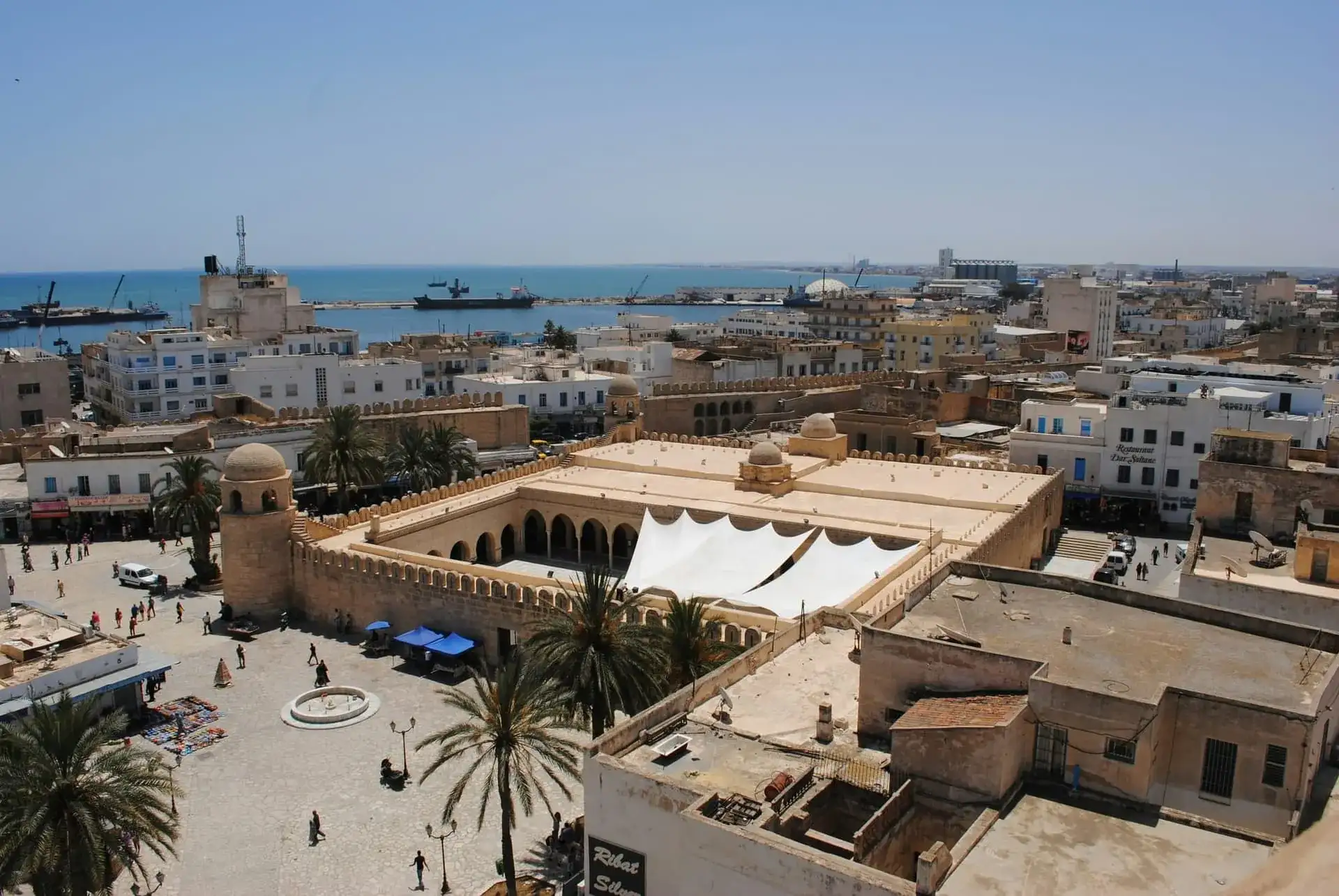
Two and a half hours from Paris, Tunisia condenses the Mediterranean and the Sahara: the blue-and-white lanes of Sidi Bou Saïd, the mosaics of Carthage and the Bardo, the UNESCO-listed medina of Tunis, the colosseum of El Jem more intact than Rome's, then the palm groves of Tozeur, the ksour of the South and the dunes where Star Wars planted its sets. A concentrate of history, beaches and desert, at small prices and in full sun.
Itineraries
The itineraries in Tunisia are in the works: the day-by-day program, named hotels, tickets to book flagged in advance. Leave your address to be notified when they come out.
Got it. You will be notified at the next release.
The sign-up could not be completed. Try again in a moment.
Your address is only used for these release announcements. Privacy policy
Leaving before they come out? Request a custom day-by-day itinerary in Tunisia
Itineraries available in Africa
We don't sell an itinerary in Tunisia yet. Here are the ones already on sale, for other countries.
Complete
15 days sequenced Morning / Afternoon / Evening / Hotel.
See the itinerary
Complete
28 days sequenced Morning / Afternoon / Evening / Hotel.
See the itinerary
The right season
April-June and September-October bring the best of everything: the sea already warm, breathable medinas and a passable desert. July-August run hot, perfect for the beaches, punishing for the Saharan South, which is then visited at dawn. Winter, mild on the coast, is the true desert season: cold nights but perfect light on the dunes.
Quick guide
Louages (shared taxis) and trains cover the coast at low cost; a rental car opens up the South and the oases. The TGM links Tunis to Carthage and Sidi Bou Saïd in 30 minutes.
The Tunisian dinar (TND), non-exportable: change locally and use up your dinars before leaving. Cash dominates outside the hotels. Bargaining is the rule in the souks.
Tunisian Arabic, but French is spoken almost everywhere and English is common in tourism: an easy destination to navigate.
Bolt for honest taxi fares in Tunis, InTunisia for train and louage timetables, and an offline map for the southern tracks.
Characterful dars in the medinas, beach resort hotels in Hammamet and Djerba, Saharan camps at Ksar Ghilane: three atmospheres, one modest budget.
Accept the pine-nut tea when offered, bargain without aggression and cover shoulders and knees in the medinas and mosques. Ramadan slows the days and magnifies the evenings.
Must-sees
Tunis
The blue-and-white village suspended above the gulf, its mashrabiyas and its Café des Délices. The finest balcony of the southern Mediterranean.
Tunis
700 monuments in a UNESCO maze: fragrant souks, the Zitouna mosque and palaces hidden behind studded doors.
El Jem
35,000 seats, the third colosseum of the Roman world, better preserved than Rome's, standing alone amid the olive trees.
Kairouan
The fourth holy city of Islam, its 7th-century Great Mosque and its Aghlabid basins, UNESCO.
Djerid
A palm grove of 400,000 trees at the gates of the Sahara, its old town of ochre brick and the Star Wars sets nearby.
Djerba
The island of gentle beaches, the Jewish heritage of the Ghriba and the street-art village of Djerbahood.
Pick a point on the map, or browse the list below.
Also on the map
This site uses Google Analytics to measure its audience and improve its content. No advertising use. You can refuse and nothing changes for you. Learn more about cookies