Day 2
Sucre, capital of independence
Morning
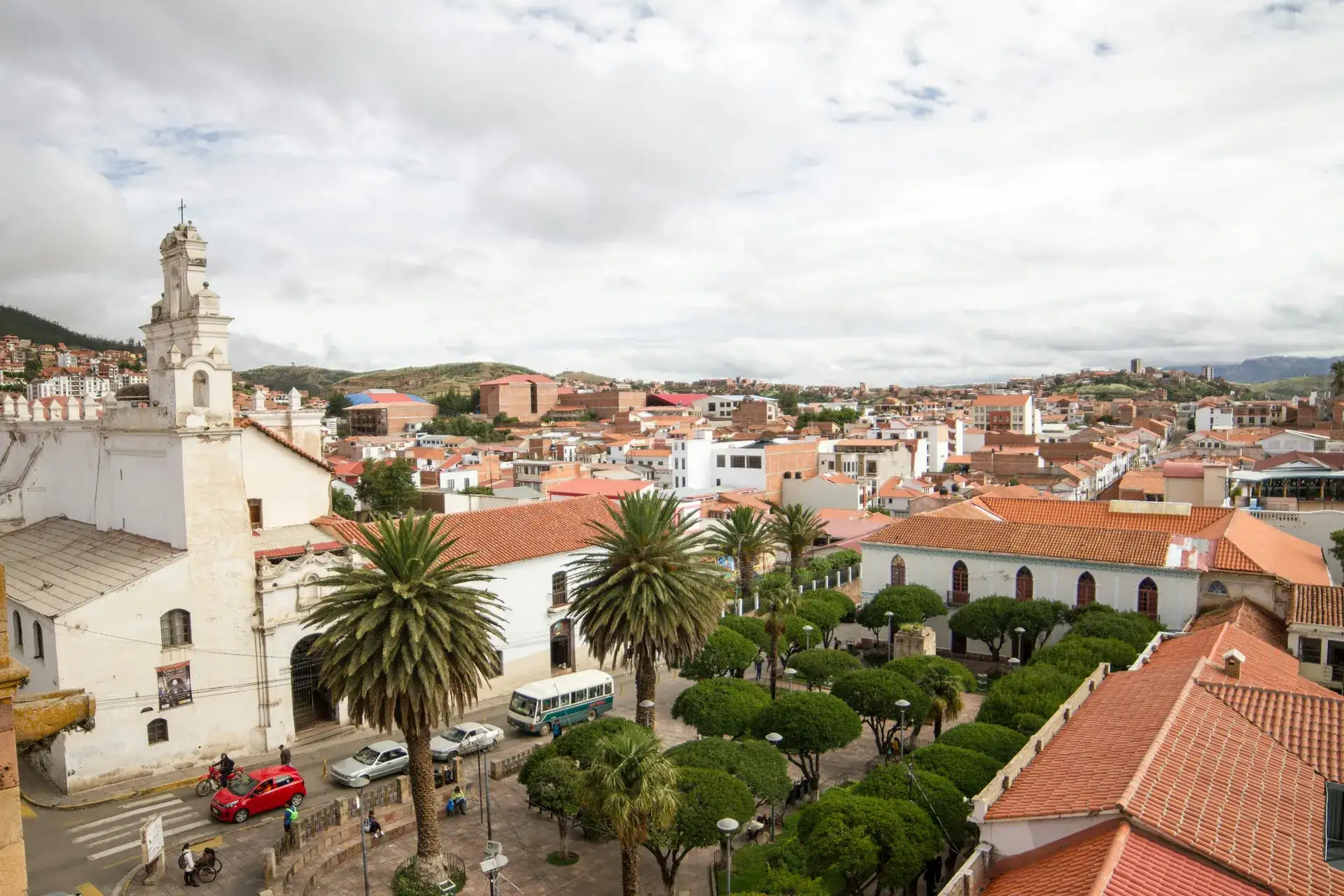
Plaza 25 de Mayo
Sucre's main square, planted with palms and lined with colonial buildings, commemorates the uprising of May 25, 1809, one of the first cries for independence in South America.
Casa de la Libertad
In this former Jesuit college, Bolivia's declaration of independence was signed on August 6, 1825. The Hall of Liberty, the portraits of Bolívar and Sucre and the original act make it the country's most symbolic site.
Catedral Metropolitana and Museo Catedralicio
Begun in the 16th century, the cathedral blends Renaissance and baroque. Its museum holds silverwork, paintings and liturgical objects from the colonial era.
Capilla de la Virgen de Guadalupe
Adjoining the cathedral, the chapel houses the image of the Virgin of Guadalupe, painted in the early 17th century and covered in gold, pearls and precious stones donated by the faithful.
Afternoon
Cementerio General
Avenues of clipped cypresses, marble mausoleums and white arches: Sucre's cemetery is one of the finest in the country, and a place where locals come to stroll.
Templo de San Felipe Neri and its terraces
A former neoclassical convent now used as a school, San Felipe Neri opens its white rooftops to visitors. The view over the domes and tiled roofs of the city is one of the best in Sucre.
Templo de La Merced and Museo del Tesoro
Behind a plain façade, La Merced hides a gilded baroque interior. The Museo del Tesoro, in a colonial house, tells the story of Bolivia's silver, ores and precious stones.
Good to know
Many sites close between 12:00 PM and 2:30 PM, and some on Mondays. Visit the San Felipe Neri terraces in the late afternoon for the light.