Day 4
Colonial Cochabamba and the Cristo
Morning
La Cancha
South of the center, this open-air market spreads over several dozen blocks. You can find everything here, from tropical fruit to fabrics, tools and medicinal herbs. It is one of the largest markets in South America and a plunge into the daily life of the valley.
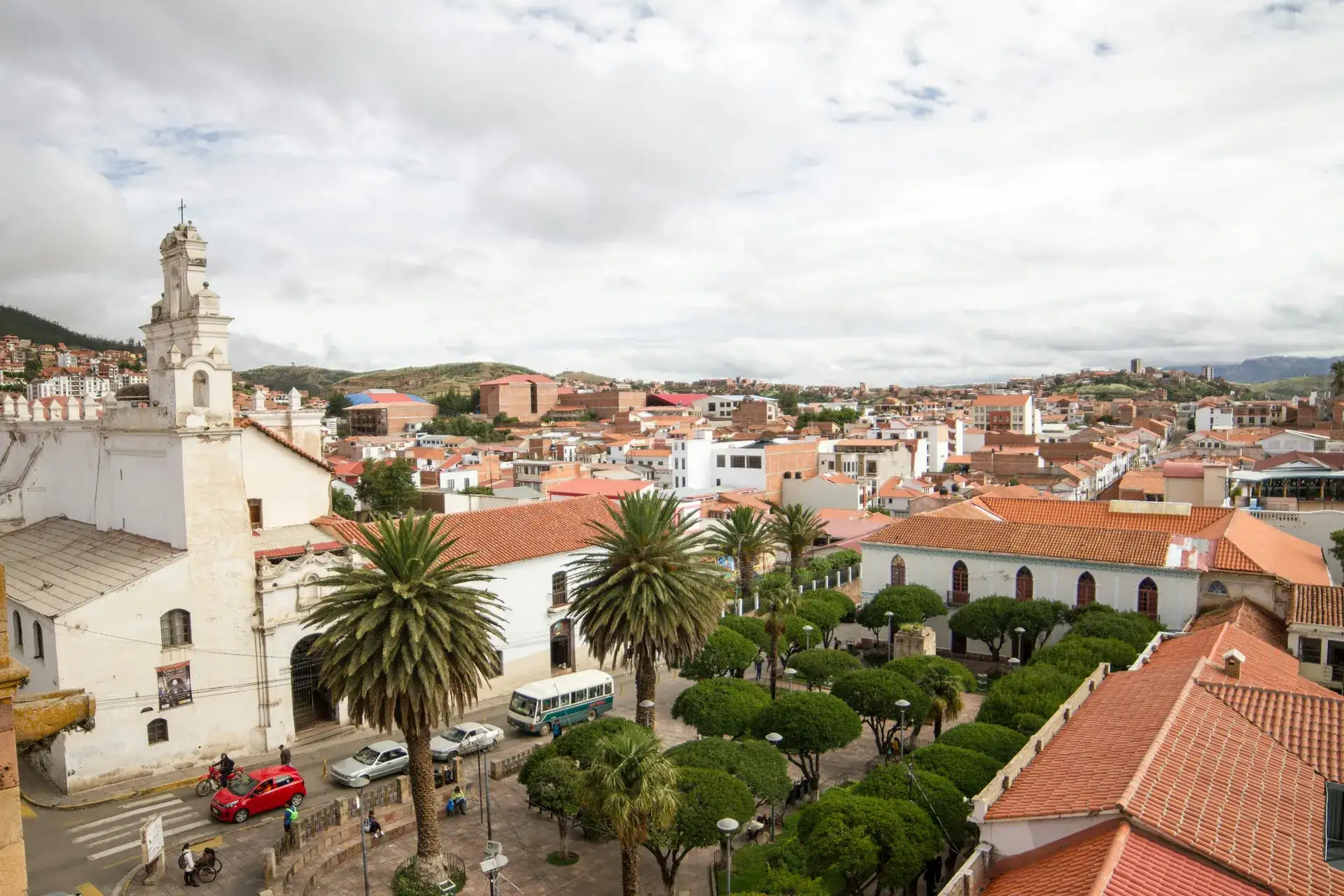
Plaza 14 de Septiembre
The main square, lined with arcades and the cathedral, takes its name from the Cochabamba uprising of September 14, 1810, during the wars of independence.
Iglesia de Santo Domingo
On the corner of the square, this Baroque church stands out for its carved stone portal, framed by twisted columns.
Convento Museo Santa Teresa
Founded in the 18th century, this Carmelite convent is still home to a community of nuns. The guided tour takes in cloisters, cells and chapels, and climbs up to the rooftops.
Templo de El Hospicio
On the Plaza Colón, this 19th-century church with pale façades blends Baroque and neoclassical styles.
Afternoon
Cristo de la Concordia approx. 2,840 m
Completed in 1994 on the Cerro San Pedro, this 34 m (112 ft) statue overlooks the whole valley. It is taller than Rio's Christ the Redeemer on Corcovado. You go up by cable car from the foot of the hill; on some days you can climb inside up to the arms.
Good to know
La Cancha: leave valuables at the hotel, as theft is common. Santa Teresa convent: guided tour compulsory, Monday to Saturday (departures from 9:00 AM to 11:00 AM and from 2:30 PM to 3:30 PM, last departure at 2:00 PM on Fridays and Saturdays), closed on Sundays and public holidays. Entry is 25 Bs for foreigners, cash only, plus another 25 Bs to take photos. The Cristo is reached by cable car from the Parque de la Autonomía (San Pedro district): closed on Mondays and sometimes for maintenance, tickets in cash, variable hours to check on site. Take the cable car rather than the stairs, where thefts have been reported, and come back down before dark.