Sleeping in a temple at Koyasan: booking and how the night unfolds
Sleeping in a temple at Koyasan, at Ekō-in: the lantern-lit Okunoin at night, the service at 7:00 AM, the fire ritual at 7:30 AM, booked eleven months ahead.
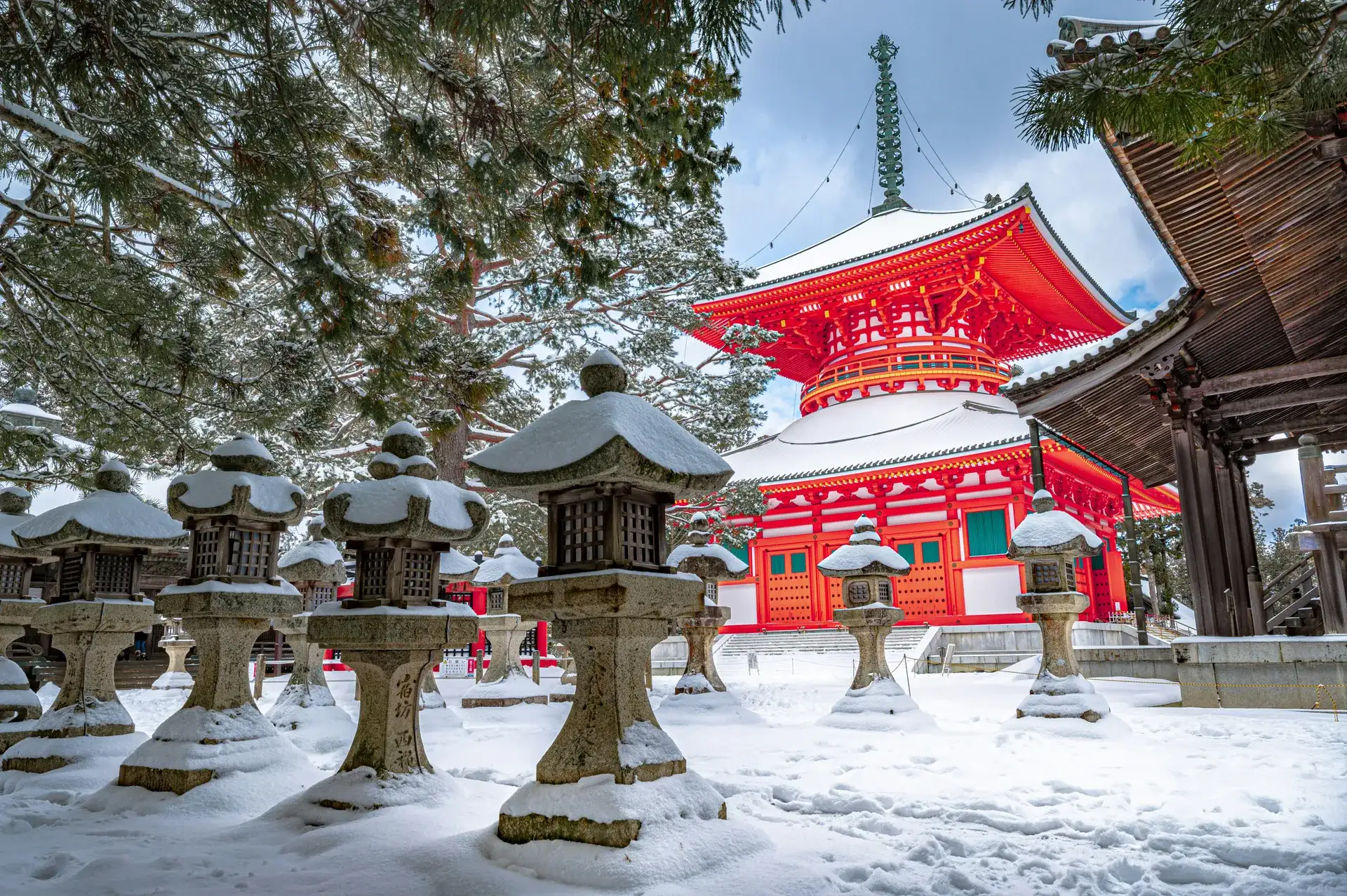
To sleep in a temple in Japan, Mount Kōya, or Koyasan, is the place to go: a plateau at 800 meters (2,620 ft) of altitude where one hundred and seventeen temples survive, fifty-one of which take in travelers for the night. These temple lodgings are called shukubō. You eat vegetarian, go to bed early, and the next day you attend the morning service and then the fire ritual. Allow a day and a night on site, and book the temple very early: eleven months ahead for a temple as sought-after as Ekō-in.
The booking calendar for the whole trip is set out in What to book in advance for a trip to Japan, and when. Here, we look at the night at the temple itself.
Why sleep on Mount Kōya rather than spend the day there
It was here that the monk Kūkai, also known as Kōbō Daishi, founded the seat of the Shingon school of Buddhism in 816, in a hollow surrounded by eight peaks said to form a lotus. Visited as a day trip, Kōya comes down to the Okunoin in broad daylight and a plateau left before evening. Sleeping there gives access to the two moments that justify the detour: the Okunoin path lit only by its stone lanterns at nightfall, then the service and the fire ritual on waking.
Sleeping in a shukubō: it is not a hotel, and that is the whole point
A shukubō is a working temple that rents out rooms. One example: Ekō-in, founded according to tradition twelve centuries ago by Kūkai himself, and in the sixteenth century the family temple of the Shimazu clan. You sleep either in Japanese tatami rooms or in rooms with beds, and a few suites have a private bath with a garden. The staff speak English.
The rhythm, though, has nothing of a hotel about it. The rules to know before booking:
- early dinner, and shōjin cuisine that is entirely vegetarian: seasonal vegetables, seaweed, tofu;
- lights out around 9:00 PM;
- a morning service at which attendance is expected, without being compulsory;
- no alcohol served in some temples;
- neither pajamas nor yukata at the service and the fire ritual, and no flash photography.
At Ekō-in, you can also try ajikan meditation or sutra copying, and the baths are fed by Kōya’s springs.
How a night at the temple unfolds, from arrival to departure
Here is how a day and a night on Kōya fit together if you arrive in the morning, with the Ekō-in timetable.
| Time | What happens |
|---|---|
| Morning | Arrival on the plateau. The Danjō Garan and its Konpon Daitō pagoda, then Kongōbu-ji |
| Afternoon | The Okunoin path by day, then the Reihōkan, the treasure museum |
| From 3:00 PM | The temple baths open, until midnight |
| Early evening | Guided night tour of the Okunoin, led by a monk in English |
| Around 9:00 PM | Lights out |
| 6:00 to 9:00 AM | The baths reopen |
| 7:00 AM | Morning service in the main hall |
| 7:30 AM | Goma fire ritual at the Bishamondō |
| 10:00 AM | Departure from the temple |
The service and the goma are free and require no registration for guests.
Tip: the general rule in shukubō rather puts the service around 6:00 AM: have the time confirmed on arrival, as it can vary from one temple to another.
What to see on Mount Kōya between two services
The Danjō Garan. This is the original sacred precinct, laid out by Kūkai. The Konpon Daitō, a great vermilion pagoda forty-eight meters high rebuilt in 1937 after several fires, is not a reliquary but a three-dimensional mandala: inside, statues and painted pillars reproduce the structure of the cosmos according to Shingon.
Kongōbu-ji. The head temple of the school has the Banryūtei, the largest rock garden in Japan: one hundred and forty stones from Shikoku arranged as two dragons in a sea of gravel.
The Okunoin, twice. By day, two kilometers of path beneath the cryptomerias, lined with more than two hundred thousand funerary steles. At the end, the Hall of Lanterns holds more than ten thousand, two of which are said to have been burning since the eleventh century. Behind it lies the mausoleum where Kūkai is considered not dead but in meditation since 835: two meals are brought to him every day. In the evening, the same path is lit only by its lanterns. That is the moment you sleep on the mountain for.
The Reihōkan. Kōya’s treasure museum, opened in 1921, holds more than one hundred thousand pieces, including twenty-eight national treasures.
How to get to Mount Kōya: the road and its pitfalls
Our itineraries go up to Kōya by car. From Himeji, allow three hours’ drive east then south to the plateau. The descent to Kumano, to the south, takes another three hours of mountain road. Our travel books do not cover access by train: if you are coming without a car, check the journey before booking the temple.
Mount Kōya opens onto the emptiest part of Honshū, and the road deserves some preparation:
- roads a lane and a half wide, tight bends, gorges and very few villages;
- little mobile coverage: download offline maps;
- gas stations that are rare and close early: fill up every morning;
- journey times that are consistently longer than stated;
- black bears reported on Kōya;
- a Kii peninsula highly exposed to typhoons, which close mountain roads because of landslides.
Booking a night at the temple: three separate bookings
The night at the temple takes three bookings that do not overlap.
- The temple. For Ekō-in, bookings open eleven months ahead on the temple’s official website, and they go fast.
- The official shukubō association. The fifty-one temples on Kōya can also be booked through it, which serves as a fallback in high season if the temple you want is full.
- The Okunoin night tour. It is run by a different operator, is not included in the temple package, is booked separately and is often full from March to November.
Watch out: the trap is an easy one: you book the temple, and the night tour, which is booked elsewhere, is already full. Book it at the same time as the temple.
These lead times are those noted in our travel books when this article was written, in September 2026. Recheck them on the temple’s website and on the association’s before booking.
When to go and what to pack
| Period | What you need to know |
|---|---|
| Mid-November | Kōya’s maples, one of the finest windows of the season |
| March to November | Okunoin night tour often full: book it at the same time as the temple |
| Late August to October | Typhoons on the Kii coast, mountain roads sometimes closed |
| Winter | Snow on the plateau |
To time the trip around the foliage, see how to follow the autumn colors in Japan.
In your bag:
- Cash. Cash machines are rare on Mount Kōya. Ekō-in accepts cards, but the rest of the mountain and the peninsula requires cash.
- Warm layers. Kōya is markedly colder than the plain: allow ten degrees less.
- Proper clothes for the morning. Pyjamas and yukata are not allowed at the service or the goma.
As for budget, entry to Kongōbu-ji and the Reihōkan, like the night tour, comes on top of the price of the night. Outside the temple’s half board, our travel books note for this part of Kansai ¥900 to ¥1,500 for a meal at lunchtime and ¥2,000 to ¥4,000 in the evening, when this article was written, in September 2026: to be rechecked on site.
And after the temple: Kumano and the oldest bath in Japan
South of Kōya, Kumano Hongū-taisha is the first of the three great shrines of Kumano. Close by, the great torii of Ōyunohara raises 33.9 meters (110 ft) of steel in the middle of the rice fields.
At Yunomine, the oldest hot spring in Japan, Tsuboyu is a wooden hut above the stream sheltering a rock basin for two people: the only thermal bath in the world on the World Heritage list, rented privately in thirty-minute slots and payable in cash only. The Tsuboyu slot and the Yunomine ryokan must also be booked in advance.
So, should you sleep on Mount Kōya?
Yes, if you accept its rules: early dinner, in bed by 9:00 PM, service in the morning. One night is enough, provided you book the temple and the Okunoin night tour as soon as bookings open. It is for the lantern-lit path in the evening and the fire ritual on waking that you stay on the mountain.
No, if the only thing that tempts you is the tatami room: a ryokan will give you that without the service or the curfew.
Our 14-day West Kansai stage details this night at the temple with its timetable and booking link, and western Japan and the islands in 86 days includes it. To place Kōya within a wider trip, see How many days in Japan? The real length, region by region and the Japan page.
Do you need to speak Japanese to sleep in a temple at Koyasan?
No, not at Ekō-in: the staff speak English, and the night tour of the Okunoin is led in English by a monk. Our travel books do not say so for the other temples on Mount Kōya, so check before you book.
Is dinner included in the night at the temple?
Yes, the night at the shukubō is taken on a half-board basis, with the vegetarian dinner served early at the temple. Lunch remains at your own expense, as do the entrance fees for the sites on the plateau.
Where do you book the Ekō-in shukubō?
On the temple's official website, ekoin.jp, where bookings open eleven months ahead, a lead time noted in September 2026 and to be rechecked.
Why are there so many graves at the Okunoin?
Because everyone wanted to rest near Kūkai: warlords, monks, poets, and even modern companies that have raised their own monument there. Their steles line the path beneath the cryptomerias all the way to the mausoleum.
What is there to see at Kongōbu-ji, apart from the rock garden?
Its painted sliding doors, which tell the life of Kūkai, and the room where Toyotomi Hidetsugu was forced to commit suicide in 1595. Entry to the head temple of the Shingon school is paid and comes on top of the price of the night.
From research to departure
Travelling in Japan
This article comes out of a complete itinerary in Japan: the day-by-day program, hotels named with their booking link, and the tickets to book flagged in advance.
Module
Western Kansai in 14 days: day-by-day itinerary and hotels
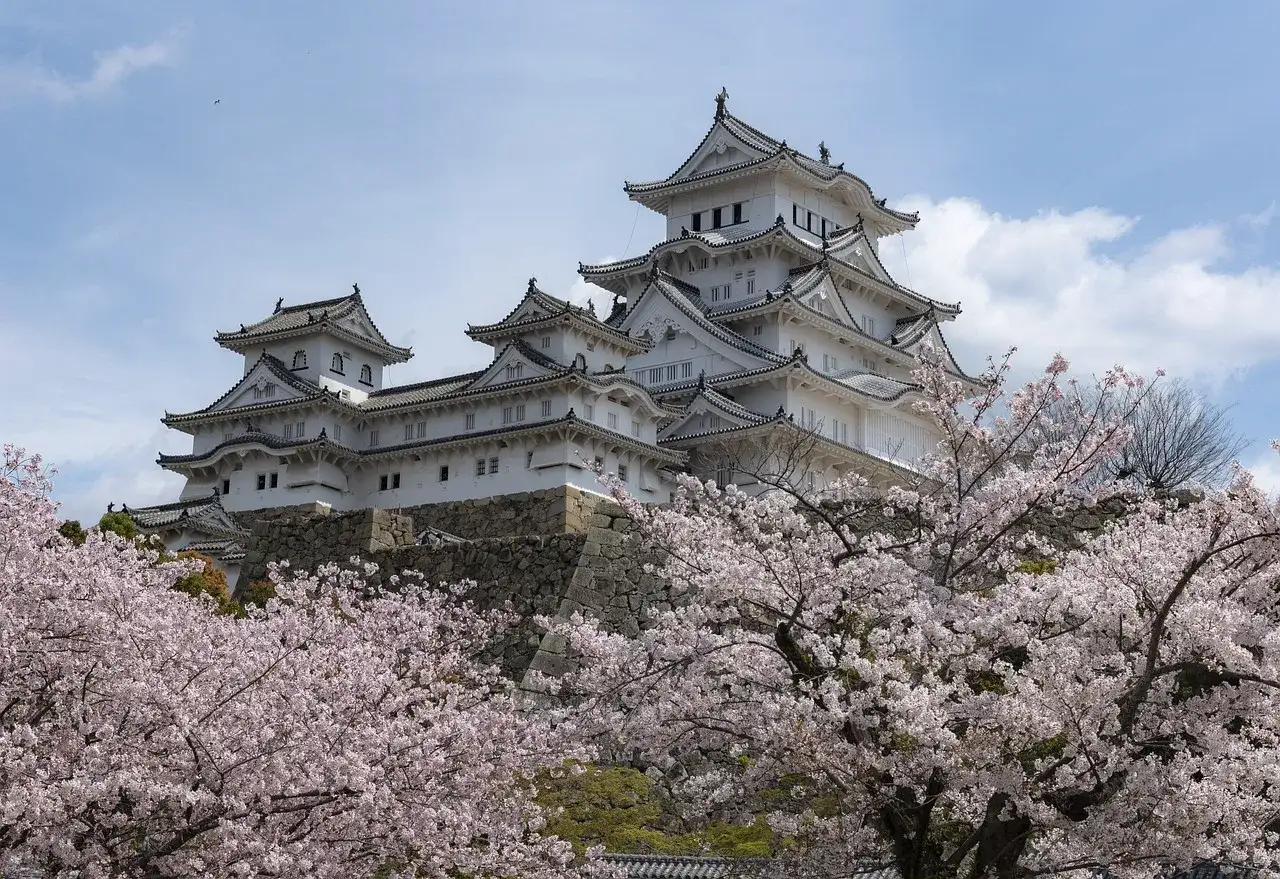
Fourteen days from Osaka to Hikone: Dotonbori and Osaka Castle, Kobe and the Akashi Kaikyō bridge, the white heron of Himeji, a night at a temple on Mount Kōya, the three shrines of Kumano and Lake Biwa.
See the itinerary
Complete
Japan itinerary: 86 days across Kyoto, Shikoku and Kyūshū, hotels and bookings
86 days sequenced Morning / Afternoon / Evening / Hotel.
See the itinerary
Also worth reading about Japan
Japan
Can ChatGPT plan a trip to Japan? What to check
An AI gives a good first draft of a Japan itinerary, not a guarantee. Hotels, timed tickets, closures, driving license: the checklist to follow.
Japan
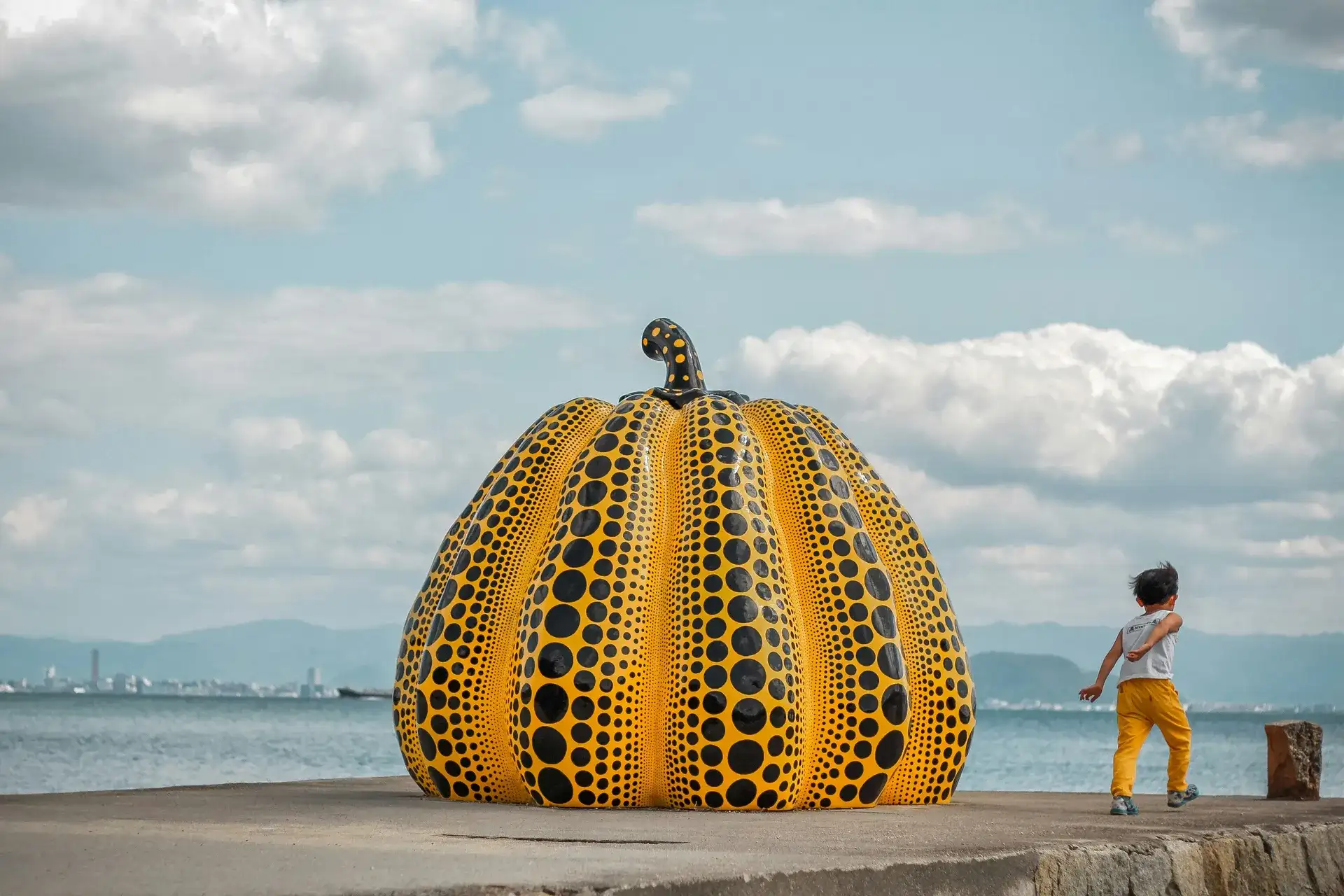
Visiting Naoshima and Teshima: ferries, museums, closed days
Allow two days, one per island, between Wednesday and Sunday: Naoshima closes on Mondays, Teshima on Tuesdays. Ferries, tickets to book, where to stay.
Japan
Shikoku: which itinerary and how many days to visit the island
Five days to cross Shikoku, eight with the upper Iya valley and the art islands, twelve for the full loop. By car, in April, May or November.