Shikoku: which itinerary and how many days to visit the island
Five days to cross Shikoku, eight with the upper Iya valley and the art islands, twelve for the full loop. By car, in April, May or November.
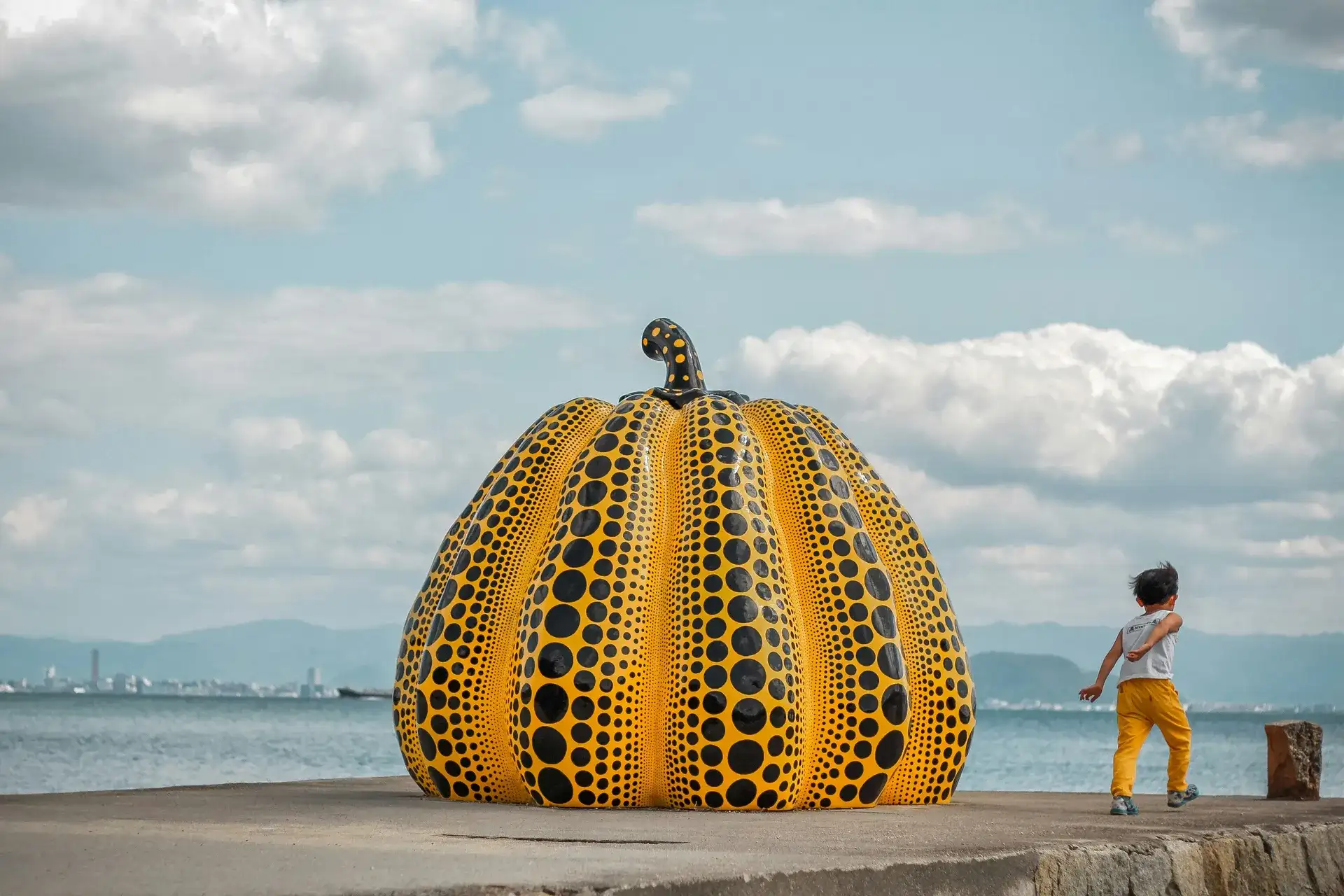
Allow five days to cross Shikoku via its major sights, eight to add the upper Iya valley and the art islands, twelve to make the full loop of the island, Pacific capes included. In all three cases, a rental car is almost essential: local trains are few and slow, and the most beautiful places are at the end of mountain roads. The best months are April, May and November.
This guide covers the island on its own. If you want to combine it with the Sea of Japan coast, read instead the San’in coast and Shikoku without the crowds.
What to see on Shikoku: five reasons to make the detour
The island reads as five groups, from the north-west to the north-east by way of the south.
- The Shimanami Kaidō, the gateway from Honshū: seventy kilometers between Onomichi and Imabari, six bridges, seven islands, and a continuous cycle path.
- Matsuyama and Dōgo Onsen. Matsuyama Castle is one of the twelve in the country whose keep is original. At Dōgo, the Honkan, a wooden building from 1894, is the oldest bathhouse still operating in Japan.
- Kōchi and the Pacific coast. Kōchi Castle is the only one in Japan where the keep and the lord’s residence both survive. Further south, the Shimanto flows for 196 kilometers (120 mi) without a single large dam, crossed by forty-seven submersible bridges with no parapet. Capes Ashizuri and Muroto close the coast at each end.
- The Iya valley. The Ōboke gorge, more than two hundred meters deep, is descended by canoe in two hours. Higher up: the Kazurabashi vine bridge, the village of Nagoro and its life-size dolls, then Mount Tsurugi, 1,955 meters (6,410 ft), forty minutes by path from the chairlift.
- The north-east: Konpira-san, Takamatsu and the art islands. At Konpira-san, 785 steps lead to the main hall and 1,368 to the inner shrine. In Takamatsu, Ritsurin-kōen covers seventy-five hectares: allow two hours. Opposite, Naoshima is one of the most visited contemporary art sites in the world.
How many days should you plan to visit Shikoku?
The three routes below are suggestions for building your trip, not products we sell as they stand. They run from west to east, entering by the Shimanami and leaving by Takamatsu.
| Length | What you see | What you leave out |
|---|---|---|
| 5 days | Shimanami Kaidō, Matsuyama and Dōgo, Kōchi, Ōboke gorge and Kazurabashi, Konpira-san and Ritsurin-kōen | The upper Iya valley, the art islands, the capes, the Shimanto |
| 8 days | The same crossing, plus a day in the upper Iya valley (Nagoro, Mount Tsurugi) and two island days (Teshima, Naoshima) | Capes Ashizuri and Muroto, the Shimanto, Naruto |
| 12 days | The full loop: Uchiko, Cape Ashizuri, the Shimanto, Cape Muroto and the Naruto whirlpools as well | Nothing essential |
The driving times noted in our travel guides:
- Onomichi to Imabari by the Shimanami: an hour and a half without stopping, a day with the islands;
- Imabari to Matsuyama: one hour;
- Matsuyama to Kōchi by the expressway: two and a half hours;
- Kōchi to Ōboke: two hours;
- Iya valley to Kotohira, then Kotohira to Takamatsu: one hour each time;
- Matsuyama to Cape Ashizuri by the coast: one hour to Uchiko, then about four hours;
- Cape Muroto to Ōboke: three hours.
The south-west explains the gap between eight and twelve days: Cape Ashizuri is at the end of half a day of coastal road. Our Shikoku itinerary in 12 days makes this full loop, with 37 places and eight places to stay between Imabari and Takamatsu. The five-day crossing corresponds to the Shikoku part of our 14-day tour between the Sea of Japan and Shikoku.
Shikoku with or without a car: what really works
With a car, everything is accessible. Without a car, you have to give up the southern half of the island.
The roads of the Iya valley and the Tsurugi ridge are narrow: a single lane for kilometers, ravines with no crash barrier, no mobile signal. To rent a car, you need your license and the document Japan accepts with it, a 1949 Geneva-format International Driving Permit or, for a few countries, an official Japanese translation: see renting a car in Japan.
Watch out: In the upper Iya valley, allow twice the time given by the GPS, drive in daylight only and sound your horn on blind bends. The Mount Tsurugi chairlift closes out of season.
Without a car, here is what remains feasible, according to the official sources consulted in October 2026:
- Matsuyama: a tram links the center to Dōgo Onsen;
- Takamatsu: the ferry terminal for Naoshima and Teshima is a three-minute walk from the station, and on the islands you get around by shuttle or electric bike;
- the Kazurabashi: seven buses a day leave from JR Awa-Ikeda station, four of which go via Ōboke, according to the Miyoshi tourist office;
- a sightseeing bus makes the round of Ōboke and the Kazurabashi in about five hours for ¥13,000 per adult, departing from Awa-Ikeda. It does not run every day and only stops at Ōboke on request.
For the train, the ALL SHIKOKU Rail Pass, reserved for foreign visitors on a temporary stay, costs ¥12,000 for three days and ¥20,000 for seven days at the time of writing. It covers non-reserved seats on JR Shikoku and three local companies, but not the section between Kojima and Okayama. Check prices and conditions again on the official website, and compare in JR Pass or regional passes.
Our travel guides, for their part, only plan access to Capes Ashizuri and Muroto, to Nagoro and to Mount Tsurugi by road. If you do not drive, stick to the five-day crossing and keep time for the islands.
When to go to Shikoku: April, May and November
The island has two climates. The Pacific coast, in the south, is the wettest region in Japan and the most exposed to typhoons. The Seto Inland Sea, in the north, is much drier and sunnier.
- April, May and November are the best months for the island as a whole.
- October is possible, with one reservation: the typhoon season runs from late August to October.
- From late August to October, mountain roads can close because of landslides and the island ferries can be canceled.
- In winter, the mountain roads of Iya are tricky, and the Chichū Art Museum closes for maintenance early in the year.
Where to stay: five bases rather than a hotel a night
The roads are slow: it is better to put your bags down where there are several days’ worth of things to do.
- Matsuyama, in the center, on the Dōgo tram line.
- Kōchi, in the center, within walking distance of the castle and of Hirome Market, sixty counters where you eat bonito seared over a straw flame.
- The Iya valley, two or three nights in a hot-spring ryokan, to see the upper valley without driving at night.
- Takamatsu, near the station and the port, two or three nights: the island days are done by ferry, without picking up the suitcase again.
- Cape Ashizuri, one night, on the full loop only.
Tip: Leave the car in Takamatsu for Naoshima and Teshima. Taking it on board is expensive and pointless, and the ferries, which are few, cannot be booked: build these days around the boat timetables. The bookings to make early are in what to book in advance in Japan.
What it costs on the ground
At the time of writing, in October 2026, the lower bath of the Dōgo Onsen Honkan costs ¥700, and up to ¥2,000 with a rest lounge. You still have to budget for tolls, gas, ferries, chairlifts, vine bridges, the canoe and the island museums. Check the prices again on the official websites.
So, how many days on Shikoku?
- Five days if Shikoku is one stage in a wider trip.
- Eight days if you are coming for the Iya valley and for Naoshima: this is the length we recommend.
- Twelve days if you want the whole island, capes and Shimanto included.
In every case, rent a car, go in April, May or November, and book the island museums before anything else. The Shimanami Kaidō belongs to our San’in and Seto Inland Sea stage, which ends in Imabari. The other regions are on the Japan page.
Do you need to book the museums of Naoshima and Teshima in advance?
Yes, they are the two most restricted bookings on the island. The Chichū Art Museum on Naoshima and the Teshima Art Museum are booked online by time slot, and tickets sell out several days in advance in season. At the time of writing, in October 2026, the Chichū costs ¥2,500 on weekdays and ¥2,700 on weekends and on public holidays online, ¥300 more on the spot. The museums on both islands close on Mondays or Tuesdays depending on the site, and the Chichū closes for maintenance early in the year: check the official calendar before fixing your dates.
What time should you see the Naruto whirlpools?
Only at the hours of peak tide, twice a day, and above all around full and new moons. The cruise operators publish a calendar of time slots: consult it before fixing the time of your visit. Outside those slots, the glass walkway under the bridge only shows a fast current. At spring tide, the whirlpools reach twenty meters in diameter.
Can you cycle the Shimanami Kaidō without being sporty?
Yes, provided you only do a section of it. The cycle ramps up to the bridges are long and steady, with no technical difficulty, and rental shops spread across the islands accept one-way bike returns. Renting for a single island, Ōmishima for example, or for the Tatara bridge is enough to experience the crossing. One-way returns are booked in advance.
Is the vine bridge in the Iya valley dangerous?
No, but it is impressive. The Kazurabashi is forty-five meters long and passes fourteen meters above the torrent, on a deck of logs spaced fifteen centimeters apart through which you can see the water, and it sways. It is rebuilt identically every three years, with a steel cable hidden in the vines since the 1950s. People prone to vertigo can settle for looking at it from the bank.
Do you need to carry cash on Shikoku?
Yes. Cash is essential in the Iya valley, at Cape Ashizuri and on the islands of Naoshima and Teshima, where cash machines are scarce. Withdraw money in a large city, Matsuyama, Kōchi or Takamatsu, before setting off for the mountains or the coast. For meals, allow as a guide ¥800 to ¥1,500 at lunchtime and ¥2,000 to ¥3,500 in the evening.
From research to departure
Travelling in Japan
This article comes out of a complete itinerary in Japan: the day-by-day program, hotels named with their booking link, and the tickets to book flagged in advance.
Module
Shikoku in 12 days: day-by-day itinerary and hotels
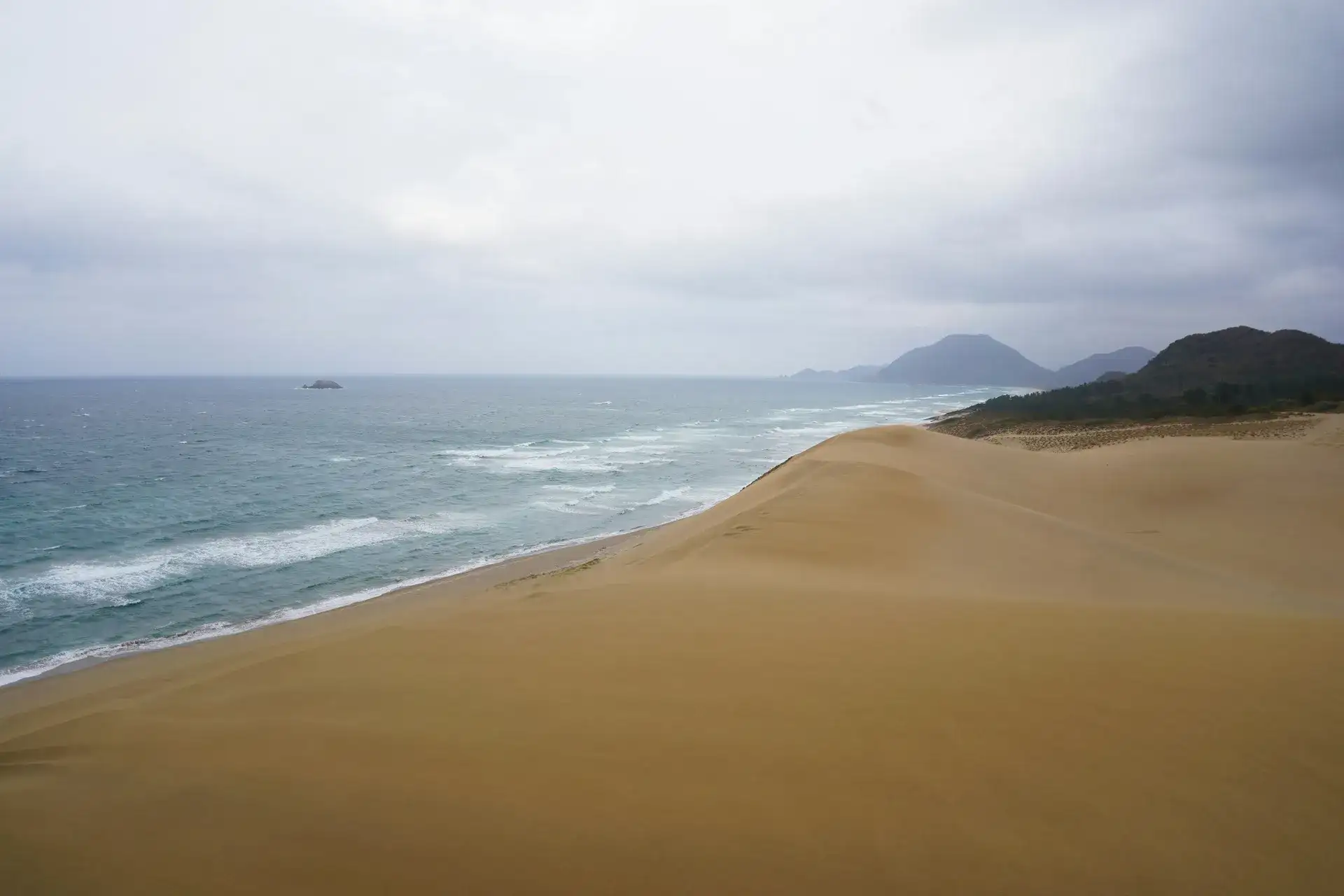
Twelve days from Imabari to Takamatsu: the oldest bath in Japan at Dōgo, the Pacific capes, the undammed Shimanto, the vine bridges of the Iya valley and the art islands of Naoshima and Teshima.
See the itinerary
Classic
Off-the-beaten-track Japan in 14 days: from the Sea of Japan to Shikoku
Japan's hidden side in two weeks: Kinosaki Onsen, the Tottori dunes, Izumo, the Shimanami Kaido and the Iya valley.
See the itinerary
Module
San'in and Setouchi in 15 days: itinerary and hotels
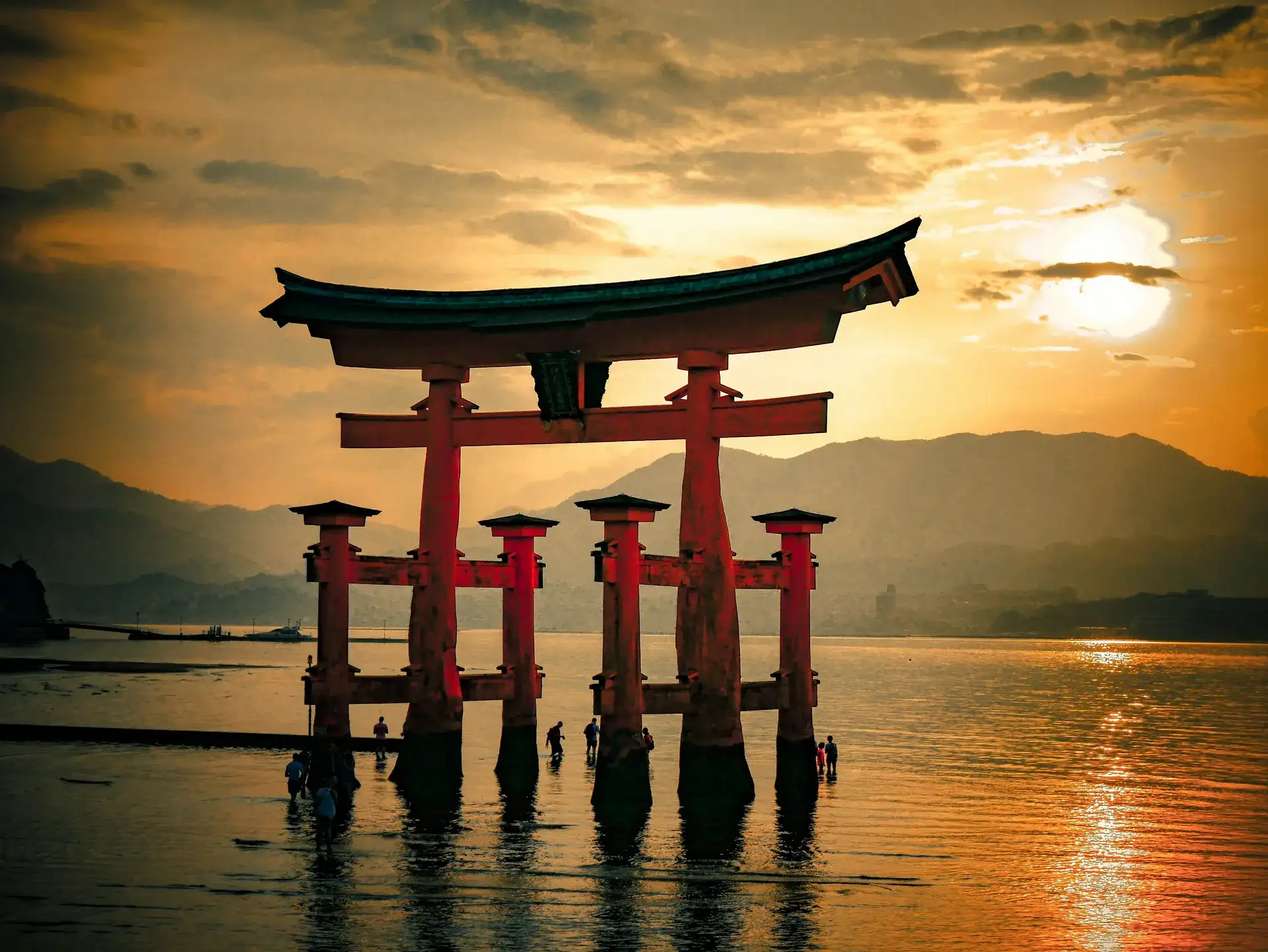
Fifteen days on the forgotten coast of the Sea of Japan, from the seven baths of Kinosaki to the dunes of Tottori and the land of the gods at Izumo, then Hiroshima, Miyajima and the six bridges of the Shimanami Kaidō.
See the itinerary
Also worth reading about Japan
Japan
Can ChatGPT plan a trip to Japan? What to check
An AI gives a good first draft of a Japan itinerary, not a guarantee. Hotels, timed tickets, closures, driving license: the checklist to follow.
Japan
Visiting Naoshima and Teshima: ferries, museums, closed days
Allow two days, one per island, between Wednesday and Sunday: Naoshima closes on Mondays, Teshima on Tuesdays. Ferries, tickets to book, where to stay.
Japan
Okinawa and Yakushima: when to go and how many days?
Okinawa and Yakushima are best visited in November or April, outside the rains and typhoons. Allow three nights per island, by plane or ferry.