Okinawa and Yakushima: when to go and how many days?
Okinawa and Yakushima are best visited in November or April, outside the rains and typhoons. Allow three nights per island, by plane or ferry.
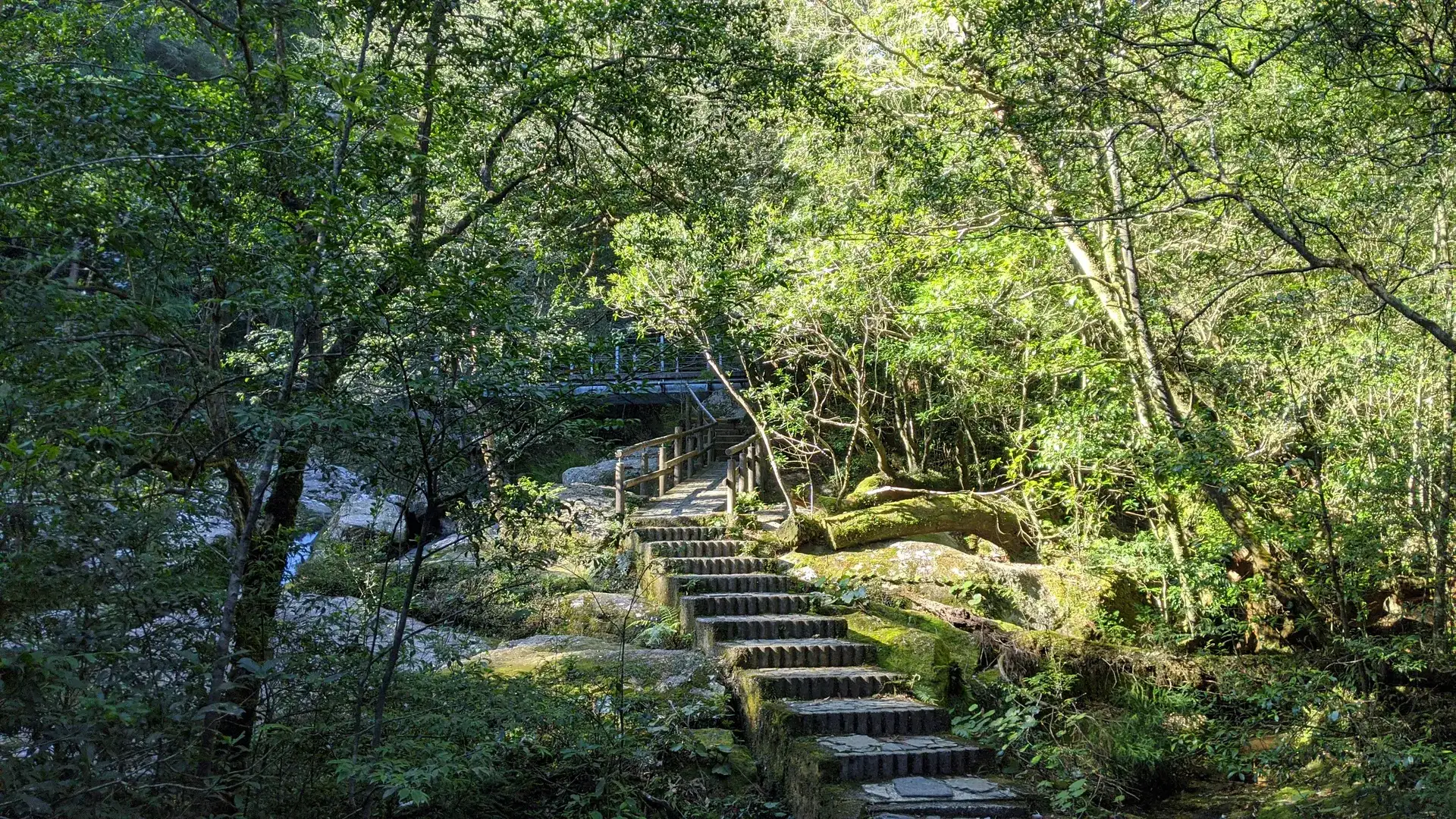
Okinawa and Yakushima are best visited in November or April: after the typhoons or before the rainy season. Allow three nights on Yakushima and three on the main island of Okinawa, which makes one week for the two. Avoid the period from May to October, when the rains and then the typhoons follow one another, and when flights and ferries are regularly canceled.
These two destinations in the south of Japan have almost nothing in common. Yakushima is a granite mountain covered in thousand-year-old cedars, where people come to walk. Okinawa is the former Ryūkyū kingdom, with reefs, a cuisine and an architecture of its own. What brings them together is their calendar.
When to go to Okinawa and Yakushima: the climate month by month
The figures below are the 1991-2020 normals of the Japan Meteorological Agency, recorded at Naha and on Yakushima. The last column gives the average number of typhoons that approach Okinawa and Amami each month.
| Month | Naha: temperature, rain | Yakushima: temperature, rain | Typhoons |
|---|---|---|---|
| January | 17.3 °C (63 °F), 102 mm (4 in) | 11.8 °C (53 °F), 295 mm (12 in) | None |
| February | 17.5 °C (64 °F), 115 mm (4.5 in) | 12.3 °C (54 °F), 289 mm (11 in) | None |
| March | 19.1 °C (66 °F), 143 mm (5.6 in) | 14.6 °C (58 °F), 387 mm (15 in) | None |
| April | 21.5 °C (71 °F), 161 mm (6.3 in) | 17.8 °C (64 °F), 406 mm (16 in) | 0.0 |
| May | 24.2 °C (76 °F), 245 mm (9.6 in) | 21.0 °C (70 °F), 444 mm (17 in) | 0.4 |
| June | 27.2 °C (81 °F), 284 mm (11 in) | 23.7 °C (75 °F), 860 mm (34 in) | 0.6 |
| July | 29.1 °C (84 °F), 188 mm (7.4 in) | 27.0 °C (81 °F), 362 mm (14 in) | 1.5 |
| August | 29.0 °C (84 °F), 240 mm (9.4 in) | 27.5 °C (82 °F), 257 mm (10 in) | 2.3 |
| September | 27.9 °C (82 °F), 275 mm (11 in) | 25.7 °C (78 °F), 451 mm (18 in) | 2.0 |
| October | 25.5 °C (78 °F), 179 mm (7 in) | 22.2 °C (72 °F), 310 mm (12 in) | 1.1 |
| November | 22.5 °C (72 °F), 119 mm (4.7 in) | 18.2 °C (65 °F), 310 mm (12 in) | 0.3 |
| December | 19.0 °C (66 °F), 110 mm (4.3 in) | 13.9 °C (57 °F), 282 mm (11 in) | 0.0 |
Three things can be read in this table.
- There is no real dry season. Naha receives more than 100 mm every month of the year, and Yakushima nearly 4,650 mm a year at sea level. Our travel book gives up to eight meters of rain a year on the island’s heights.
- November and April are the two balanced months: more than 21 °C in Naha, moderate rain, and a low or zero typhoon risk.
- Winter is the least rainy time, but the coolest: 17 °C in Naha in January, 12 °C on Yakushima.
Our travel book picks April, May and November as the safest months, our product page March, April and November. November and April are unanimous. March is cooler, and May only holds in its first half in Okinawa. For the rest of the country, see when to go to Japan, region by region.
Rainy season and typhoons: the months to avoid
The rainy season does not arrive at the same time on the two islands. According to the normal dates of the Japan Meteorological Agency:
- Okinawa: from about May 10 to June 21.
- Yakushima, attached to southern Kyūshū: from about May 30 to July 15. June alone totals 860 mm (34 in) of rain there.
The typhoons then take over. Nearly eight approach Okinawa and Amami each year, most of them between July and October, with a peak in August and September. These dates are thirty-year averages: each year shifts the calendar by a few days or a few weeks.
Watch out: In the event of a typhoon, Yakushima’s flights are the first to be canceled, and the ferries do not sail. Never schedule a tight international flight behind a crossing or a flight from the island: keep a day in hand.
How to get to Yakushima: plane or ferry from Kagoshima
Everything goes through Kagoshima, in the south of Kyūshū. From Tokyo Haneda, it is a two-hour flight to Kagoshima, then there are three options.
| Link | Duration | Adult price, one way |
|---|---|---|
| Kagoshima-Yakushima plane | About forty minutes | Varies with the date |
| Toppy & Rocket hydrofoil | 1 h 50 direct, longer with a stop | ¥14,000 (¥25,900 return) |
| Ferry Yakushima 2 | 4 h, one departure a day at 8:30 | ¥7,000 in 2nd class |
These prices and timetables are those of the operators at the time of writing, in October 2026. The hydrofoil timetable changes with the season: check it again on the website of the operator, which only confirms each departure one hour before sailing. The hydrofoil serves two ports on the island, Miyanoura and Anbō, depending on the rotation. The ferry arrives in Miyanoura at 12:30 and leaves again at 13:30: it does not require a booking for a foot passenger.
The planes that serve Yakushima are small, and their baggage allowance is lower than on the main routes: check the weight limits when you book.
To go on to Okinawa afterwards, you go back through Kagoshima: a forty-minute flight, then one hour twenty to Naha. The return from Naha to Tokyo Haneda takes two and a half hours.
How many days on Yakushima and what to do on the island
Three nights are the right format, because the flagship hike takes a whole day.
- Jōmon-sugi, the oldest cedar on the island: 22 km (14 mi) there and back, eight to ten hours of walking, about 800 meters (2,620 ft) of elevation gain.
- Shiratani Unsuikyō, the moss forest, on circuits of one to five hours.
- Yakusugi Land, easy loops among the old cedars, at an altitude of 1,000 meters.
- The coast: the Ōko waterfall, 88 meters in a single drop, and the Hirauchi rock bath, accessible only for two hours before and after low tide.
Tip: From March 1 to November 30, the road to the Arakawa trailhead, towards Jōmon-sugi, is closed to private cars. The shuttle is compulsory, its first departure is at around 5:00 in the morning, and the ticket is bought the day before.
It rains more or less all the time at altitude: bring a waterproof jacket and trousers, not just a windbreaker. For sleeping, the Anbō and Miyanoura areas are the island’s two ports; the hotels have few rooms and are booked early.
How many days in Okinawa and what to see on the main island
Three nights cover the essentials of the main island: one in Naha, two in the north, on the Motobu peninsula, a two-hour drive away.
- In Naha: Shuri Castle and the Tamaudun royal mausoleum, the Shikinaen garden, the Tsuboya potters’ street, Makishi market.
- In Motobu: the Churaumi aquarium and its whale shark tank, for which you should allow three hours, the fukugi tree road in the village of Bise, Emerald Beach.
A car is necessary on both islands, and the rental companies have few of them: they go quickly in high season. The driving and license rules are in renting a car in Japan, and the full list of what gets booked up early is in what to book in advance in Japan.
So, when should you go to Okinawa and Yakushima, and for how long?
- The best choice: November or April, one week, three nights on each island.
- The second choice: March, cooler, or the first week of May, before the rains in Okinawa.
- Winter: possible in Okinawa for sightseeing, less so for Yakushima, cold and always damp.
- To avoid: from mid-May to October, and above all August and September.
Our itinerary Yakushima and Okinawa in 7 days follows this split: 18 places, six nights, flights via Kagoshima and a car on each island. If you arrive via the south of Kyūshū, it follows on naturally after Kyūshū in 25 days, which ends in Kagoshima. To place this week in a wider trip, see how many days to allow in Japan and the Japan page.
When can you see the turtles on Yakushima?
From May to July, on Nagata Inakahama beach, the leading nesting site of the loggerhead turtle in the North Pacific. At night, the beach is then regulated: observation is done accompanied, by registering with the local association and in limited numbers, with no flashlight, no flash and your phone switched off. During the day, the beach remains freely accessible. This period overlaps with the island's rainy season.
Can you see the moss forest of Yakushima without doing the Jōmon-sugi trek?
Yes, they are two separate sites. The moss forest is at Shiratani Unsuikyō, above Miyanoura, on three circuits of one to five hours: the short loop, one hour, is enough to see the essentials. The rocks are very slippery, and shoes with a good sole are essential. Yakusugi Land, at an altitude of 1,000 meters (3,300 ft), also offers four loops of thirty minutes to two hours fifty among the old cedars.
Is Shuri Castle open to visitors?
Yes, but its main hall has been under reconstruction since the fire of October 2019. The building site is open to the public and is part of the visit, with the accessible areas being extended in stages. The ramparts and the gates are original and listed as World Heritage. Check the state of the works and the opening hours on the castle's official website before you go.
Do you need cash on Yakushima?
Yes. Many of the island's shops and the Hirauchi rock bath only accept cash, and cash machines are rare. It is best to withdraw yen in Kagoshima before the crossing, or in Anbō once you are there.
What are the dangers to know about in Okinawa?
Three, according to our travel book: habu snakes in the undergrowth, strong currents outside the supervised beaches, and coral, which cuts and quickly becomes infected. Water shoes are recommended for walking on the reef. On Yakushima, there is no referral hospital for serious emergencies and evacuation is to Kagoshima: insurance covering medical expenses and repatriation is essential.
From research to departure
Travelling in Japan
This article comes out of a complete itinerary in Japan: the day-by-day program, hotels named with their booking link, and the tickets to book flagged in advance.
Module
Yakushima and Okinawa in 7 days: itinerary and hotels
Seven days in the subtropical south: the thousand-year-old cedar forest of Yakushima and the Jōmon-sugi trek, then the Ryūkyū kingdom, the potters' street of Naha, the fukugi road of Bise and the Churaumi aquarium.
See the itinerary
Module
Kyūshū in 25 days: day-by-day itinerary and hotels
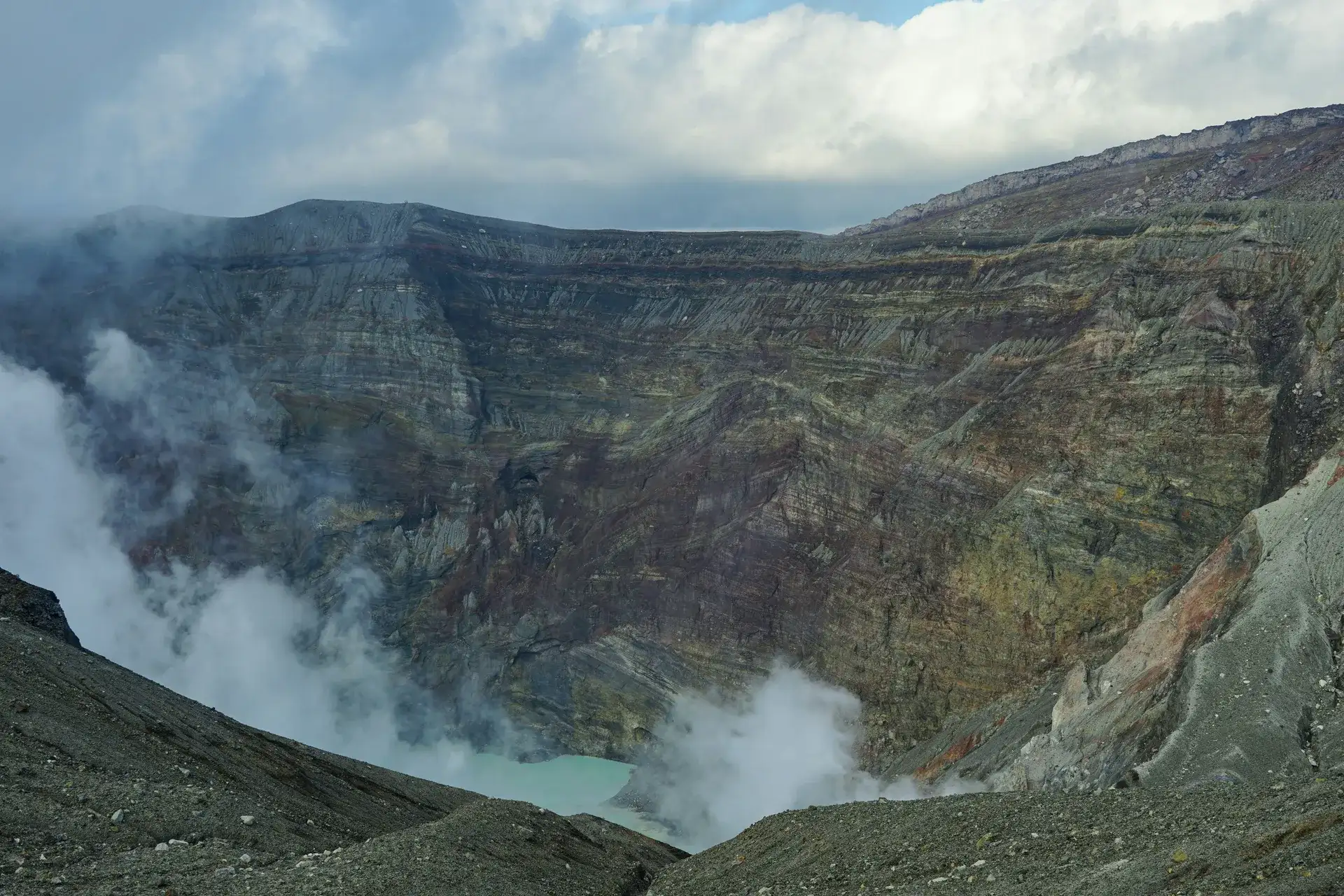
Twenty-five days on the island of volcanoes and baths, from Fukuoka to Nagasaki, from the ghost island of Hashima to the crater of Aso, from the hells of Beppu to the Takachiho gorge and on to Sakurajima.
See the itinerary
Also worth reading about Japan
Japan
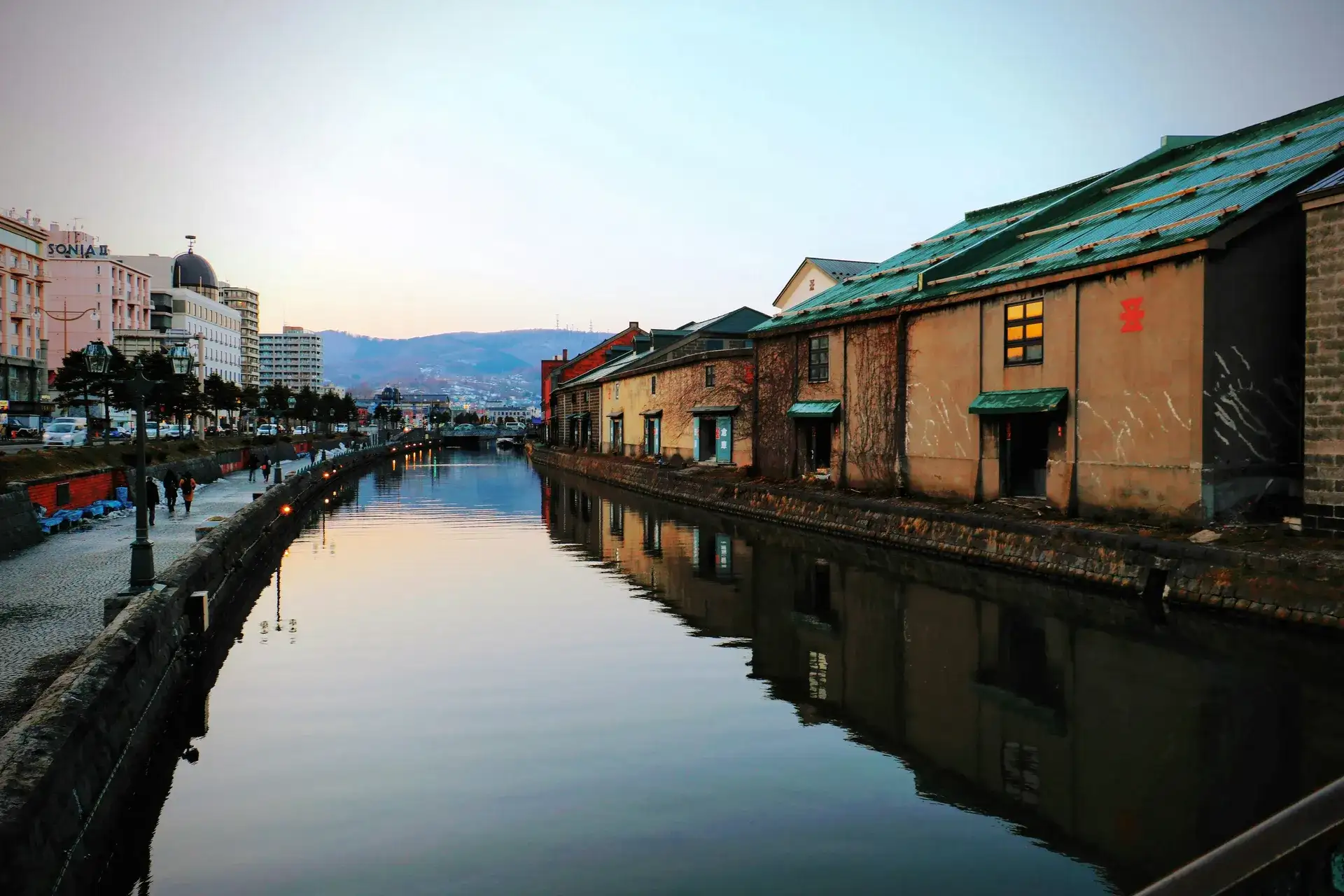
Can ChatGPT plan a trip to Japan? What to check
An AI gives a good first draft of a Japan itinerary, not a guarantee. Hotels, timed tickets, closures, driving license: the checklist to follow.
Japan
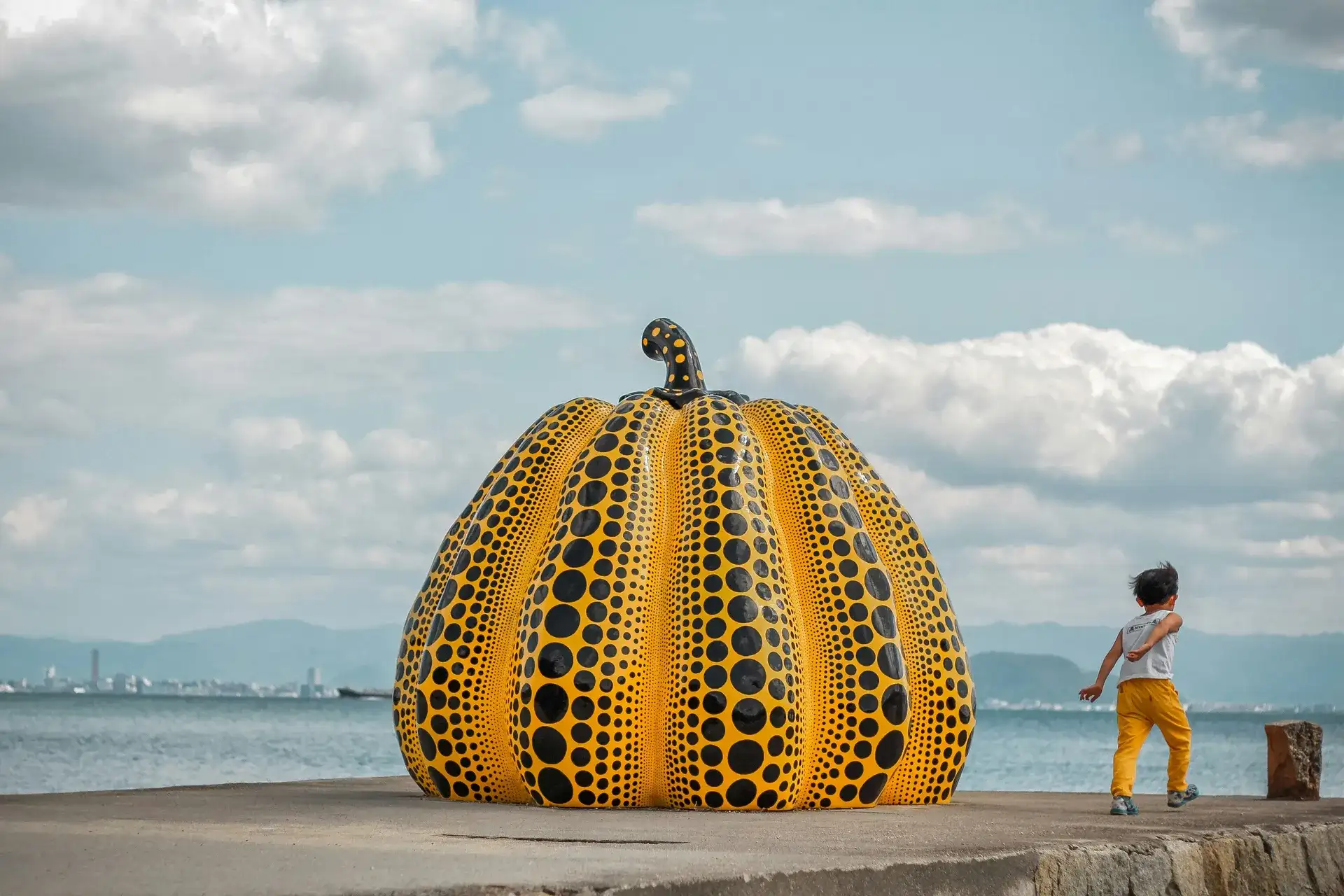
Visiting Naoshima and Teshima: ferries, museums, closed days
Allow two days, one per island, between Wednesday and Sunday: Naoshima closes on Mondays, Teshima on Tuesdays. Ferries, tickets to book, where to stay.
Japan
Shikoku: which itinerary and how many days to visit the island
Five days to cross Shikoku, eight with the upper Iya valley and the art islands, twelve for the full loop. By car, in April, May or November.