Skip to content
Étaperia

Kyūshū in 25 days: day-by-day itinerary and hotels

Twenty-five days on the island of volcanoes and baths, from Fukuoka to Nagasaki, from the ghost island of Hashima to the crater of Aso, from the hells of Beppu to the Takachiho gorge and on to Sakurajima.

Sequenced by Kylian Updated on 5 September 2026

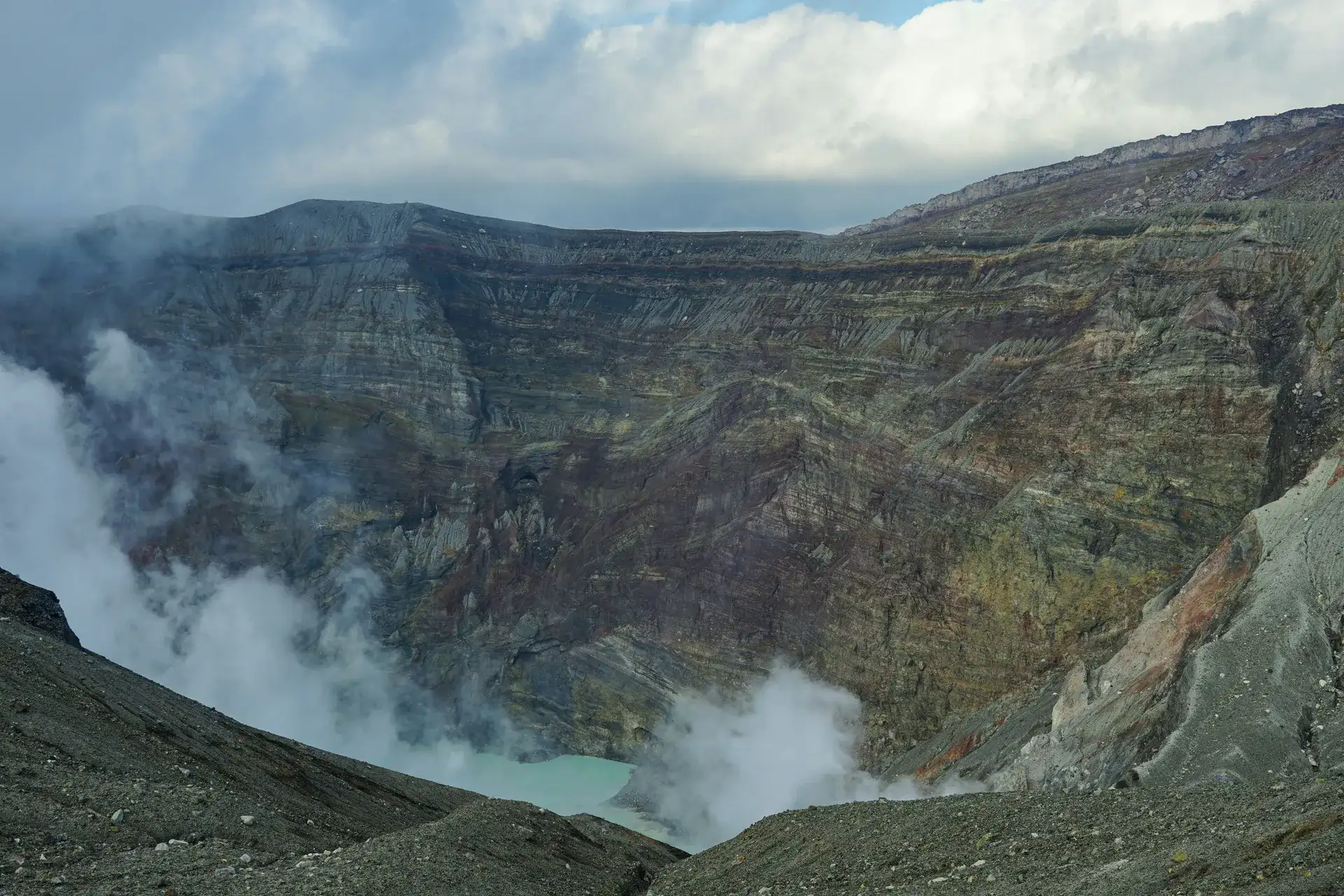
The steaming crater of Mount Aso and its turquoise lake
  • 25 days
  • 56 places
  • 24 nights
  • sustained pace
Start
Fukuoka
End
Kagoshima, return flight via Tokyo
Main transport
Hire car, two ferries that take the vehicle on board, one Takamatsu-Fukuoka flight to open the stage
Recommended season
April and May for the azaleas, October and November for the maples; avoid August and September, the typhoon season

What you get

  • The complete itinerary: 25 days sequenced Morning / Afternoon / Evening / Hotel
  • The card of every hotel, with the address and a direct booking link
  • Quota tickets, fixed-date tickets and surcharges flagged in advance
  • The country quick guide: weather, transport, formalities, budget
  • A PDF file of 49 pages

What the price does not include

  • Flights
  • Hotel nights
  • Tickets and admission fees
  • Travel insurance
  • On-the-ground assistance during your trip

The travel book preview

The free day in full, with its hotel card. This is the sample.

Day 18

The eight hells of Beppu

Morning

The hells of Beppu

An hour and a half's drive north-east. Beppu produces more hot water than any other city in Japan, and ranks second in the world after Yellowstone: two thousand springs and more than ninety thousand tonnes a day. Seven sites, called jigoku, too hot to bathe in, are laid out to be looked at. The Umi Jigoku is a cobalt blue pool at ninety-eight degrees, the colour coming from iron sulphate. The Oniishi Bōzu bursts bubbles of grey mud that look like the shaven heads of monks. The Chinoike Jigoku, the hell of the blood pond, is brick red from iron oxide. The Tatsumaki Jigoku is a geyser that erupts every thirty to forty minutes.

Afternoon

Kaihin sand baths and Takasakiyama

At the sand baths of Beppu Kaihin, you are buried up to the neck in beach sand heated by the spring beneath, right on the shore: attendants shovel the sand over you and come to dig you out after ten minutes or so. The practice is attested here since the nineteenth century. The Takasakiyama, a hill south of the city, is home to fifteen hundred free-ranging Japanese macaques in two troops that take turns at the feeding ground according to a strict hierarchy, studied by primatologists since 1953.

Evening

Beppu viewpoint

Up on the heights, it shows the whole bay at night and the columns of steam rising from the spa districts, lit up: it is the view that earned the city the nickname of the city of a thousand smokes.

Good to know

A combined ticket covers all seven hells. Allow two to three hours including the travel, as the sites are split into two groups a few kilometres apart.
Hotel · Night 18

Hotel Shiragiku

A spa establishment in central Beppu, running since the 1950s, with several baths fed by its own spring and an outdoor garden bath. Well placed for reaching the hells and the seafront. Seven minutes' walk from Beppu station along Aoyama avenue, free parking.

Address
· 16-36 Ueda-no-yu-machi, Beppu, Ōita 874-0908
Check-in
3:00 PM · Check-out 11:00 AM
Book this hotel (new tab)

Buy this itinerary

€39 incl. tax

that is €1.56 per day of travel

The buy button becomes active once the box is ticked.

  • Secure payment through Stripe, bank card, Apple Pay and Google Pay
  • Available immediately in your customer account: online reading with clickable booking links, downloadable PDF for offline use
  • Method: what is checked, and when

A hotel in the itinerary closed or impossible to find, a place to visit permanently closed?

Within 12 months of purchase, email contact@etaperia.com

Itinerary corrected within 7 days, or refunded in full. Terms in article 12 of the T&Cs, on top of the legal warranty (new tab)

€39 incl. tax · 25 days

Buy

A question before buying? Email Kylian, reply within 48 working hours.

The day-by-day rundown

23 stops, 800 km as the crow flies

  1. Day 1 Fukuoka and the street stalls Canal City Hakata Day reserved for buyers, unlocked in the PDF
  2. Day 2 The castle, the parks and the seafront Castle ruins, Maizuru and Ōhori parks Day reserved for buyers, unlocked in the PDF
  3. Day 3 Dazaifu, the reclining Buddha and the canals Dazaifu Tenman-gū Day reserved for buyers, unlocked in the PDF
  4. Day 4 Yoshinogari and Arita porcelain Yoshinogari site Day reserved for buyers, unlocked in the PDF
  5. Day 5 Huis Ten Bosch Huis Ten Bosch Day reserved for buyers, unlocked in the PDF
  6. Day 6 Nagasaki, the hypocentre Peace Park and hypocentre Day reserved for buyers, unlocked in the PDF
  7. Day 7 The Nagasaki of foreigners Glover Garden Day reserved for buyers, unlocked in the PDF
  8. Day 8 Hashima, the abandoned island Hashima, the abandoned island Day reserved for buyers, unlocked in the PDF
  9. Day 9 The hells of Unzen and the ferry to Kumamoto Unzen Jigoku Day reserved for buyers, unlocked in the PDF
  10. Day 10 Kumamoto Castle and the Tōkaidō garden Kumamoto Castle Day reserved for buyers, unlocked in the PDF
  11. Day 11 Museums and Musashi's cave Contemporary Art Museum and prefectural museum Day reserved for buyers, unlocked in the PDF
  12. Day 12 The One Piece trail, part one The One Piece trail, part one Day reserved for buyers, unlocked in the PDF
  13. Day 13 Towards the Amakusa islands Towards the Amakusa islands Day reserved for buyers, unlocked in the PDF
  14. Day 14 Sakitsu, the dolphins, then Aso Sakitsu village Day reserved for buyers, unlocked in the PDF
  15. Day 15 The One Piece trail, part two Takamori Yūsui Tunnel Park Day reserved for buyers, unlocked in the PDF
  16. Day 16 Mount Aso and its caldera Nakadake crater Day reserved for buyers, unlocked in the PDF
  17. Day 17 The Kujū mountains and Kurokawa Onsen Tadewara peat bogs and the Makinotō path Day reserved for buyers, unlocked in the PDF
  18. Day 18 The eight hells of Beppu The eight hells of Beppu Free
  19. Day 19 Yufuin, the lake and the mountain Lake Kinrin Day reserved for buyers, unlocked in the PDF
  20. Day 20 Takachiho, where the myths are born Takachiho gorge Day reserved for buyers, unlocked in the PDF
  21. Day 21 Miyazaki and the Nichinan coast Miyazaki-jingū and Heiwadai Park Day reserved for buyers, unlocked in the PDF
  22. Day 22 Udo, cape Toi and the Ebino plateau Udo-jingū Day reserved for buyers, unlocked in the PDF
  23. Day 23 Sakurajima and Kagoshima Sakurajima Day reserved for buyers, unlocked in the PDF
  24. Day 24 A day with no programme A day with no programme Day reserved for buyers, unlocked in the PDF
  25. Day 25 Kagoshima, Tokyo, Paris Kagoshima, Tokyo, Paris Day reserved for buyers, unlocked in the PDF

Found an error in this itinerary? Report an error

Country quick guide and logistics

The essentials of the country, scannable in ten seconds.

Weather and when to go

  • Kyūshū is mild in winter and heavy in summer, with a marked rainy season in June and July.
  • April and May for the azaleas of Aso and Ebino, October and November for the maples and the seas of cloud at Daikanbō and Kunimigaoka.
  • Kyūshū is the region of Japan most exposed to typhoons, with a peak in August and September: roads cut, ferries and flights cancelled. Avoid those two months if possible.

Transport and permits

  • Two crossings take the vehicle on board, Shimabara-Kumamoto and Sakurajima: check that the rental contract allows it, several Japanese hire companies exclude it or require a prior declaration. For Hashima, the car stays in Nagasaki.
  • Three sites depend on an alert level reassessed continuously: the crater of Nakadake at Aso, the plateau of Ebino and Sakurajima. Closures are frequent, decided on the day itself and unrelated to the weather: check the websites of the municipalities concerned every morning.
  • Bookings not to forget: the cruise to Hashima with a licensed operator, with a fallback slot in case of rough seas, the boat in the Takachiho gorge, the Huis Ten Bosch ticket over two days and the Amakusa dolphin cruise.

Formalities and safety

  • Valid passport, no visa for a tourist stay of 90 days maximum. This stage closes the second stay of the Japanese route, which runs to eighty-six days: four days of margin, no more. Keep the outbound ticket to hand, it may be asked for.
  • Sulphurous gas at Unzen, Beppu, Aso and Ebino: respect the closed zones, approach is not advised for people who are asthmatic or have heart conditions.
  • Habu snakes in the scrub in the south. Travel insurance with medical costs and repatriation is essential.

Budget and meals

  • Japanese yen. Cash essential at Amakusa, in Aso, at Kurokawa and at Takachiho.
  • Indicative meal budget: ¥800 to ¥1,500 at midday, ¥2,000 to ¥3,500 in the evening. The specialities are worth the detour: tonkotsu ramen in Fukuoka, champon in Nagasaki, basashi and red beef in Kumamoto, black pork and sweet potato shōchū in Kagoshima.
  • Left to you: the return flight, admission to Huis Ten Bosch, the Hashima cruise, the cable cars, the Yanagawa and Takachiho boats, the tickets for the Beppu hells and the sand baths.

Frequently asked questions

What exactly do I receive?

Your Étaperia itinerary, available immediately in your customer account after payment: readable online with clickable booking links, and downloadable as a PDF for the trip. Every day is sequenced Morning / Afternoon / Evening, with the hotel for each night, its address and its booking link, and timed-entry tickets flagged in advance.

How is this better than what an AI gives me?

A generative AI composes a plausible list in seconds, without saying what was checked or when. At Étaperia, every itinerary is sequenced by hand, place by place, with the booking constraints spotted before it is too late to get them. The Method page says what is checked, against which source and on what date.

Can I adapt it to my dates and my pace?

Yes. The days are self-contained blocks: you can shift the departure, stretch a stage or skip a day without breaking what follows. Only timed-entry tickets require adjusting the dates accordingly, and they are all flagged.

What if a hotel or a place in the itinerary has closed?

Email contact@etaperia.com within 12 months of your purchase. If a hotel in the itinerary is closed or can no longer be found, or a place to visit has closed permanently, the itinerary is corrected in your customer account within 7 days, or you are refunded in full. A hotel fully booked on your dates, a seasonal closure or a change in opening hours or prices is not covered. This guarantee comes on top of the legal warranty of conformity; details in article 12 of the terms and conditions of sale.

Who is selling you this itinerary

  • Kylian, sole trader, SIRET 927 587 709 00035
  • Consumer mediator: ANM Consommation
  • Payment handled by Stripe: Étaperia never sees your card number
  • Publisher, not a travel agency: you book flights, hotels and tickets yourself

In the same country

This module is one leg of the full itinerary: Japan itinerary: 86 days across Kyoto, Shikoku and Kyūshū, hotels and bookings

For a first trip to the country, see instead: Hokkaido in 14 days: Japan's great north from Sapporo to Hakodate

The complete itinerary

The classic itineraries

Or take it one module at a time

To read before you go

Our articles about Japan

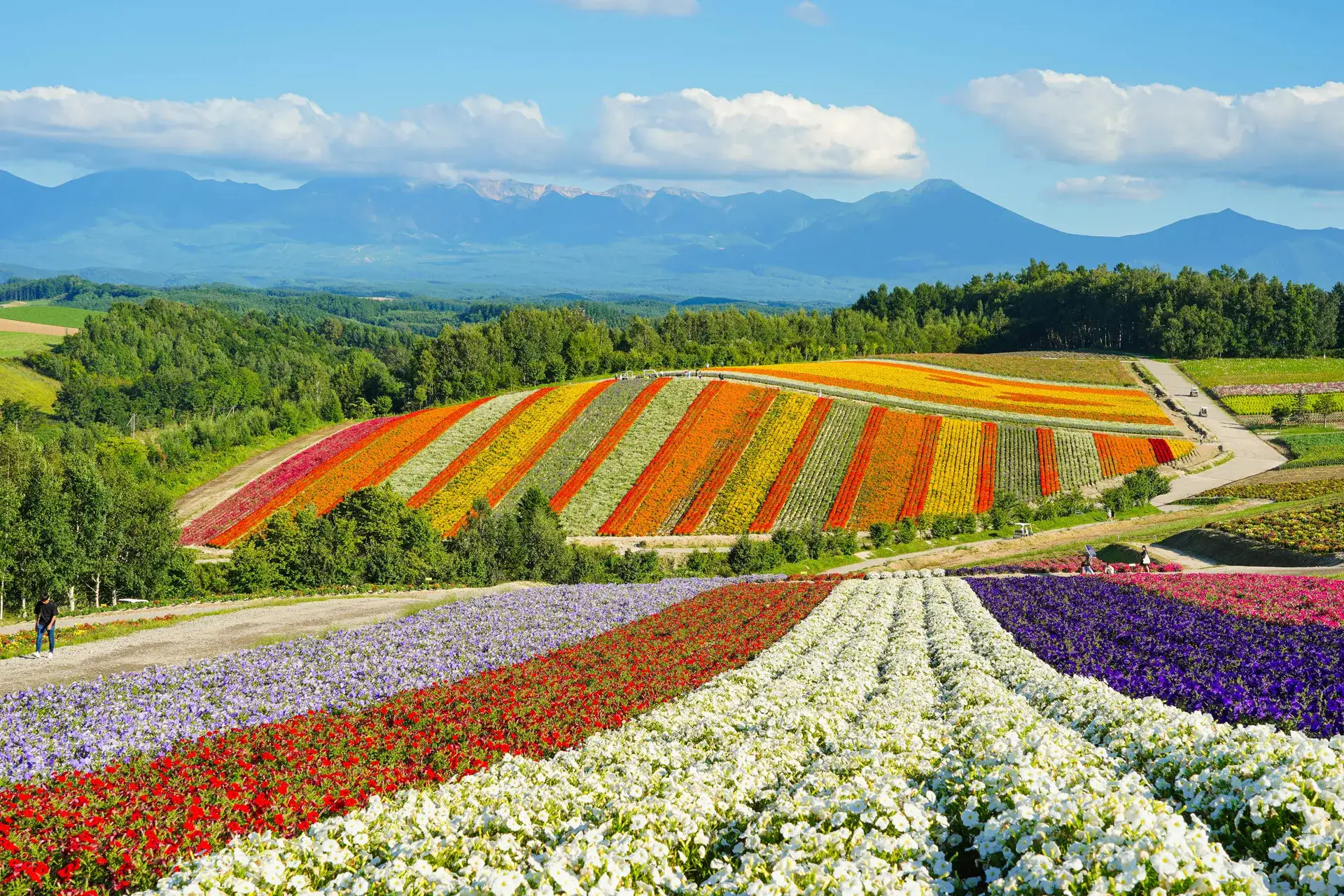
The bands of flowers on the hills of Biei, in Hokkaidō

Japan

How many days do you need for Hokkaidō?

Fourteen days are enough to loop Hokkaidō from Sapporo to Hakodate. You need eighteen to add the far north and the climb up Rishiri-Fuji.

Read the article
All the blog articles