Day 14
Into Shiretoko, the end of the world
Morning
Lake Tōfutsu
A brackish lagoon separated from the sea by the Koshimizu dune ridge, a major stopover for migratory birds, whooper swans and cranes.
Oshinkoshin waterfall
An hour and a half's drive along the coast, to this fall that splits into two arms right at the edge of the main road, a few metres from the sea. A short staircase, spray guaranteed: it is the park's opening statement.
Afternoon
Shiretoko National Park
Inscribed as World Heritage in 2005, the peninsula is one of the most intact ecosystems in Japan: the density of brown bears is among the highest in the world, and the seasonal drift ice feeds the whole food chain up to the sea eagles.
Five Lakes of Shiretoko
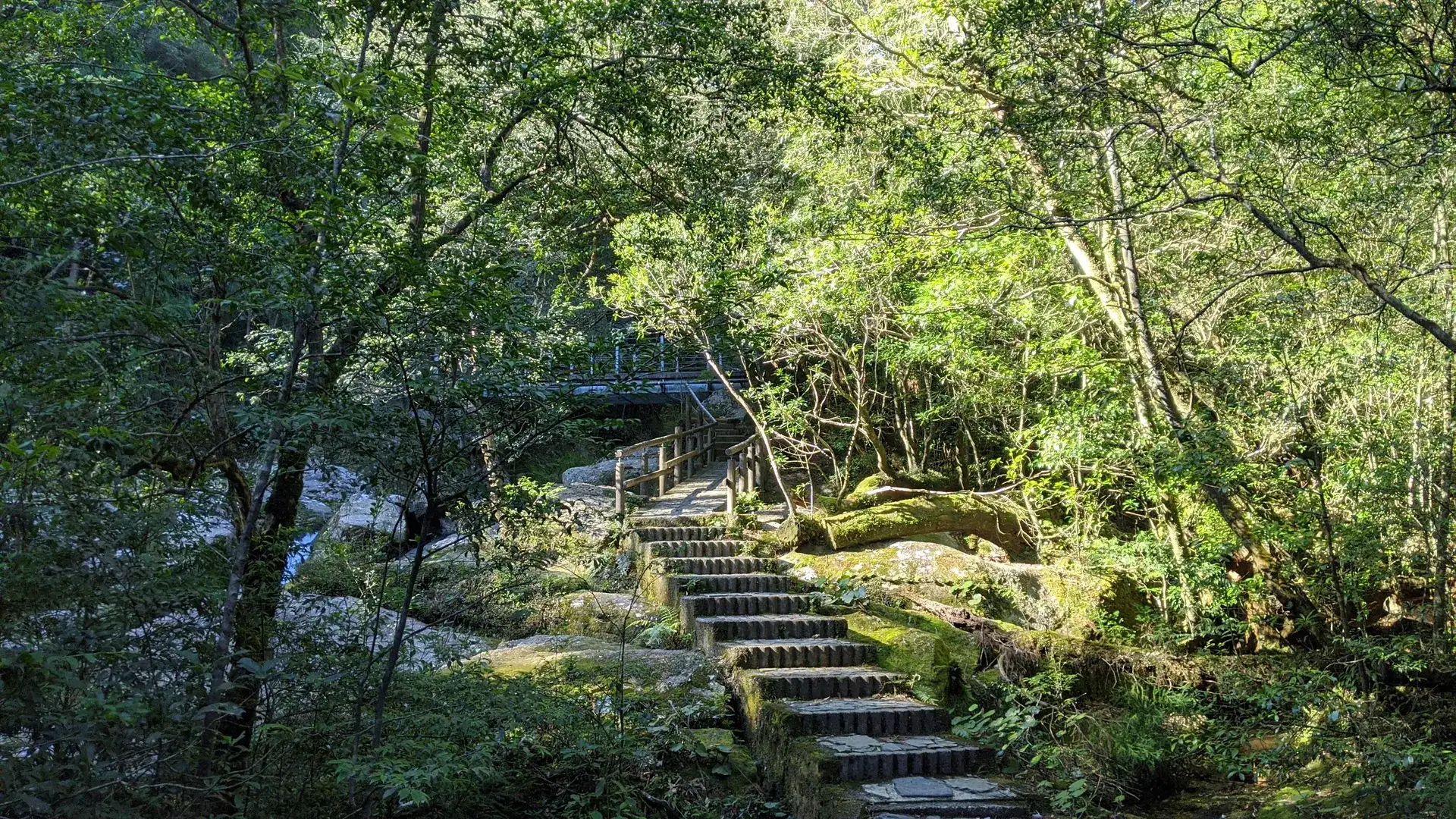
Five forest lakes reflecting the Shiretoko mountains, linked by a 3 km loop. The long loop is only accessible with an approved guide during the sensitive bear period; the 800 m raised boardwalk, protected by an electric fence, stays free and open all season.
Booking · Booking and time slots: www.goko.go.jp/multilingual_eng/ (new tab)
Evening
Cape Puyuni
The viewpoint above Utoro, facing due west over the Sea of Okhotsk. It is the best sunset on the peninsula: the sea, the successive capes, and in winter the ice advancing.
Good to know
Five Lakes of Shiretoko: during the brown bear period, 10 May to 31 July, the ground-level paths are only accessible with an approved guide, booked in advance (per adult, from ¥6,000 for the long loop depending on the agency, ¥4,000 for the short one). Before and after that period, from the road's opening around mid-April to its closure in November, you need a ticket (¥450) and a compulsory briefing of about ten minutes at the visitor centre, with no booking needed for groups under 15. The 800 m raised boardwalk stays free and open all season. Opening and closing dates change each year.