Day 16
The praying hands of Suganuma and Shirakawa-gō
Morning
Suganuma
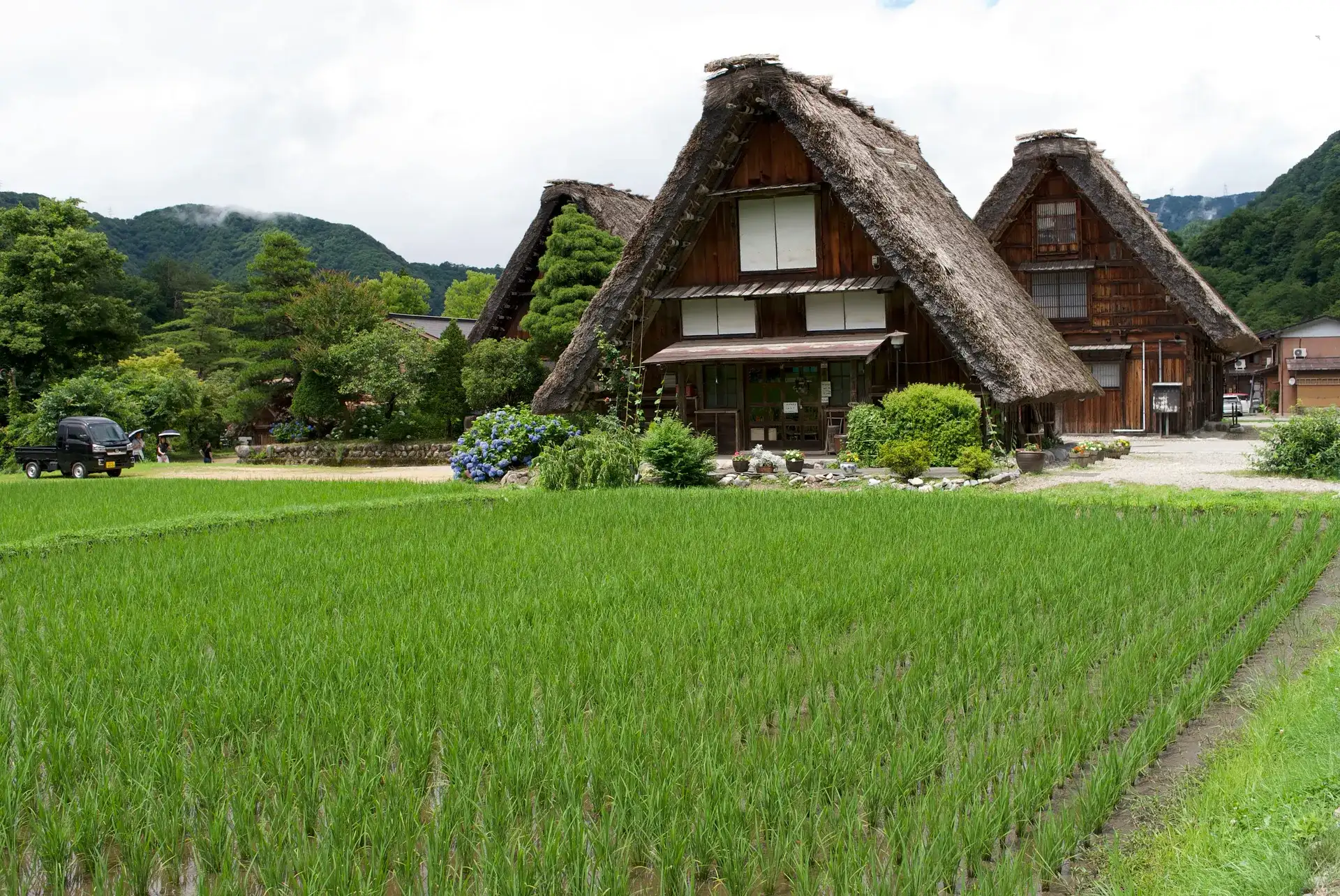
The smallest of the three World Heritage hamlets of the Gokayama valley: just nine gasshō-zukuri houses set in a bend of the Shō river. The name of the style means hands joined in prayer, after the very steep pitch of the thatched roofs, calculated to carry several metres of snow. Gunpowder for the Maeda was made here, from saltpetre produced under the floorboards of the houses. Almost nobody, unlike Shirakawa-gō.
Afternoon
Shirakawa-gō
Forty minutes' drive. The village of Ogimachi has about a hundred thatched-roof houses, some of them more than two hundred and fifty years old and three or four storeys high: silkworms were raised under the roof. The thatch is redone every thirty to forty years, in a single day, by the whole community together.
Wada house and the Shiroyama viewpoint
See the Wada house, the largest, the one of the village headman, and climb to the Shiroyama viewpoint for the overall view in its cirque of mountains. The village is lived in and farmed: it is not a museum.
Evening
Ogimachi after the visitors leave
The village empties of its visitors at 5:00 PM, and that is the moment that counts. Dinner around the farmhouse's central irori hearth, river fish grilled on skewers and mountain vegetables.