Skip to content
Étaperia

Kyoto in 14 days: day-by-day itinerary and hotel

Fourteen nights in a single base to cross a thousand years of capital, district by district: Fushimi Inari, Kiyomizu-dera, Kinkaku-ji, Arashiyama, the Katsura villa, Ōhara and Takao.

Sequenced by Kylian Updated on 5 September 2026

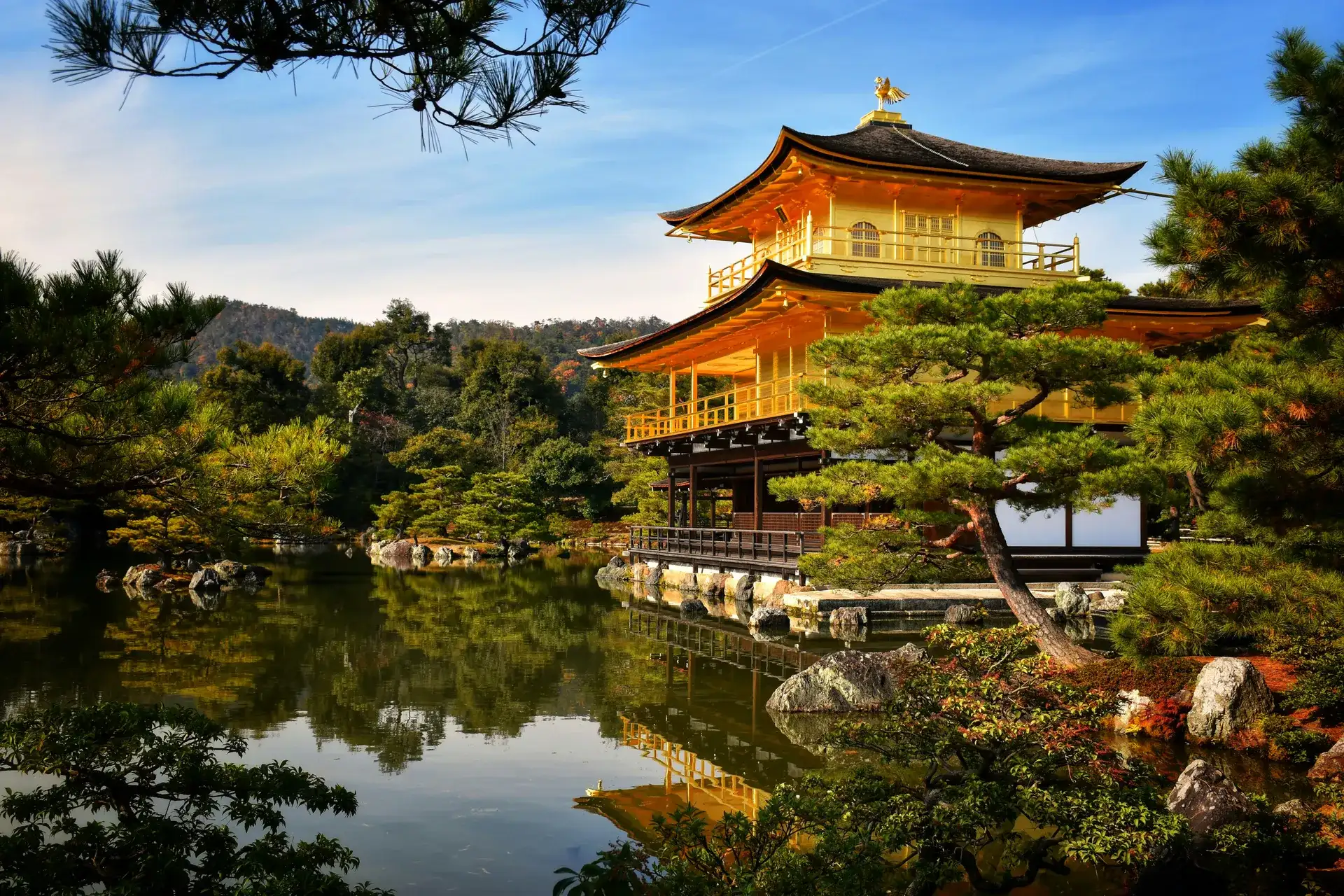
Kinkaku-ji, the Golden Pavilion, mirrored in its pond
  • 14 days
  • 57 places
  • 14 nights
  • sustained pace
Start
Kyoto, Nakagyō district
End
Kyoto, same base
Main transport
Buses and two metro lines with an IC card; the car is only useful for Uji, Kurama, Ōhara and Takao
Recommended season
March to May and October to November; May and October are the best compromise, April's cherry blossom and November's maples double the prices; avoid July-August

What you get

  • The complete itinerary: 14 days sequenced Morning / Afternoon / Evening / Hotel
  • The card of every hotel, with the address and a direct booking link
  • Quota tickets, fixed-date tickets and surcharges flagged in advance
  • The country quick guide: weather, transport, formalities, budget
  • A PDF file of 32 pages

What the price does not include

  • Flights
  • Hotel nights
  • Tickets and admission fees
  • Travel insurance
  • On-the-ground assistance during your trip

The travel book preview

The free day in full, with its hotel card. This is the sample.

Day 3

Higashiyama, from Kiyomizu to Gion

Morning

Kiyomizu-dera

Founded in 778 around a spring, hence its name, the temple of pure water. Its terrace, thirteen metres above the slope, rests on a timber frame of zelkova pillars assembled without a single nail. The Japanese expression for taking the plunge, literally jumping from the Kiyomizu terrace, comes from here: two hundred and thirty-four jumps were recorded in the Edo period, with an 85% survival rate. Below, the Otowa waterfall is drunk from a ladle.

Sannenzaka, Ninenzaka and Yasaka Kōshin-dō

Two paved, sloping lanes lined with wooden houses and shops, listed as a preservation district: tradition says that tripping there brings bad luck for three years or two years, depending on the street. The small Yasaka Kōshin-dō, in the middle, is covered with thousands of coloured cloth balls, the kukurizaru, one wish per ball and one desire to give up in exchange.

Afternoon

Yasaka-jinja and Maruyama Park

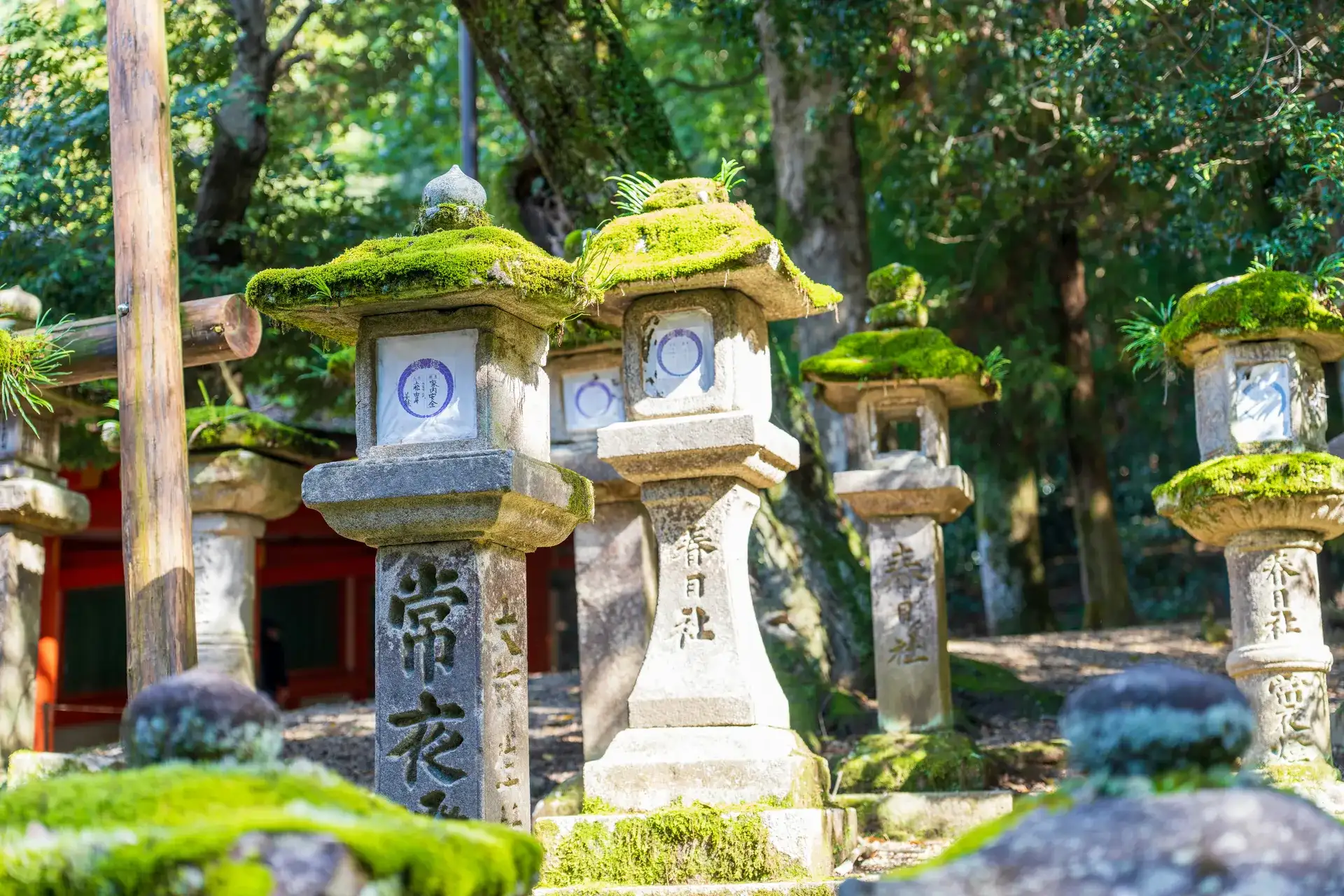
Founded in 656, the Gion shrine has organised the Gion Matsuri since 869, the largest festival in Japan, born of a vow to stop an epidemic. Its lanterns carry the names of the restaurants that fund them. The neighbouring Maruyama Park is the oldest public park in the city and its historic hanami spot.

Chion-in

The headquarters of the Jōdo school, founded in 1234 on the spot where the monk Hōnen died. Its 1619 Sanmon gate, twenty-four metres high, is the largest wooden temple gate in Japan, and its 1636 bell weighs seventy tonnes: seventeen monks ring it together at New Year.

Kōdai-ji and Entoku-in

The Kōdai-ji was founded in 1606 by Hideyoshi's widow: a garden by Kobori Enshū, a thatched-roof tea house, period lacquerware. The Entoku-in next door keeps its painted sliding doors and a remarkable dry garden.

Evening

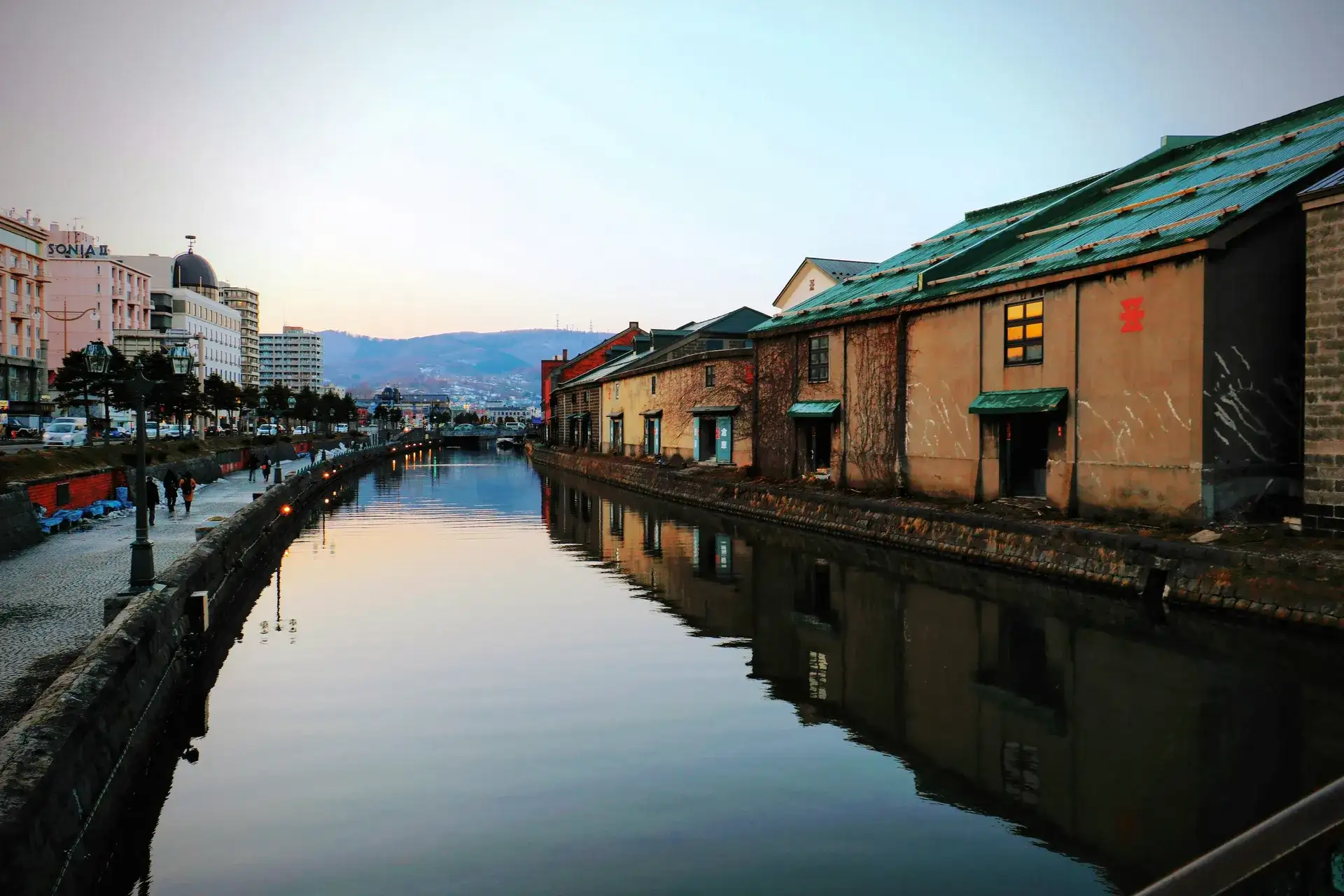
Shirakawa Canal

The Shirakawa canal in Gion, lined with willows and wooden houses, is Kyoto's most photogenic corner without being the busiest: it is best walked along at dusk, when the restaurant lanterns light up.
Hotel · Night 3

RESI STAY Mayu Grace Hotel

Twenty-three apartments in the Horikawa-Oike district, five minutes' walk from Nijōjō-mae station and eight from the castle. Mayu means silk cocoon: the lobby echoes the motifs of the Rinpa school, and the hotel occupies the same building as a yūzen workshop, Kyoto's hand-painted dyeing craft. Every room has a kitchenette with a hob, microwave and fridge, a Simmons mattress, and at least 34 m², which changes everything over fourteen nights. Single base for the whole stage.

Address
· 457-2 Tsuboya-chō, Ogawa-dōri, Nakagyō-ku, Kyoto 604-8276
Check-in
3:00 PM · Check-out 11:00 AM
Book this hotel (new tab)

Buy this itinerary

€39 incl. tax

that is €2.79 per day of travel

The buy button becomes active once the box is ticked.

  • Secure payment through Stripe, bank card, Apple Pay and Google Pay
  • Available immediately in your customer account: online reading with clickable booking links, downloadable PDF for offline use
  • Method: what is checked, and when

A hotel in the itinerary closed or impossible to find, a place to visit permanently closed?

Within 12 months of purchase, email contact@etaperia.com

Itinerary corrected within 7 days, or refunded in full. Terms in article 12 of the T&Cs, on top of the legal warranty (new tab)

€39 incl. tax · 14 days

Buy

A question before buying? Email Kylian, reply within 48 working hours.

The day-by-day rundown

14 stops, 110 km as the crow flies

  1. Day 1 Uji, tea and the Phoenix Hall Byōdō-in Day reserved for buyers, unlocked in the PDF
  2. Day 2 Fushimi, the torii and sake Fushimi Inari-taisha Day reserved for buyers, unlocked in the PDF
  3. Day 3 Higashiyama, from Kiyomizu to Gion Kiyomizu-dera Free
  4. Day 4 The north-west, from gold to gravel Kinkaku-ji Day reserved for buyers, unlocked in the PDF
  5. Day 5 The shogun, the emperor and the market Nijō-jō Day reserved for buyers, unlocked in the PDF
  6. Day 6 The Philosopher's Path Ginkaku-ji Day reserved for buyers, unlocked in the PDF
  7. Day 7 Arashiyama and the temples of Sagano Sagano bamboo grove Day reserved for buyers, unlocked in the PDF
  8. Day 8 Katsura and the moss garden Katsura Imperial Villa Day reserved for buyers, unlocked in the PDF
  9. Day 9 The north, scholars' gardens and the mountain of the tengu Manshu-in, Shisen-dō and Enkō-ji Day reserved for buyers, unlocked in the PDF
  10. Day 10 Ōhara, the valley of temples Sanzen-in Day reserved for buyers, unlocked in the PDF
  11. Day 11 Takao, then the great monastery of the west Jingo-ji, Kōzan-ji and Saimyō-ji Day reserved for buyers, unlocked in the PDF
  12. Day 12 The thousand Kannon and the national museum Sanjūsangen-dō Day reserved for buyers, unlocked in the PDF
  13. Day 13 Daigo-ji, then south of the station Daigo-ji Day reserved for buyers, unlocked in the PDF
  14. Day 14 Last day, water and courtly gardens Kiyamachi-dōri, Nashinoki-jinja and Kyoto Gyoen Day reserved for buyers, unlocked in the PDF

Found an error in this itinerary? Report an error

Country quick guide and logistics

The essentials of the country, scannable in ten seconds.

Weather and when to go

  • Late March and early April for the cherry trees, mid-November to early December for the maples: these are the two crowd peaks of the year, and accommodation prices double.
  • Kyoto sits in a basin, so it is stifling in July and August, 35 °C with heavy humidity, and cold and damp in January.
  • May and October are the best compromise.

Transport and permits

  • Kyoto is done by bus, crowded and often stuck at rush hour, and by two metro lines. A rechargeable IC card.
  • The most popular sites, Fushimi Inari, the bamboo grove, Kiyomizu-dera, Kinkaku-ji, Tōfuku-ji, are bearable before 8 AM and unbearable after 10 AM: the programme is built to take them early. Fushimi Inari is open at night and free.
  • The car is useless and costly in the city, but it is useful for Uji and comes in handy for Kurama, Ōhara and Takao, poorly served: a reasonable option is to hire by the day for those outings.

Formalities and safety

  • Valid passport, no visa for a tourist stay of 90 days maximum. This stage belongs to the second stay of the Japanese route, the eighty-six-day one.
  • Essential bookings to make before departure: Katsura Villa, Shugakuin Villa and the Sentō Imperial Palace, named online reservation through the Imperial Household Agency with passport required on site, and the Saihō-ji, booking compulsory.
  • Temple etiquette: shoes come off at the entrance to the halls, photography is forbidden in many interiors. In the lanes of Gion, photographing geiko and maiko is regulated and can incur a fine on certain private streets.

Budget and meals

  • Japanese yen. Many temples take only cash for entry: keep cash on you at all times.
  • Indicative meal budget: ¥900 to ¥1,800 at midday, ¥2,500 to ¥5,000 in the evening, much more for a kaiseki meal. The apartment's kitchenette and Nishiki Market bring the bill down significantly over fourteen days.
  • Left to you: temple entries, between ¥300 and ¥600 for most and more for the Saihō-ji and the Ōkōchi Sansō, urban transport and Kyoto's accommodation tax, to be paid in cash on arrival. Budget generously for entries: at this pace, they become the biggest expense of the day.

Frequently asked questions

What exactly do I receive?

Your Étaperia itinerary, available immediately in your customer account after payment: readable online with clickable booking links, and downloadable as a PDF for the trip. Every day is sequenced Morning / Afternoon / Evening, with the hotel for each night, its address and its booking link, and timed-entry tickets flagged in advance.

How is this better than what an AI gives me?

A generative AI composes a plausible list in seconds, without saying what was checked or when. At Étaperia, every itinerary is sequenced by hand, place by place, with the booking constraints spotted before it is too late to get them. The Method page says what is checked, against which source and on what date.

Can I adapt it to my dates and my pace?

Yes. The days are self-contained blocks: you can shift the departure, stretch a stage or skip a day without breaking what follows. Only timed-entry tickets require adjusting the dates accordingly, and they are all flagged.

What if a hotel or a place in the itinerary has closed?

Email contact@etaperia.com within 12 months of your purchase. If a hotel in the itinerary is closed or can no longer be found, or a place to visit has closed permanently, the itinerary is corrected in your customer account within 7 days, or you are refunded in full. A hotel fully booked on your dates, a seasonal closure or a change in opening hours or prices is not covered. This guarantee comes on top of the legal warranty of conformity; details in article 12 of the terms and conditions of sale.

Who is selling you this itinerary

  • Kylian, sole trader, SIRET 927 587 709 00035
  • Consumer mediator: ANM Consommation
  • Payment handled by Stripe: Étaperia never sees your card number
  • Publisher, not a travel agency: you book flights, hotels and tickets yourself

In the same country

This module is one leg of the full itinerary: Japan itinerary: 86 days across Kyoto, Shikoku and Kyūshū, hotels and bookings

For a first trip to the country, see instead: Hokkaido in 14 days: Japan's great north from Sapporo to Hakodate

The complete itinerary

The classic itineraries

Or take it one module at a time

To read before you go

Our articles about Japan

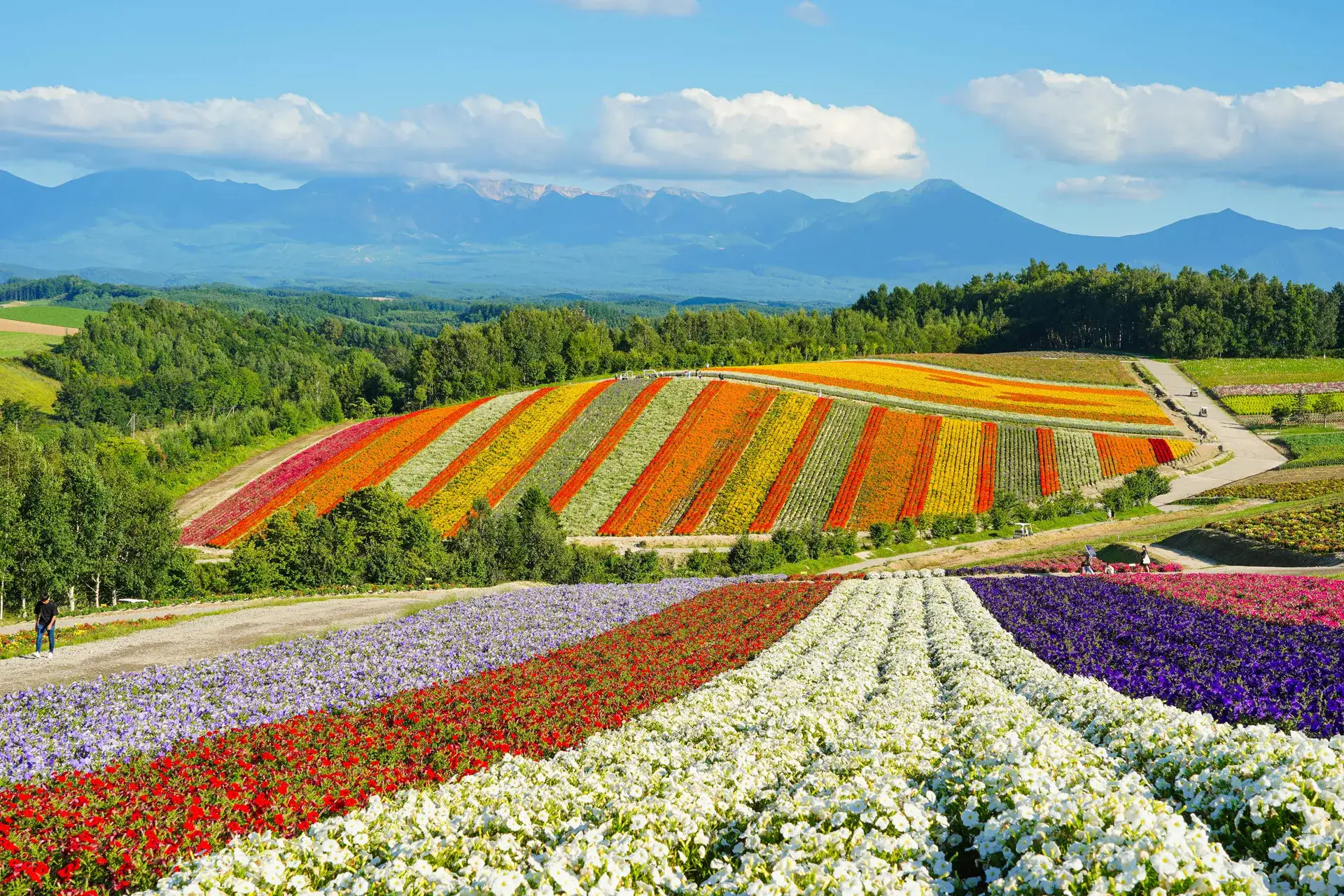
The bands of flowers on the hills of Biei, in Hokkaidō

Japan

How many days do you need for Hokkaidō?

Fourteen days are enough to loop Hokkaidō from Sapporo to Hakodate. You need eighteen to add the far north and the climb up Rishiri-Fuji.

Read the article
All the blog articles