Skip to content
Étaperia

Shikoku in 12 days: day-by-day itinerary and hotels

Twelve days from Imabari to Takamatsu: the oldest bath in Japan at Dōgo, the Pacific capes, the undammed Shimanto, the vine bridges of the Iya valley and the art islands of Naoshima and Teshima.

Sequenced by Kylian Updated on 5 September 2026

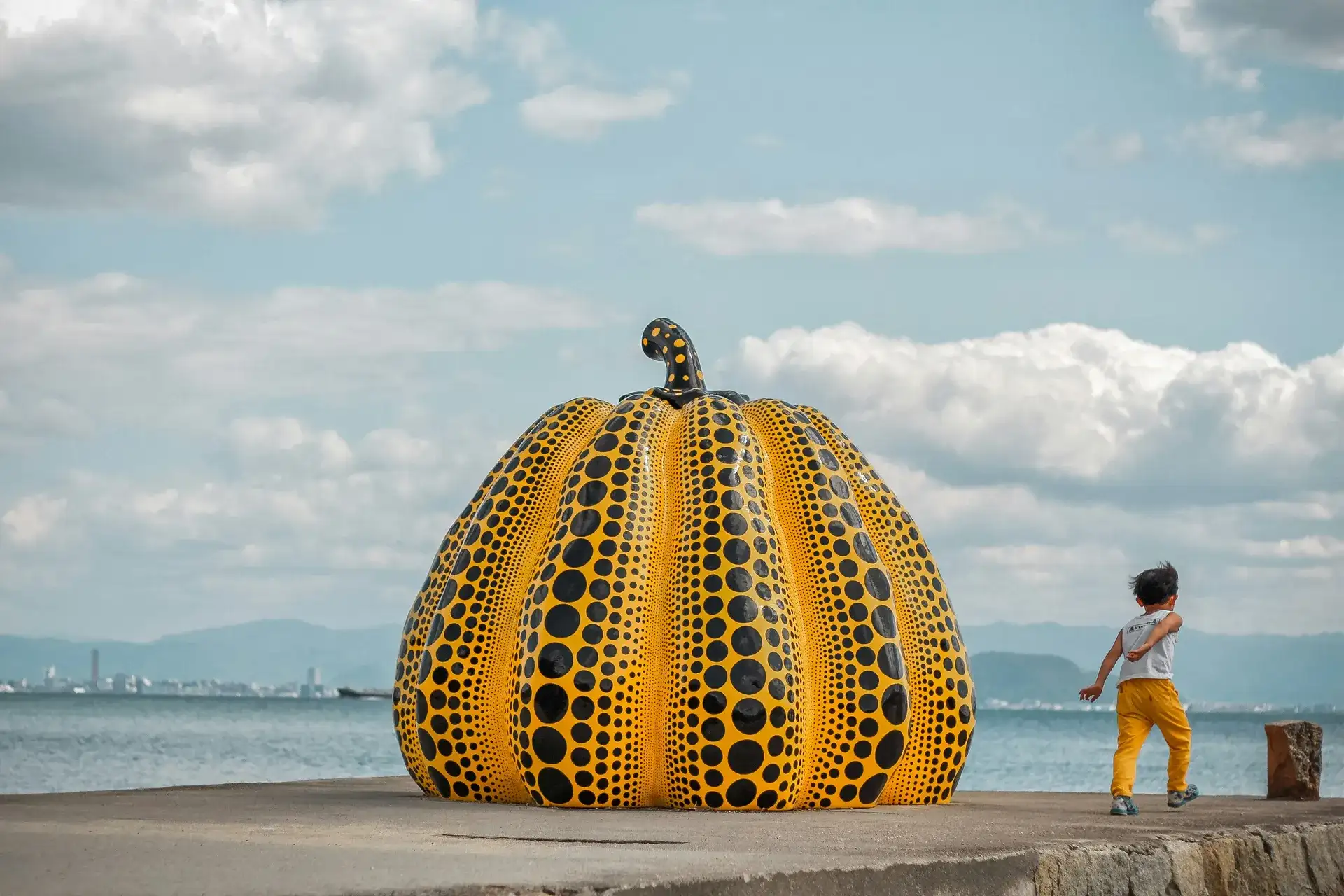
The polka-dot pumpkin of Naoshima by the Inland Sea
  • 12 days
  • 37 places
  • 12 nights
  • sustained pace
Start
Imabari
End
Takamatsu
Main transport
Hire car essential, since local trains are rare and slow; ferry as a foot passenger for Teshima and Naoshima
Recommended season
April, May, October and November are the best months; typhoons from late August to September on the Pacific coast, still possible in early October

What you get

  • The complete itinerary: 12 days sequenced Morning / Afternoon / Evening / Hotel
  • The card of every hotel, with the address and a direct booking link
  • Quota tickets, fixed-date tickets and surcharges flagged in advance
  • The country quick guide: weather, transport, formalities, budget
  • A PDF file of 29 pages

What the price does not include

  • Flights
  • Hotel nights
  • Tickets and admission fees
  • Travel insurance
  • On-the-ground assistance during your trip

The travel book preview

The free day in full, with its hotel card. This is the sample.

Day 7

The gorge and the vine bridge

Morning

Ōboke gorge by canoe

The Yoshino is Japan's most celebrated rafting river, but the Ōboke section can also be paddled by calm canoe or kayak: two hours between sheer walls of folded schist, in deep green water. Quieter motorboats also run out and back from the landing stage, half an hour, for those who prefer to just watch. The rock layers visible from the water have earned the gorge its listing as a national natural monument.

Afternoon

Iya no Kazurabashi

Forty-five metres long, fourteen metres above the torrent, woven entirely from shirakuchi kazura vines: the deck is made of logs spaced fifteen centimetres apart, through which you can see the water below. It sways. Tradition holds that these bridges, of which only three remain in the valley out of twenty-six recorded, were built by survivors of the Heike clan who took refuge here after 1185, made of vines so they could be cut with a sword in case of pursuit. It is rebuilt identically every three years, with a steel cable hidden inside since the 1950s.

Evening

Biwa Falls and the Peeing Boy

The Biwa Falls, just past the bridge, drops fifty metres: the Heike used to play the biwa lute here to console themselves for their exile, hence the name. Further up the ridge road, the statue of the Peeing Boy, placed in 1968 on a rocky spur two hundred metres above a sheer drop, recalls how the village children used to dare each other to urinate from there. The vertigo is real.
Hotel · Night 7

Hotel Iya Onsen

The most singular address of this stage: the hotel sits atop the cliff, and its outdoor baths are one hundred and seventy metres below beside the torrent, reached by a private five-minute funicular that you operate yourself. The water emerges at 39 °C straight into stone pools, in the middle of the gorge. Three nights here to cover the whole Iya valley.

Address
· 367-28 Matsuo-Matsumoto, Ikeda-chō, Miyoshi, Tokushima 778-0165
Check-in
3:00 PM · Check-out 10:00 AM
Book this hotel (new tab)

Buy this itinerary

€39 incl. tax

that is €3.25 per day of travel

The buy button becomes active once the box is ticked.

  • Secure payment through Stripe, bank card, Apple Pay and Google Pay
  • Available immediately in your customer account: online reading with clickable booking links, downloadable PDF for offline use
  • Method: what is checked, and when

A hotel in the itinerary closed or impossible to find, a place to visit permanently closed?

Within 12 months of purchase, email contact@etaperia.com

Itinerary corrected within 7 days, or refunded in full. Terms in article 12 of the T&Cs, on top of the legal warranty (new tab)

€39 incl. tax · 12 days

Buy

A question before buying? Email Kylian, reply within 48 working hours.

The day-by-day rundown

12 stops, 640 km as the crow flies

  1. Day 1 Matsuyama and the Dōgo bath Imabari Castle Day reserved for buyers, unlocked in the PDF
  2. Day 2 Dōgo, then the Uchiko theatre Asuka no Yu, Dōgo Kōen and Yuzuki Day reserved for buyers, unlocked in the PDF
  3. Day 3 The coast to Cape Ashizuri Cape Ashizuri Day reserved for buyers, unlocked in the PDF
  4. Day 4 Tatsukushi reefs and the Shimanto valley Tatsukushi coast and Ashizuri aquarium Day reserved for buyers, unlocked in the PDF
  5. Day 5 Kōchi, the intact castle and Ryōma Kōchi Castle Day reserved for buyers, unlocked in the PDF
  6. Day 6 Cape Muroto, geology in the open air Cape Muroto and the geopark Day reserved for buyers, unlocked in the PDF
  7. Day 7 The gorge and the vine bridge Ōboke gorge by canoe Free
  8. Day 8 Deep Iya and Mount Tsurugi Nagoro Day reserved for buyers, unlocked in the PDF
  9. Day 9 The Naruto whirlpools and indigo Naruto whirlpools Day reserved for buyers, unlocked in the PDF
  10. Day 10 Konpira-san and the Takamatsu garden Kotohira-gū, known as Konpira-san Day reserved for buyers, unlocked in the PDF
  11. Day 11 Takamatsu, then the island of Teshima Takamatsu Castle, Shikoku Mura and Yashima Day reserved for buyers, unlocked in the PDF
  12. Day 12 Naoshima Chichū Art Museum Day reserved for buyers, unlocked in the PDF

Found an error in this itinerary? Report an error

Country quick guide and logistics

The essentials of the country, scannable in ten seconds.

Weather and when to go

  • Shikoku's Pacific coast is the wettest region of Japan and the most exposed to typhoons, from late August to October: mountain roads close for landslides and the island ferries are cancelled.
  • April, May and November are the best months. The Inland Sea, to the north, is much drier and sunnier.
  • The Naruto whirlpools form only at spring tides, twice a day and especially around full and new moons: check the calendar published by the operators before fixing the time.

Transport and permits

  • A car is essential, since local trains are rare and slow. The roads of the Iya valley and the Tsurugi ridge are the narrowest of the whole trip: a single lane, no guardrail, no signal. Allow double the stated time, drive by daylight, sound your horn on blind bends.
  • For Teshima and Naoshima, leave the car at Takamatsu and take the ferry as a foot passenger. Ferries are infrequent: build the last two days around the boat timetable.
  • The pilgrimage of the 88 temples crosses the itinerary everywhere: it is customary to give priority to the pilgrims in white and not to photograph them closely without a word.

Formalities and safety

  • Valid passport, no visa for a tourist stay of 90 days maximum. This stage belongs to the second stay of the Japanese route. French driving licence plus an official Japanese translation for the car.
  • Essential bookings: the Chichū Art Museum and the Teshima Art Museum, on timed slots, as soon as sales open, and the BUAISOU dyeing workshop. The museums on both islands close on Mondays or Tuesdays depending on the site.
  • Travel insurance covering medical costs and repatriation is essential: hospitals are far away in the Iya valley and at Cape Ashizuri.

Budget and meals

  • Japanese yen. Cash is essential in the Iya valley, at Cape Ashizuri and on the islands, where cash machines are scarce.
  • Indicative meal budget: ¥800 to ¥1,500 at midday, ¥2,000 to ¥3,500 in the evening. Try the katsuo no tataki in Kōchi, the Sanuki udon in Takamatsu, and the Iya soba made with local buckwheat flour.
  • Left to you: canoeing on the Shimanto and at Ōboke, the BUAISOU workshop, the cable cars, the vine bridges, the Uzu no Michi and the Naruto cruise, the ferries and admission to the island museums.

Frequently asked questions

What exactly do I receive?

Your Étaperia itinerary, available immediately in your customer account after payment: readable online with clickable booking links, and downloadable as a PDF for the trip. Every day is sequenced Morning / Afternoon / Evening, with the hotel for each night, its address and its booking link, and timed-entry tickets flagged in advance.

How is this better than what an AI gives me?

A generative AI composes a plausible list in seconds, without saying what was checked or when. At Étaperia, every itinerary is sequenced by hand, place by place, with the booking constraints spotted before it is too late to get them. The Method page says what is checked, against which source and on what date.

Can I adapt it to my dates and my pace?

Yes. The days are self-contained blocks: you can shift the departure, stretch a stage or skip a day without breaking what follows. Only timed-entry tickets require adjusting the dates accordingly, and they are all flagged.

What if a hotel or a place in the itinerary has closed?

Email contact@etaperia.com within 12 months of your purchase. If a hotel in the itinerary is closed or can no longer be found, or a place to visit has closed permanently, the itinerary is corrected in your customer account within 7 days, or you are refunded in full. A hotel fully booked on your dates, a seasonal closure or a change in opening hours or prices is not covered. This guarantee comes on top of the legal warranty of conformity; details in article 12 of the terms and conditions of sale.

Who is selling you this itinerary

  • Kylian, sole trader, SIRET 927 587 709 00035
  • Consumer mediator: ANM Consommation
  • Payment handled by Stripe: Étaperia never sees your card number
  • Publisher, not a travel agency: you book flights, hotels and tickets yourself

In the same country

This module is one leg of the full itinerary: Japan itinerary: 86 days across Kyoto, Shikoku and Kyūshū, hotels and bookings

For a first trip to the country, see instead: Hokkaido in 14 days: Japan's great north from Sapporo to Hakodate

The complete itinerary

The classic itineraries

Or take it one module at a time

To read before you go

Our articles about Japan

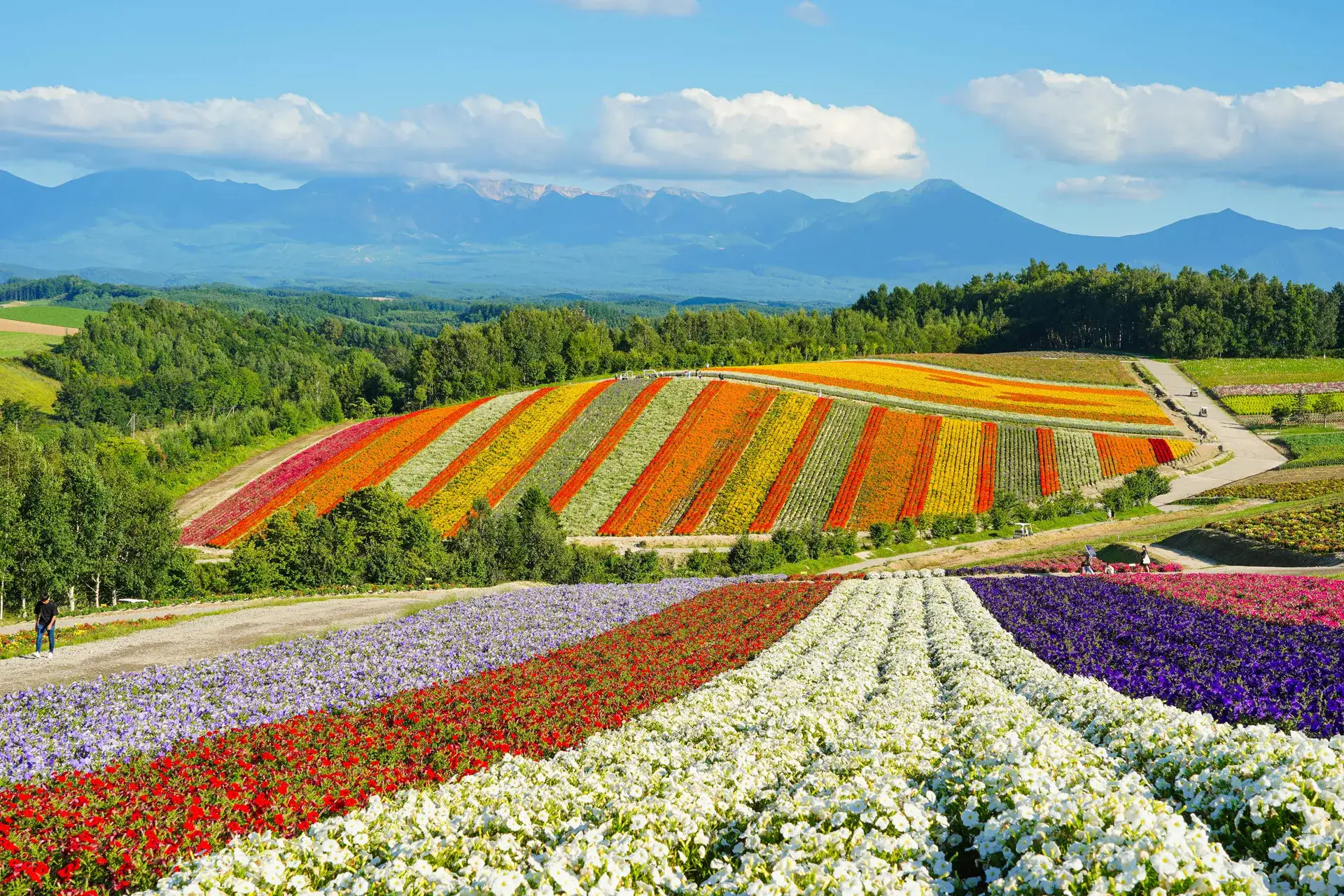
The bands of flowers on the hills of Biei, in Hokkaidō

Japan

How many days do you need for Hokkaidō?

Fourteen days are enough to loop Hokkaidō from Sapporo to Hakodate. You need eighteen to add the far north and the climb up Rishiri-Fuji.

Read the article
All the blog articles