The San'in coast and Shikoku: Japan without the crowds
Two hours from Miyajima, the Sea of Japan coast lines up seven village baths, sixteen kilometres of dunes and a shrine where you clap four times instead of twice.
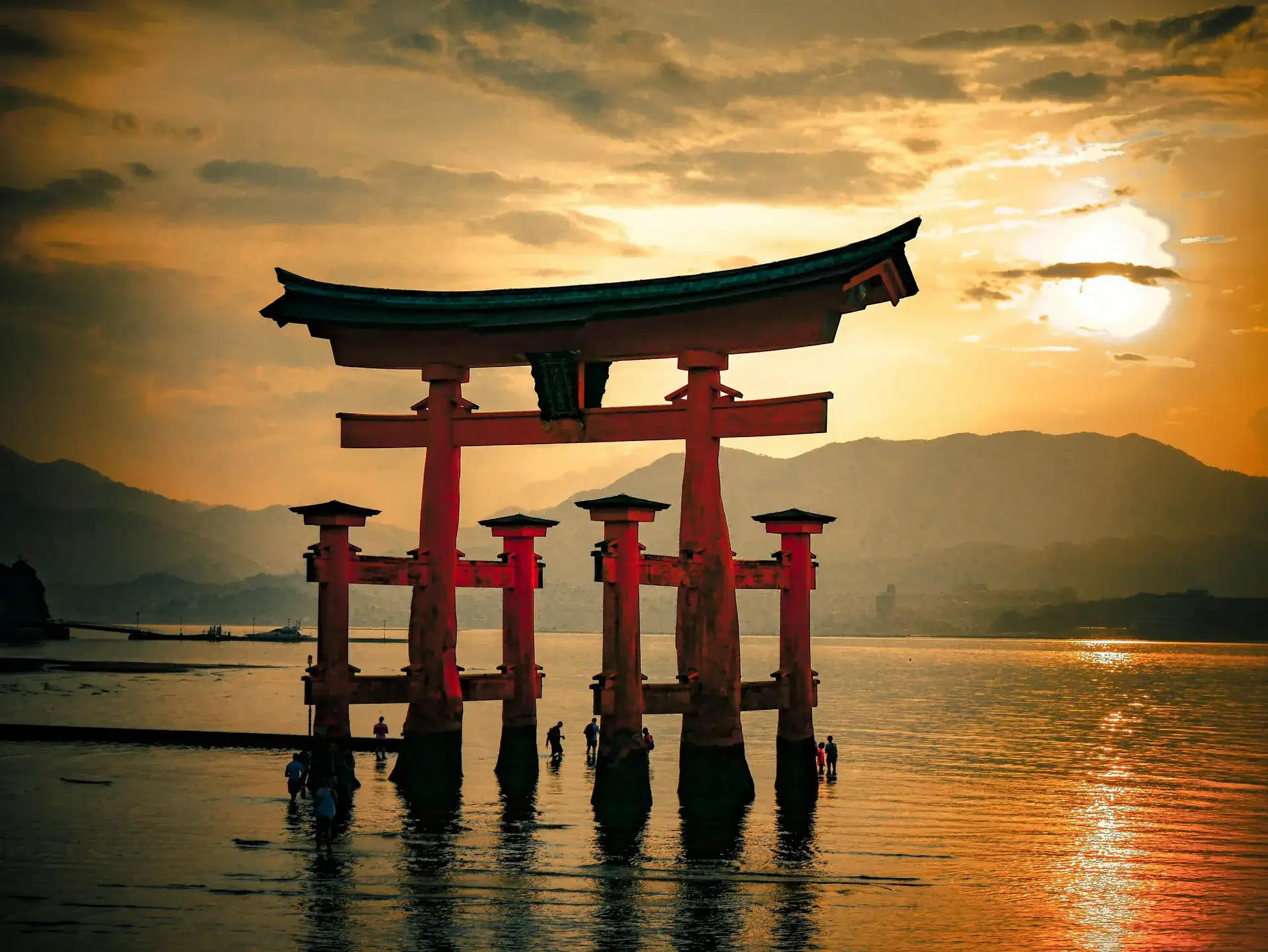
The Miyajima torii is one of the most reproduced images of Japan, and one of its busiest sites. Two hours’ drive to the north, the Sea of Japan coast is almost empty. It is the least populated region of Honshū, and it lines up seven village baths, a sandbar planted with five thousand pines, the only large dunes in the country and a shrine where people pray differently from everywhere else.
That coast is called the San’in. Tours do not go there, for one simple reason: it cannot be done by train.
Why this coast stayed empty
The San’in is the least populated region of Honshū. Its local trains run far apart, and some valleys have no service at all. A car is essential, and it is precisely that filter which explains the absence of crowds: groups do not go where you have to drive.
The climate did the rest. The San’in coast is grey and rainy for much of the year, with snow in winter at Kinosaki and Tottori. The Chūgoku mountains hold the clouds back to the north: on the other side, the Inland Sea is one of the sunniest regions in Japan. You can see the light change at the pass, three hours down the road.
Seven village baths at Kinosaki
Kinosaki Onsen is a spa town built around a willow-lined canal, and its particularity lies somewhere other than in the water: you do not take a bath here, you do seven.
The principle is unique in Japan. The ryokan have only small baths, and it is the village’s seven sotoyu that serve as the shared bathhouse. Guests move from one to the next in yukata and wooden geta, the pass being provided by their accommodation. After dinner the canal lights up with lanterns and the clatter of clogs carries from bridge to bridge until late.
The town has been healing for thirteen centuries, the spring having been found in 720 by a monk after a thousand days of prayer. It was entirely destroyed by the 1925 earthquake, then rebuilt identically in wood, which is why it has kept its pre-war look.
Two things to check on arrival: each bath has its own closing day, different from the others, and tattoos are refused at several of the seven.
The bridge of sand, and the village with its feet in the water
Amanohashidate is a sandbar 3.6 kilometres long and forty metres wide, planted with five thousand pines, which almost completely closes Miyazu Bay. It is one of the three most famous views in Japan, a canon fixed in the 17th century, and it is looked at in a precise way: leaning forward, head between your legs. The gesture is called matanozoki, and the sandbar then takes on the look of a bridge hanging in the sky. A slightly ridiculous rite that everyone performs anyway.
An hour further north, Ine lines up two hundred and thirty fishermen’s houses over five kilometres along an exceptionally calm bay. These funaya are built on two levels, the boat garage at water level and the living quarters above. It works because the tide varies by only thirty centimetres. The village is listed as a national preservation zone and is still lived in by fishermen.
One practical detail that changes everything: the funaya can only really be seen from the water. A small company makes the tour of the bay in thirty minutes. From the road, you only see ordinary façades.
The Tottori dunes, and a museum that closes four months a year
The Tottori dunes run sixteen kilometres long and two wide: the only large dune field in Japan. The sand, torn from the mountains by the Sendai river, has been thrown back onto the coast by the currents for a hundred thousand years. The Uma no Se, the horse’s back, rises forty-seven metres above the sea and is climbed through soft sand in a breathless quarter of an hour.
Right next door, the sand museum deserves a warning, because it is the kind of detail that ruins a day. It is the only museum in the world devoted to indoor sand sculpture, where an international team builds monumental scenes each year around a geographical theme. But:
- it only opens from mid-April to early January;
- the sculptures are deliberately razed each January, and the next ones are built from January to April behind closed doors;
- a visit in February or March finds the building empty.
Open from 9:00 AM to 6:00 PM, last entry at 5:30 PM, ¥800. The theme changes every year, and the works are made of sand and water alone, without glue.
Izumo, where you clap four times
October is known everywhere else in Japan as the month without gods. At Izumo it is called the month with the gods: tradition holds that the country’s eight million deities gather here in assembly, and lodgings are set aside for them within the grounds.
The practical consequence for a visitor: here you pray by clapping four times, not twice. It is a custom particular to this shrine, and nobody will tell you on site.
The main hall, rebuilt in 1744, rises to twenty-four metres. Excavations have shown it was probably forty-eight metres in its original form. Grounds open from 6:00 AM to 8:00 PM from March to October, free entry, free car park of about four hundred spaces. The neighbouring museum of ancient history, where the giant pillars found in 2000 are displayed, is paid separately, about ¥620.
Crossing south: Onomichi, the Shimanami, Shikoku
Three hours of driving through the Chūgoku mountains take you from one side of Honshū to the other, from the grey coast to the Inland Sea.
Onomichi is built on a steep slope facing a two-hundred-metre strait: a town of stairways, lanes too narrow for cars, and cats. Ozu shot Tokyo Story here in 1953. The cat alley is a two-hundred-metre lane where a local artist has painted more than a hundred cat-shaped pebbles; the real ones are there too. The temple path links twenty-five temples over two and a half kilometres of hillside.
From there runs the Shimanami Kaidō: seventy kilometres to Imabari, six bridges, seven islands, and the only one of the three Honshū-Shikoku links with a continuous cycle path. By car the route takes an hour and a half, but the whole point is to stop island by island. On Ōmishima, the Ōyamazumi shrine holds about 80% of Japan’s listed ancient armour and weapons, left by warriors before they went to sea, on an island of two thousand people.
On Shikoku, three places carry the rest of the route:
- the Dōgo Onsen Honkan, the oldest bath still in use in Japan, mentioned in the chronicles of the 8th century. The three-storey wooden building dates from 1894 and holds the Yūshinden, the only imperial bath in existence in Japan. The place inspired the sets of Spirited Away. Lower bath from 6:00 AM to 11:00 PM, ¥700;
- the Iya valley and its woven vine bridge, above the Ōboke gorge, more than two hundred metres deep, where the road and the railway cling to a ledge with a tunnel every hundred metres;
- the Ritsurin-kōen in Takamatsu and its thousand clipped pines. It does not appear on the official list of Japan’s three great gardens, which many consider an injustice: the Michelin guide awarded it three stars, more than the other three. ¥500, with hours that follow the sun, 5:30 AM to 7:00 PM from June to August.
Two things to prepare before you go
Cash. This is the real constraint of the route. The San’in has a great many small establishments, temples and rural car parks that do not take cards, and cash machines are scarce outside the towns. Withdraw at 7-Eleven and at post offices, the only ones that accept foreign cards, and always keep cash on you.
Time on the Iya roads. They are among the narrowest in Japan open to traffic: a single lane, no crash barrier. Allow twice the stated time and drive in daylight.
As for the season, the window is April to June, then October and November. The Pacific coast of Shikoku is very exposed to typhoons from late August to October.
And as everywhere you have to drive in Japan: the international driving permit is not recognised. You need your national licence together with its official Japanese translation, issued by the JAF or by the consulate.
What it adds up to
Two weeks are enough to string together the San’in coast and Shikoku, provided you accept leaving Hiroshima and Miyajima out. That is the choice made by our 14-day route from the Sea of Japan to Shikoku, which loops from Osaka.
If you want both regions in depth rather than as a loop, they exist separately: the San’in coast and the Inland Sea in 15 days, Hiroshima and Miyajima included, and Shikoku in 12 days, with the art islands of Naoshima and Teshima. The rest of the country is on the Japan page.
From research to departure
Travelling in Japan
This article comes out of a complete itinerary in Japan: the day-by-day programme, hotels named with their booking link, and the tickets to book flagged in advance.
Module
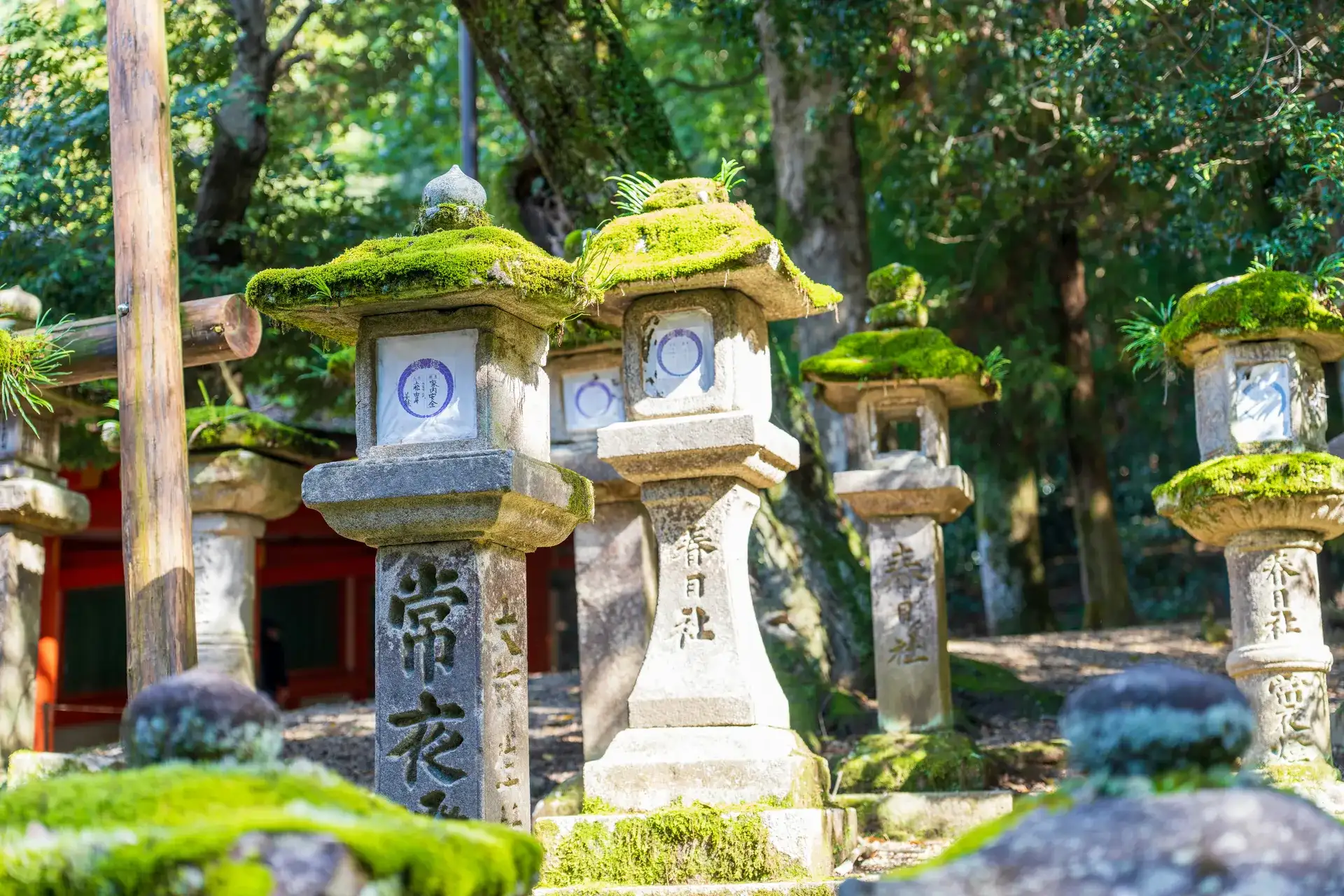
Nara and Yoshino in 6 days: itinerary and hotels
Six days in the first capital and the mountain of a hundred thousand cherry trees: the great Buddha of Tōdai-ji, the lanterns of Kasuga-taisha, the Hōryū-ji, the Kinpusen-ji of Yoshino, the painted tombs of Asuka and the Yamanobe no Michi.
See the itinerary
Module
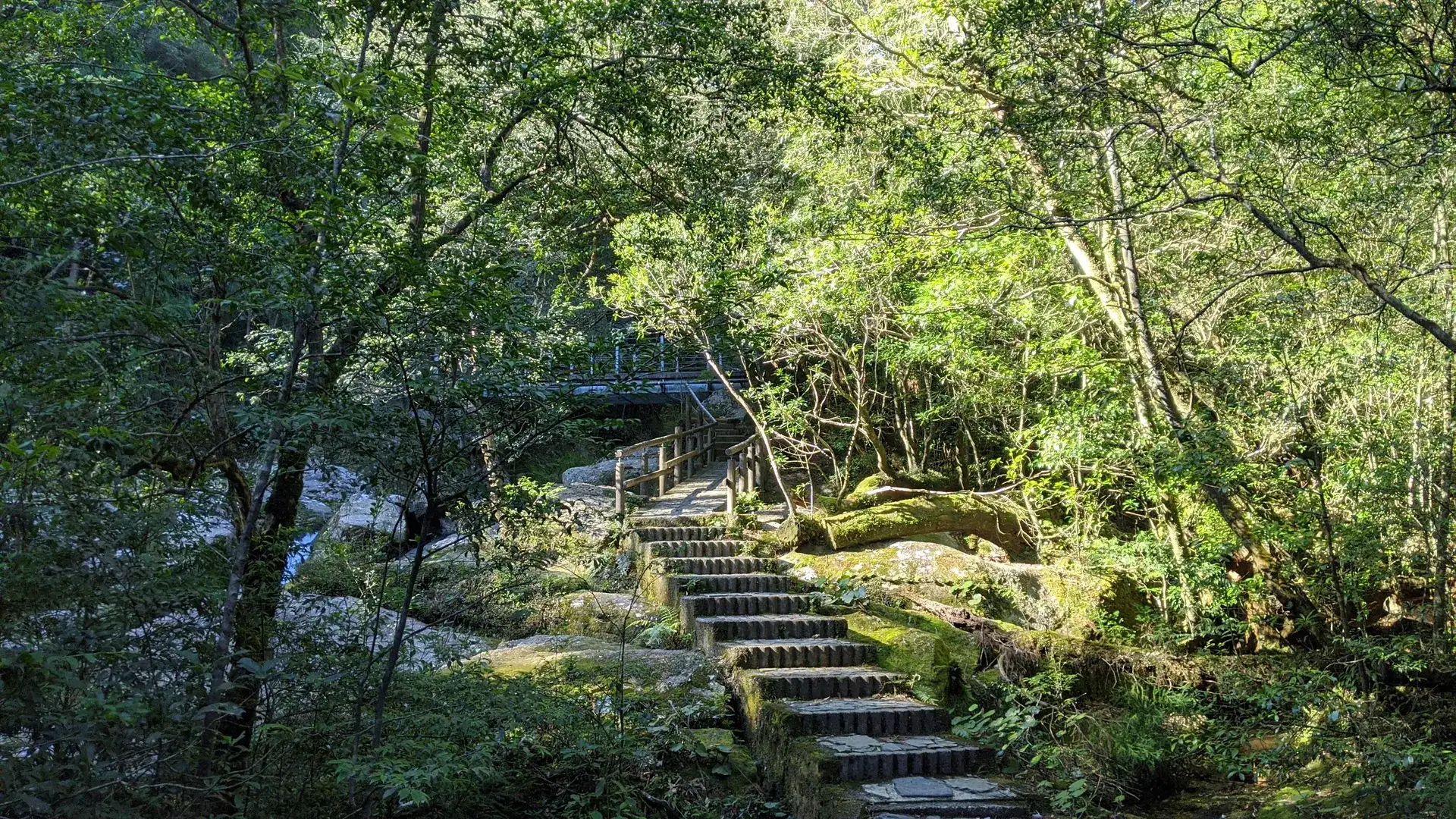
Yakushima and Okinawa in 7 days: itinerary and hotels
Seven days in the subtropical south: the thousand-year-old cedar forest of Yakushima and the Jōmon-sugi trek, then the Ryūkyū kingdom, the potters' street of Naha, the fukugi road of Bise and the Churaumi aquarium.
See the itinerary
Module
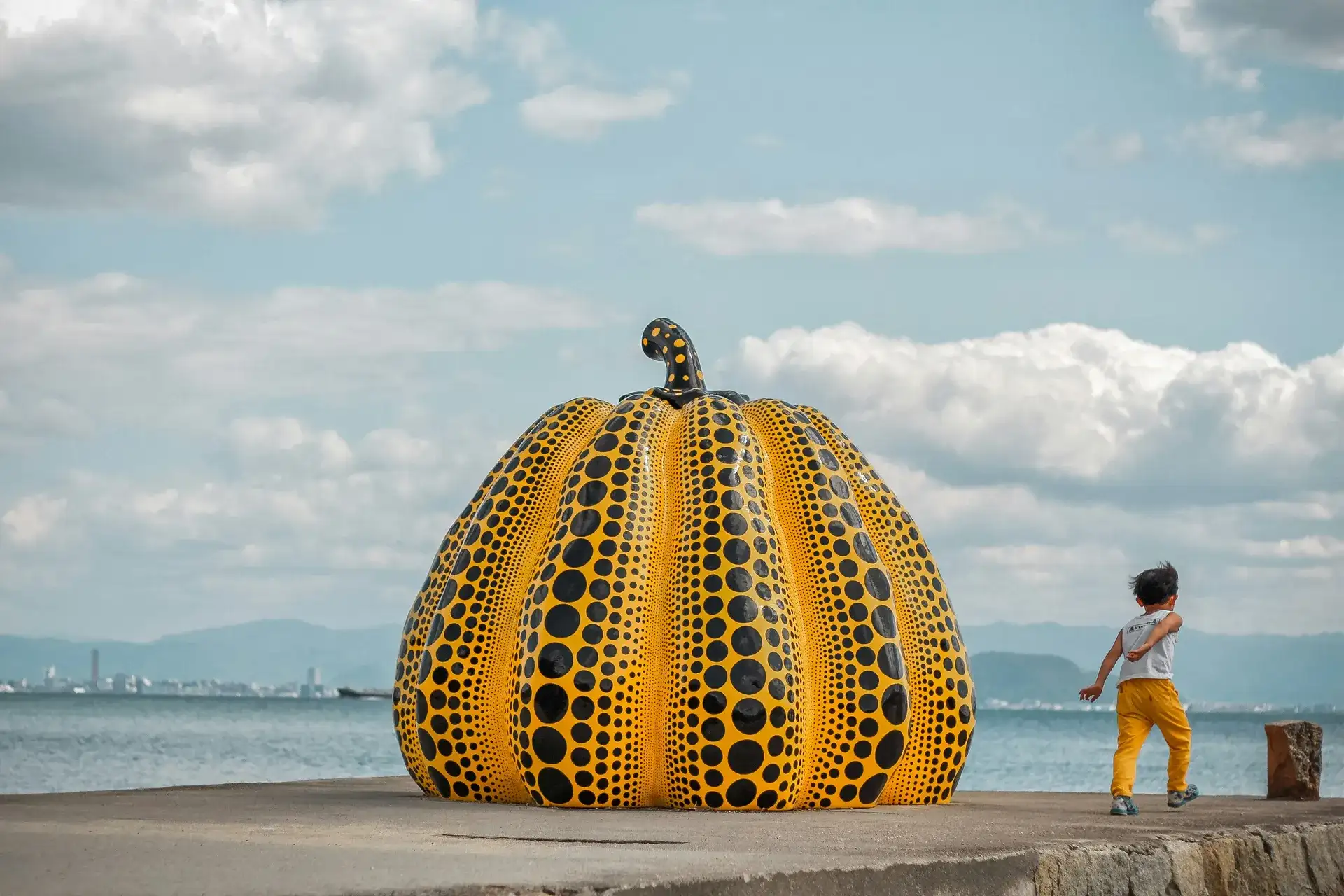
Shikoku in 12 days: day-by-day itinerary and hotels
Twelve days from Imabari to Takamatsu: the oldest bath in Japan at Dōgo, the Pacific capes, the undammed Shimanto, the vine bridges of the Iya valley and the art islands of Naoshima and Teshima.
See the itinerary
Also worth reading about Japan
Japan
How many days do you need for Hokkaidō?
Fourteen days are enough to loop Hokkaidō from Sapporo to Hakodate. You need eighteen to add the far north and the climb up Rishiri-Fuji.