Travel in Guam: when to go, places and advice
An American territory lost in the western Pacific, Guam is the unexpected crossroads of Micronesia: the turquoise lagoon of Tumon Bay, the cliffs of Two Lovers Point, the Chamorro villages of the South with their Spanish churches, poignant relics of the Pacific War and dives on wrecks from both world wars. The island blends thousand-year-old Chamorro culture, Spanish heritage and American comfort: a concentrate of history and reefs that few European travellers know.
- Capital
- Hagåtña
- Currency
- US dollar ($)
- Language
- English, Chamorro
- Direct flight
- No direct flight, via Tokyo or Seoul
- Time difference
- +9 hr in winter, +8 hr in summer
Itineraries
Our trip ideas in Guam
The itineraries in Guam are in the works: the day-by-day programme, named hotels, tickets to book flagged in advance. Leave your address to be notified when they come out.
Got it. You will be notified at the next release.
The sign-up could not be completed. Try again in a moment.
Your address is only used for these release announcements. Privacy policy
The right season
When to go in Guam?
From January to May, the dry season offers the best of Guam: steady trade winds, a limpid lagoon, a constant 28 °C. From July to November, the wet season brings daily showers and the typhoon risk, strongest from August to October: the island then lives to the rhythm of the weather bulletins. December and June make a gentle, often very pleasant transition.
- January : Ideal
- February : Ideal
- March : Ideal
- April : Ideal
- May : Pleasant
- June : Pleasant
- July : In-between
- August : Avoid
- September : Avoid
- October : Avoid
- November : In-between
- December : Pleasant
- Ideal
- Pleasant
- In-between
- Avoid
Quick guide
Understanding Guam
Getting around
A rental car is essential, the island loops in a day along the coastal road. The tourist shuttles serve Tumon, but the deep South is only discovered at the wheel.
Money
The US dollar ($). Card everywhere, American prices raised by insularity. The southern villages and their fiestas run on cash and generosity.
Language
Official English and Chamorro, the local pride: "håfa adai" (hello) opens every smile. Japanese and Korean are omnipresent in the tourist areas.
Useful apps
An offline map is enough for the southern loop, the NOAA weather app for typhoon season, and Guam Visitors Bureau for the weekend village fiestas.
Accommodation
The big resorts lined along Tumon Bay dominate the offer; a few guesthouses and rentals in the South provide the Chamorro immersion; book early.
Etiquette
Respect the sacred Chamorro sites and the war memorials, ask before crossing a property to reach a beach, and gladly accept an invitation to a fiesta: it is the soul of the island.
The iconic places
Tumon Bay
Tumon
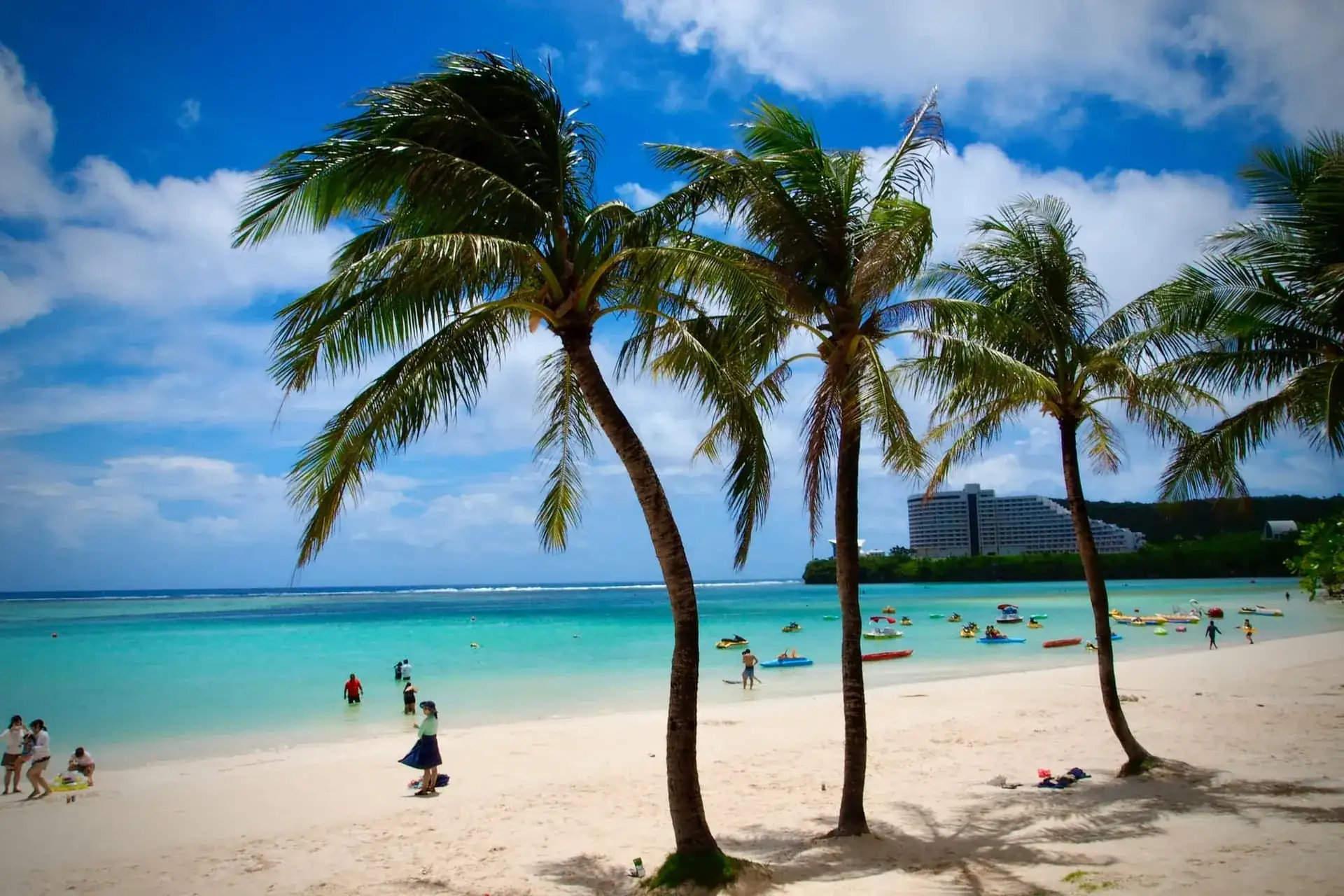
The island's postcard lagoon: white sand, water at 29 °C and a reef protected as a marine reserve, at the foot of the hotels.
Two Lovers Point
Tamuning
The 122 m cliff of the Chamorro legend of the two lovers, an absolute panorama over the lagoon and the north coast.
Ritidian Beach
North
The wild beach of the national refuge: immaculate sand, translucent water and intact jungle, without a hotel on the horizon.
Hagåtña
Hagåtña
The tiny capital: a Spanish basilica, the Plaza de España, thousand-year-old latte stones and the Wednesday night market at the Chamorro village.
Fort Soledad
Umatac
The Spanish fort overlooking the bay where Magellan landed in 1521, guardian of the southern villages and their colourful churches.
Inarajan Pools
Inarajan
Natural pools carved into the volcanic rock at the ocean's edge, diving boards and coconut palms included: the favourite swim of Chamorro families.
Tap a dot, or browse the list below the map.
- Tumon Bay : The island's marine-reserve lagoon
- Two Lovers Point : The cliff of the Chamorro legend
- Ritidian Beach : The wild beach of the national refuge
- Hagåtña : Basilica, latte stones and night market
- War in the Pacific Park : The landing beaches of 1944
- Fort Soledad : The Spanish lookout of Umatac
- Inarajan Pools : Natural pools in the lava