Tōhoku in 17 days: an itinerary through northern Japan
Yes, northern Japan is worth it if you drive: 17 days from Aomori to Niigata for Hirosaki, Oirase, Hiraizumi and Ginzan Onsen, from June to October.
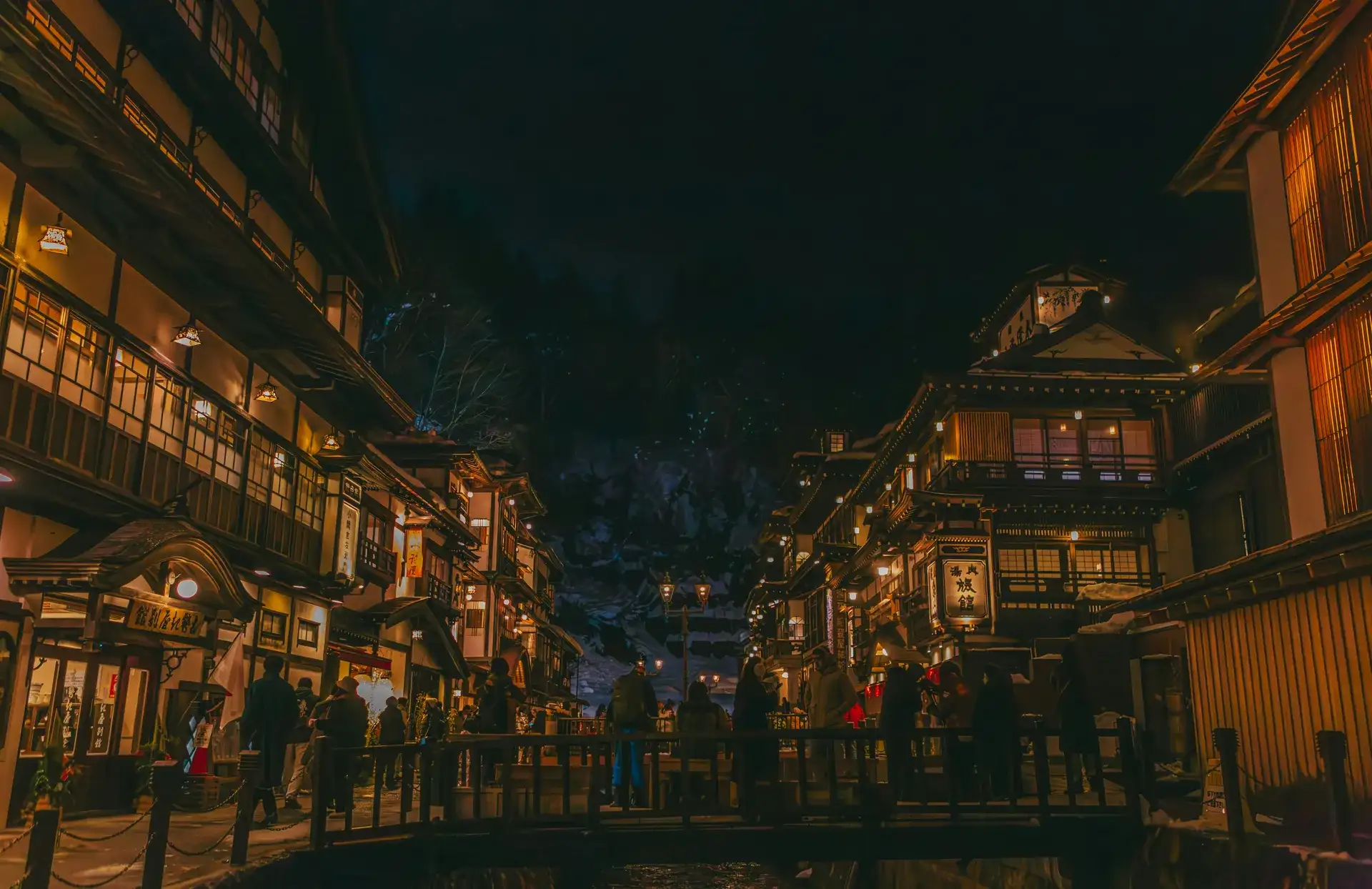
Yes, Tōhoku is worth it, on two conditions: driving, and going between June and October. The north of Honshū takes about seventeen days to travel, from Aomori to Niigata, and lines up an original castle keep, a three-century-old hot spring inn with its cypress bath, a pavilion covered in gold from 1124 and a spa village lit by gas lamps.
How many days to plan for Tōhoku, from Aomori to Niigata
The logical route runs from north to south without doubling back, from the tip of Honshū to the great port on the Sea of Japan. Allow seventeen nights to see everything without rushing, including two in the same place at Hiraizumi, Tsuruoka, Sendai and Niigata so you do not change hotel every evening.
| Area | What to see | Suggested nights |
|---|---|---|
| Aomori and Tsugaru | Nebuta floats, Sannai Maruyama Jōmon site, Hirosaki castle | 2 |
| Hakkōda and Towada | Kenashitai marshes, Sukayu baths, Oirase gorge, Lake Towada | 2 |
| Akita | Lake Tazawa, Kakunodate samurai street | 1 |
| Hiraizumi | Mōtsū-ji garden, Konjikidō of Chūson-ji, Geibikei gorge | 2 |
| Yamagata | Okama crater, Yamadera, Ginzan Onsen | 2 |
| Dewa Sanzan | Mount Haguro pagoda, summit of Gassan | 2 |
| Sendai and Matsushima | Date Masamune mausoleum, cruise in the bay | 2 |
| Fukushima and Aizu | Bandai-Azuma Skyline, Goshiki-numa, Tsuruga castle | 2 |
| Ouchi-juku and Niigata | Ouchi-juku thatched village, port of Niigata, Yahiko shrine | 2 |
Why tours pass it by
Tōhoku has to be earned. Four concrete reasons keep groups away.
- The car. You arrive from Hokkaidō by shinkansen, from Shin-Hakodate-Hokuto to Shin-Aomori, in one hour through the Seikan tunnel. After that, apart from the train trip from Sendai to Matsushima, everything is done by rental car, with six drives of two hours to two and a half hours over seventeen days.
- The mountain roads are seasonal. The Zaō Echo Line is closed by snow from about late October to late April, the Bandai-Azuma Skyline from mid-November to early April, and both also close at night.
- Tolls and cash. Tolls are particularly heavy on the expressways, and temples, parking lots and small inns often take cash only.
- The length. Seventeen days for a single region is the price of a route that sacrifices neither the north nor the south.
The north: Hirosaki, the Hakkōda and the Oirase gorge
Hirosaki castle is one of the twelve original Japanese castle keeps still standing, built in 1611 by the Tsugaru clan. Its park has 2,600 cherry trees, considered the finest blossom in Tōhoku in late April.
An hour’s drive from Hirosaki, the Hakkōda cable car climbs in ten minutes to 1,324 meters (4,340 ft), above the Kenashitai peat bogs. For the night, aim for Sukayu, a wooden inn at 925 meters of altitude, in business for about three centuries. Its Sennin-buro, the bath of a thousand people, is a single 250 m² hall in hiba cypress, with no tiles and no taps. It is mixed, with time slots reserved for women. Without staying there, you can bathe as a day visitor, from 7:00 AM to 6:00 PM for ¥600 at the time of writing, in September 2026: recheck.
Watch out: the Hakkōda cable car is frequently suspended because of wind or fog, and the decision is taken on the day: check its status before setting off.
Then the Oirase gorge: fourteen kilometers of flat trail along the torrent that flows out of Lake Towada, between waterfalls and mossy rocks. Allow four hours for the whole of it, or just one section, as a bus runs along the parallel road.
The heart: Kakunodate, the gold of Hiraizumi and the Geibikei boat
Kakunodate is a town laid out in 1620 and never burned. Its samurai street has kept its black board walls and its weeping cherry trees.
In Hiraizumi, Chūson-ji holds the Konjikidō, a pavilion from 1124 entirely covered in gold leaf, where the mummies of the four Fujiwara lords lie. No photos inside, no lockers on the site, closing at 5:00 PM, 4:30 PM from early November to late February.
The same day, the Geibikei gorge is traveled upstream in a flat-bottomed boat: two kilometers between fifty-meter limestone walls, a boatman who sings, about ninety minutes there and back. The travel book gives a last departure at 4:00 PM from April 1 to November 5 and at 3:00 PM in winter: recheck it on the official website before you go.
Yamagata: the Zaō, Yamadera, Ginzan and the mountains of Dewa
The Okama crater is a lake 360 meters (1,180 ft) across whose acidic water shifts from turquoise to emerald. You drive up by the Zaō Echo Line, to 1,600 meters.
Yamadera is climbed by 1,015 stone steps among the cedars, an hour and a half of easy ascent. It was here that Bashō wrote one of his best-known haiku in 1689.
Ginzan Onsen is the moment you come for: wooden inns from the 1920s facing each other on either side of the river, whose gas lamps light up at nightfall.
Tip: cars are banned from Ginzan village, whose parking lot is about 700 meters from the entrance, with a shuttle, and access is regulated in high season. Sleeping outside the village, in the Mogami valley about twenty minutes’ drive away, solves the parking question.
Further west, the three mountains of Dewa have been walked for fourteen centuries by the yamabushi ascetics. On Mount Haguro, 2,446 steps climb beneath Japanese cedars four to six hundred years old, with, a third of the way up, a five-story pagoda with no paint and no nails. Gassan, 1,984 meters, takes a full day and can only be hiked in July and August.
The south: Matsushima, the Azuma and Aizu
Matsushima bay has about two hundred and sixty tuff islets topped with pines, ranked since the 17th century among the three most beautiful views in Japan. The cruise lasts fifty minutes, first departure at 9:00 AM then one an hour.
The Bandai-Azuma Skyline is twenty-nine kilometers long and climbs to 1,622 meters (5,320 ft), from beech forest to a desert of ash. Finally Aizu has the only Japanese castle roofed with red tiles and the Sazaedō from 1796, a wooden tower in a double helix where you go up and down without ever crossing anyone.
Watch out: the Bandai-Azuma Skyline can close without warning in the event of a volcanic alert: check its status the same morning.
Where to stay in Tōhoku: near the station in towns, in hot spring villages elsewhere
- In towns, a station hotel saves time, in Aomori, Hirosaki, Sendai and Niigata. In Hirosaki, the castle is fifteen minutes’ walk or five by bus from the station. In Sendai, staying at the station puts the Matsushima line at the foot of the hotel.
- Elsewhere, aim for the hot spring villages. Sukayu, Zaō Onsen, Urabandai and Aizu offer unlimited bathing and, often, half board. The acidic waters of the Zaō and Sukayu attack silver jewelry, and several establishments refuse tattoos: check when booking.
Planning a Tōhoku road trip: three things to sort out
- The ryokan. Those in Ginzan and Sukayu are booked several months ahead in high season. Our article What to book in advance for a trip to Japan, and when sets out the method.
- The license. A national license alone is not enough in Japan: depending on the country that issued it, you need a 1949 Geneva-format International Driving Permit (US, UK, Canadian or Australian license, among others) or an official Japanese translation (French, Belgian, Swiss or German license). It is all in our guide Renting a car in Japan: where a road trip is worth it.
- The season. June to October, because the high roads of the Hakkōda, the Zaō and the Azuma are closed from November to April. Late April for the Hirosaki cherry blossom, mid-October for the foliage of Oirase and Jōgakura, among the first on Honshū. To pin down the date, see Japan in autumn: following the kōyō and its maples from north to south and When to go to Japan: the best time, region by region.
Add two habits: cash on you at all times, withdrawn from the cash machines at 7-Eleven and at post offices, and a bell in the Hakkōda, Dewa and Bandai massifs, where black bears live. For meals, allow ¥900 to ¥1,500 at lunchtime and ¥2,000 to ¥3,500 in the evening outside half board (rough figures as of September 2026, to be rechecked).
So, is Tōhoku worth it?
Yes, if you drive and if you have at least two and a half weeks to give it. You will get first-rank sites, the Konjikidō, the Hirosaki keep, Yamadera, far from the Tokyo-Kyoto axis, evenings of hot baths at Sukayu, on the Zaō and at Urabandai, and the gas lamps of Ginzan at nightfall. No, if your trip is limited to two weeks in total or is done by train: you are then better off staying on the central axis, and our article How many days in Japan? The real length, region by region helps you decide.
Our 17-day Tōhoku stage sets out the program day by day, with bookable accommodation for every night. It is also included in full in our 88-day itinerary from Hokkaidō to Okinawa. The rest of the country is on the Japan page.
Can you visit Tōhoku in winter?
Yes for the snowy landscapes, but not as a road trip: most of the mountain roads are closed. Towards the Hakkōda, only the link between Aomori and Sukayu, one of the snowiest inhabited places in the world, is kept open. In return, the Hakkōda and the Zaō are covered in snow monsters, and at Geibikei the boats are fitted with a heated table from late November to March, with a river meal to book in advance.
What budget should you allow on top of accommodation and the car for a Tōhoku road trip?
Fuel and tolls make up most of it, but a series of small expenses adds up over seventeen days. Allow for the Hakkōda and Zaō cable cars, the Matsushima cruise, the Geibikei boat, entry to temples and museums, hot spring taxes (a ¥150 bathing tax at Sukayu) and, in town, hotel parking of ¥700 to ¥1,500 depending on the establishment. These amounts are the ones noted in September 2026: recheck them before you go, and do not plan on tipping, it is not practiced.
How do you bathe in an onsen if you have never done it before?
You wash sitting down before getting into the bath, never the other way round. After that, the towel stays out of the water and long hair is tied up.
Is Tōhoku dangerous, with its volcanoes and earthquakes?
The risk is real but localized: the volcanic gases at Jigokunuma, in the Hakkōda, on the Zaō and on the Azuma mean you must stay on the marked trails. Approaching the Jigokunuma pond is forbidden, several fatal accidents have happened there. The region is also an active seismic zone, and every hotel displays its evacuation instructions: read them when you arrive.
Do you need to book the Geibikei boat and the Matsushima cruise?
Yes for the Geibikei boat in high season, when booking is recommended. The Matsushima cruise leaves every hour and two companies run the same tour of the bay: booking online there mainly serves to get a discount.
From research to departure
Travelling in Japan
This article comes out of a complete itinerary in Japan: the day-by-day program, hotels named with their booking link, and the tickets to book flagged in advance.
Module
Tōhoku in 17 days: day-by-day itinerary and hotels
Seventeen days in northern Honshū, from Aomori to Niigata: Hirosaki Castle, the cypress baths of Sukayu, the Oirase gorge, the samurai street of Kakunodate, the Fujiwara gold, Yamadera and Ginzan Onsen under gas lamps.
See the itinerary
Complete
Japan itinerary: 88 days from Hokkaidō to Okinawa, hotels and bookings
88 days sequenced Morning / Afternoon / Evening / Hotel.
See the itinerary
Also worth reading about Japan
Japan
Can ChatGPT plan a trip to Japan? What to check
An AI gives a good first draft of a Japan itinerary, not a guarantee. Hotels, timed tickets, closures, driving license: the checklist to follow.
Japan
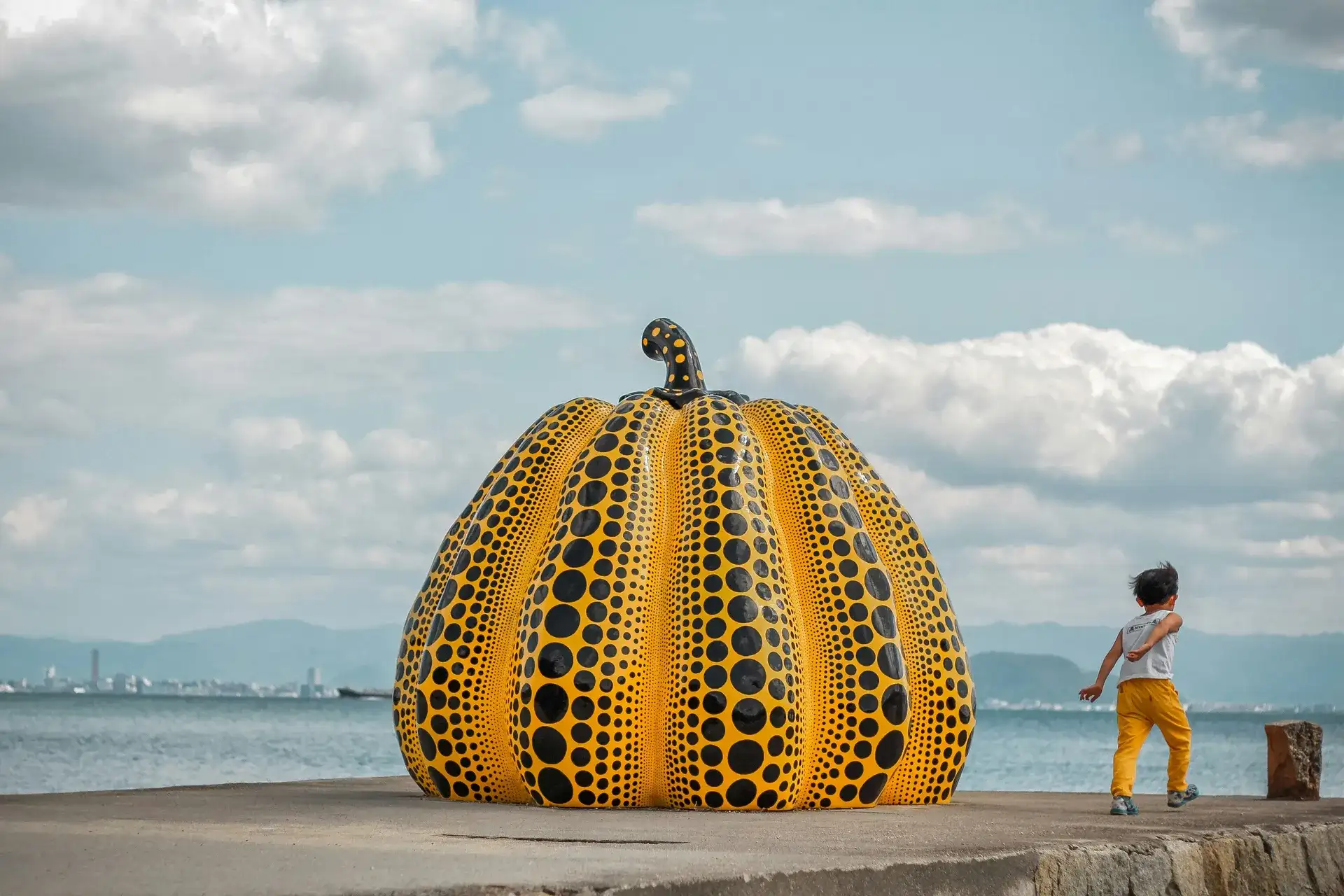
Visiting Naoshima and Teshima: ferries, museums, closed days
Allow two days, one per island, between Wednesday and Sunday: Naoshima closes on Mondays, Teshima on Tuesdays. Ferries, tickets to book, where to stay.
Japan
Shikoku: which itinerary and how many days to visit the island
Five days to cross Shikoku, eight with the upper Iya valley and the art islands, twelve for the full loop. By car, in April, May or November.