How many days do you need for Hokkaidō?
Fourteen days are enough to loop Hokkaidō from Sapporo to Hakodate. You need eighteen to add the far north and the climb up Rishiri-Fuji.
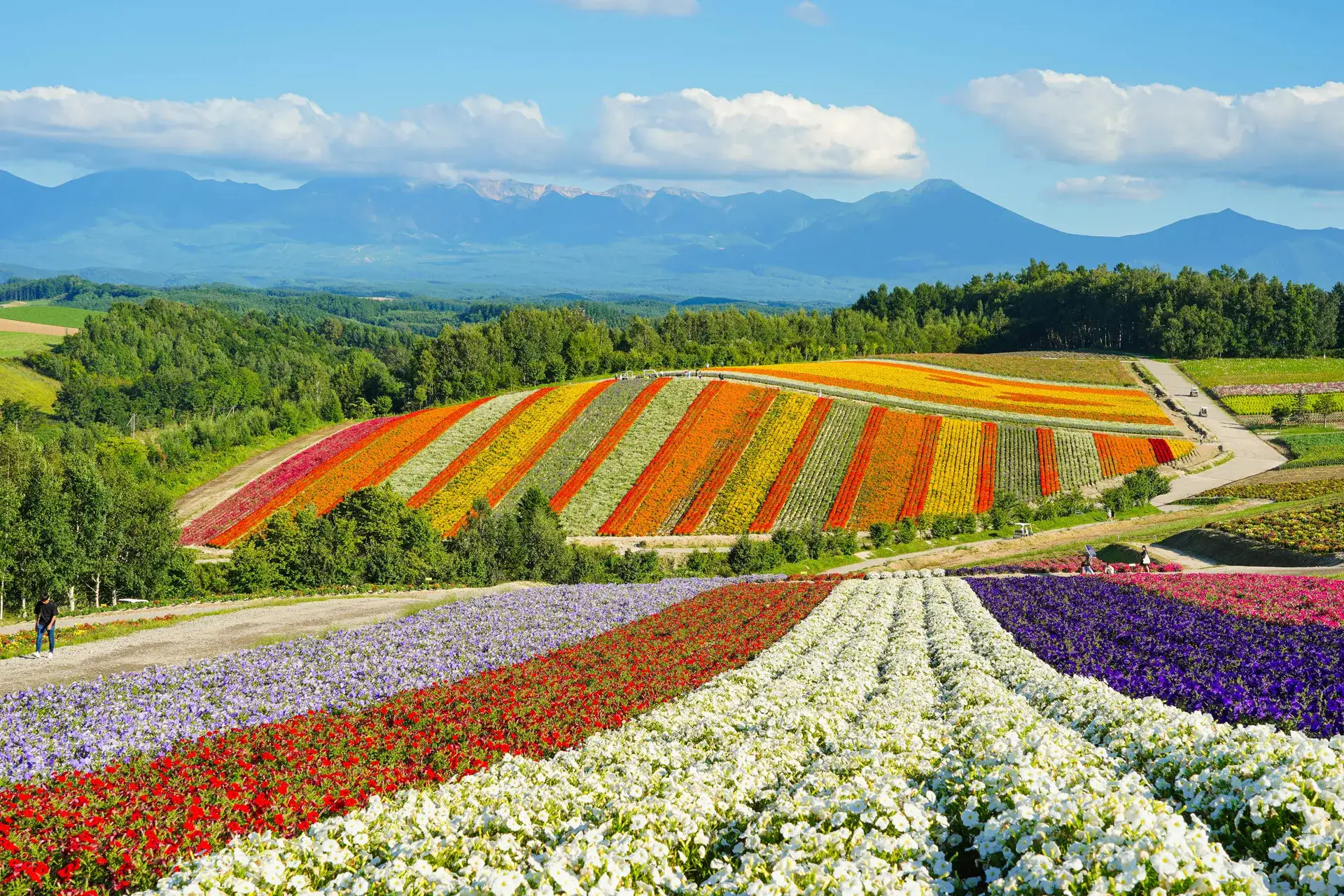
Fourteen days are enough to loop the northern island from Sapporo to Hakodate, taking in the Otaru Canal, the hills of Biei, the Daisetsuzan, the Shiretoko Peninsula, the crater lakes of the east and the hells of Noboribetsu. You need eighteen to add the far north: the Orōron coast, Cape Sōya and the island of Rishiri.
Below fourteen days, an entire region has to go. Hokkaidō is the size of Austria and can only be covered by car.
What fourteen days cover
It is a loop, not a there-and-back: you start in Sapporo, you finish in Hakodate, and you never drive the same road twice. About 1,900 km of driving, sightseeing detours included, an average of one hundred and forty kilometres a day.
The route strings together four national parks and five hot spring resorts:
- Sapporo for three nights: Ōdōri Park, the Aka Renga, the Moerenuma Park designed by Isamu Noguchi and the baths of Jōzankei;
- Otaru and the blue of the Shakotan peninsula;
- Biei and Furano, the Patchwork Road, the blue pond of Shirogane and the lavender bands;
- Sōunkyō and Asahidake for two nights, with the Kurodake ropeway, the Sugatami ponds and the Hagoromo waterfall;
- Bihoro Pass, Abashiri and Shiretoko, three nights on the Sea of Okhotsk, including the cruise beneath the cliffs;
- Lakes Mashū, Kussharo and Akan, the Ainu Kotan and the Lost Kamuy show;
- Noboribetsu, the hell valley and the Ōyunuma pond;
- Lake Tōya and Hakodate, the Shōwa-shinzan and the Goryōkaku star fort.
Two days at the wheel stand out from the rest: the west-to-east crossing towards Abashiri, about three hours, and the descent from Lake Akan to Noboribetsu, four and a half hours. The rest is done in stretches of one to two hours.
Over thirteen nights, this split needs only nine establishments, because you stay three nights in Sapporo and two each in Sōunkyō and Utoro. That is what makes the pace liveable: nine changes of suitcase instead of thirteen.
What eighteen days add
The four extra days are not scattered around, they serve one thing: going to the very top of Japan.
You leave Otaru along the Orōron coast, a straight coastal road along the Sea of Japan, through Rumoi, Cape Ōgon and Shosanbetsu. You sleep in Wakkanai after Cape Sōya, the northernmost point in the country. The next day, a ferry to Rishiri, a circular volcanic island out at sea: the Himenuma pond, Peshi Cape, Cape Numaura.
And above all, a full day for the climb up Rishiri-Fuji. The Oshidomari trail starts at 220 metres and rises to 1,721 metres: about 1,500 metres of ascent, nine to ten hours there and back. The volcano comes straight out of the sea, with no foothills, and in clear weather you can see all around the island, neighbouring Rebun island and the coast of Sakhalin.
Three constraints to know before planning it:
- Set off around 4 or 5 in the morning, and carry plenty of water: there is no spring beyond the third relay.
- There are no toilets on the mountain. All hikers are asked to carry a portable sanitary kit, sold at the guesthouse and the tourist office.
- The season runs from mid-June to September only.
Put plainly: those four days pay for a there-and-back to the top of the island. If the climb does not interest you, they do not justify themselves.
What constrains the calendar, more than the duration
The right question is not only how many days, but when.
- June to September. The high roads and the Shiretoko pass are only clear from late May or June.
- The Furano lavender flowers from mid-July to early August. Outside that window the fields are there but the colours are not.
- Japan’s first autumn colours appear in the Daisetsuzan from mid-September, ahead of everywhere else in the country.
- The guided slot for the Shiretoko Five Lakes is compulsory during the brown bear season.
- The Shiretoko cruise is cancelled in rough seas, and the decision is taken on the morning itself. Plan the Shiretoko pass and the Furepe waterfall as a fallback on the same day: they do not depend on the sea.
- The Asahidake ropeway stops in strong wind or zero visibility, again decided that morning.
Summers are mild, 20 to 26 °C, with cool nights in the mountains. Hokkaidō largely escapes the rainy season, which makes it a genuine way out of the Japanese June.
The car is not optional, and neither is the licence
Hokkaidō cannot be done by train. Connections exist between the main cities, but nothing serves Shiretoko, the eastern lakes or the hills of Biei at a frequency compatible with a two-week trip.
And there is an administrative trap that costs people whole trips: Japan only recognises International Driving Permits issued under the 1949 Geneva Convention. A permit issued under the 1968 Vienna Convention is worthless there. Licences from Switzerland, Germany, Taiwan, France, Belgium and Monaco fall outside that framework altogether: they require the national licence together with its official Japanese translation, issued by the JAF or by the consulate and valid for one year from your arrival. Without the right document, no agency will hand over the car. It has to be sorted before you leave, not on arrival.
Two driving habits specific to the island:
- Fill up every morning. Petrol stations are scarce and close early in the east of the island.
- Deer and foxes cross at dawn and dusk, and collisions are frequent.
So, fourteen or eighteen?
Fourteen days if Hokkaidō is your first stay on the island, or if it fits inside a wider trip to Japan. You will get the volcanic heart, the Okhotsk coast and the bears of Shiretoko, with no dead day.
Eighteen days if the far north calls you for its own sake and if climbing Rishiri-Fuji is part of the plan. It is a different trip, not a more complete one.
The day-by-day breakdown of both versions, with named hotels and their booking links, exists in two formats here: the 14-day route from Sapporo to Hakodate and the 18-day stage that goes up to Rishiri. The rest of the country is on the Japan page.
From research to departure
Travelling in Japan
This article comes out of a complete itinerary in Japan: the day-by-day programme, hotels named with their booking link, and the tickets to book flagged in advance.
Module
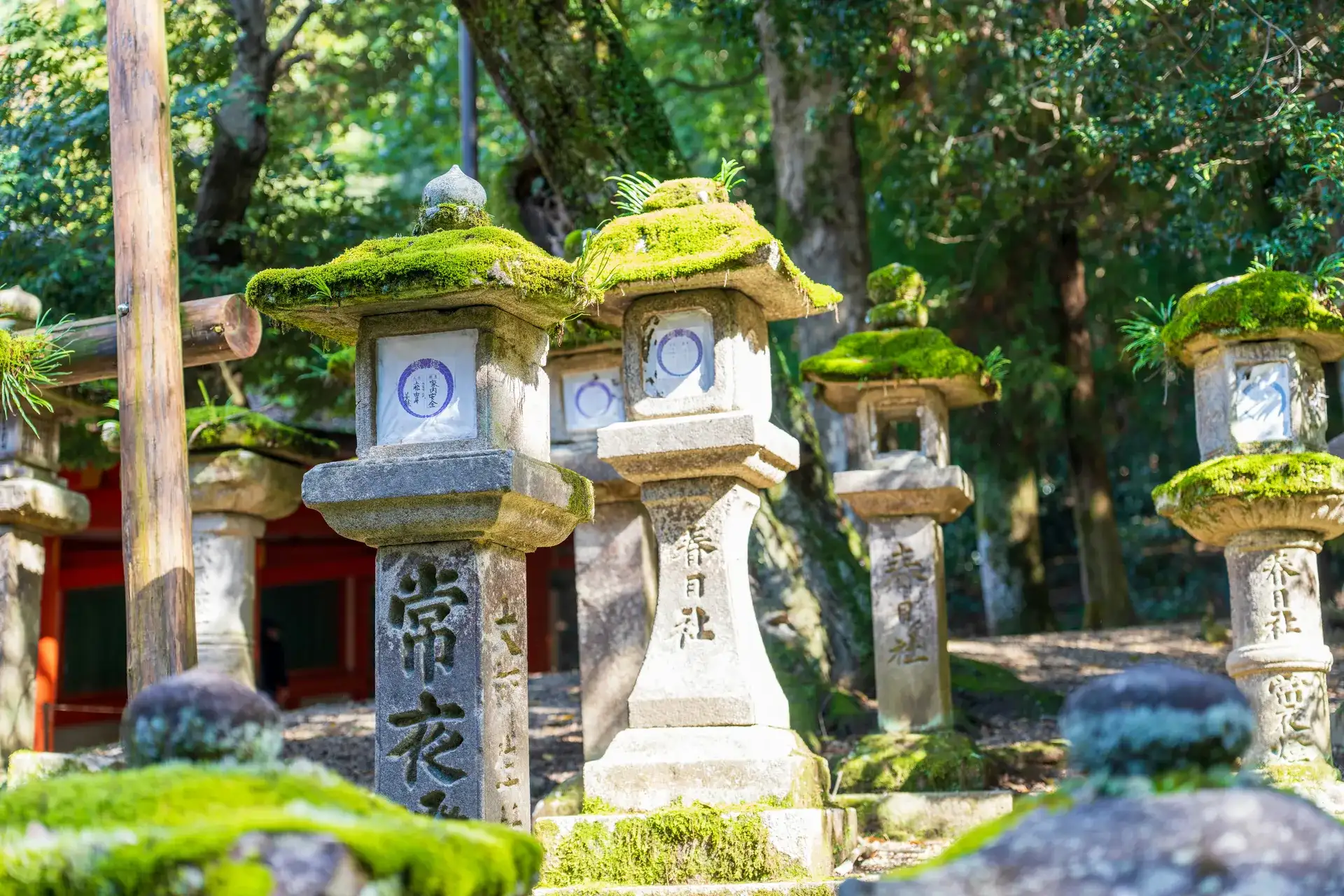
Nara and Yoshino in 6 days: itinerary and hotels
Six days in the first capital and the mountain of a hundred thousand cherry trees: the great Buddha of Tōdai-ji, the lanterns of Kasuga-taisha, the Hōryū-ji, the Kinpusen-ji of Yoshino, the painted tombs of Asuka and the Yamanobe no Michi.
See the itinerary
Module
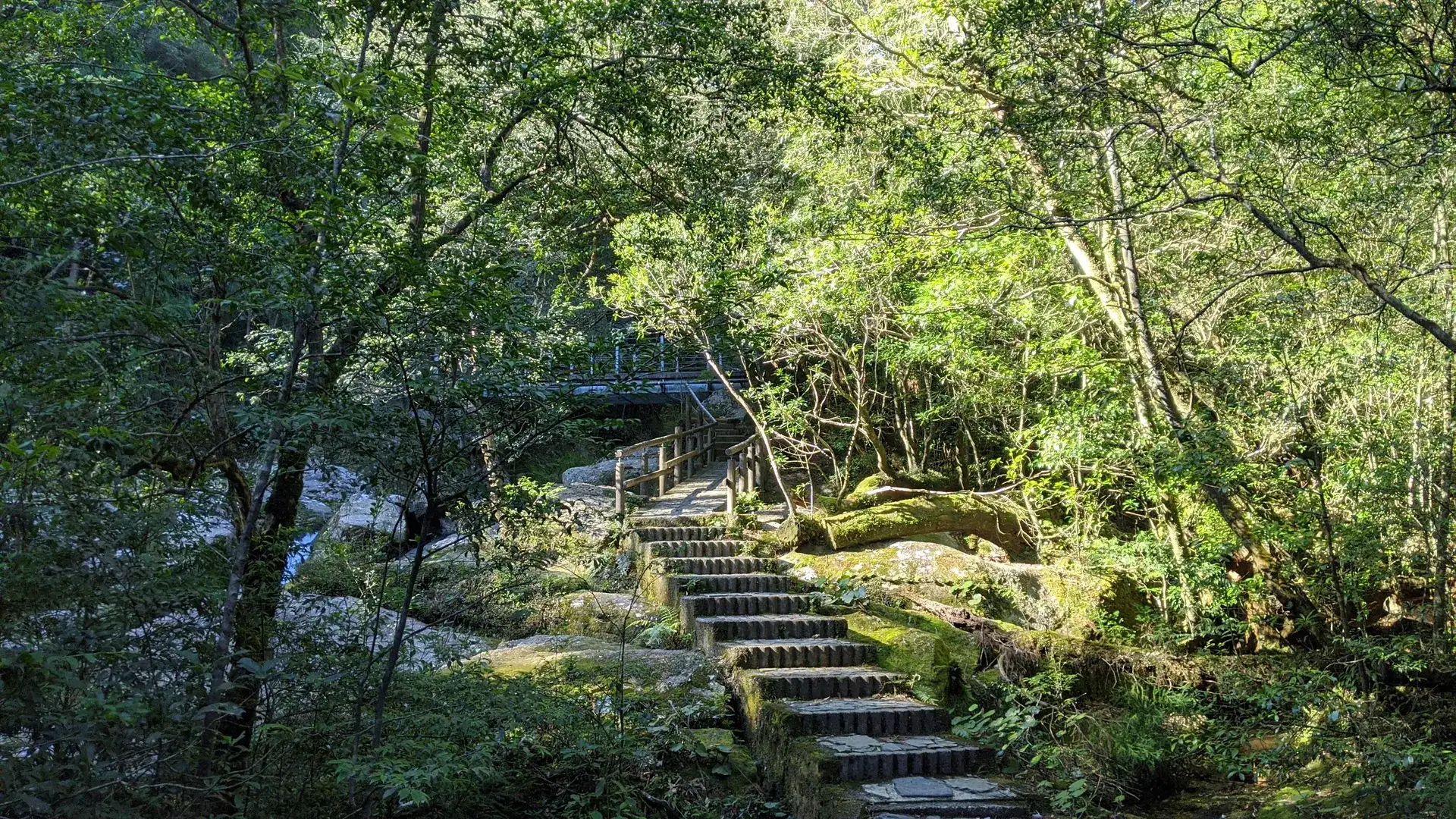
Yakushima and Okinawa in 7 days: itinerary and hotels
Seven days in the subtropical south: the thousand-year-old cedar forest of Yakushima and the Jōmon-sugi trek, then the Ryūkyū kingdom, the potters' street of Naha, the fukugi road of Bise and the Churaumi aquarium.
See the itinerary
Module
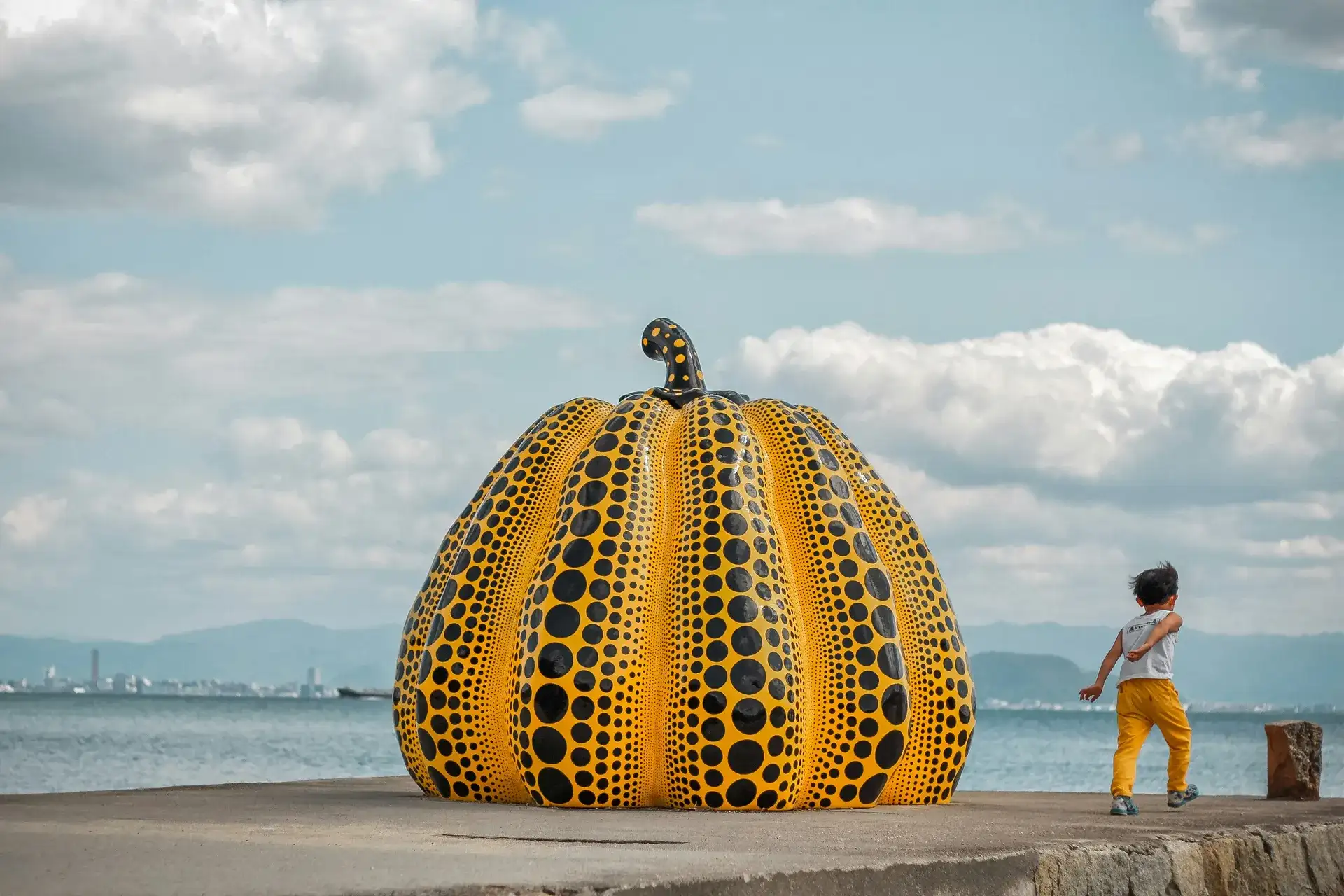
Shikoku in 12 days: day-by-day itinerary and hotels
Twelve days from Imabari to Takamatsu: the oldest bath in Japan at Dōgo, the Pacific capes, the undammed Shimanto, the vine bridges of the Iya valley and the art islands of Naoshima and Teshima.
See the itinerary
Also worth reading about Japan
Japan
The San'in coast and Shikoku: Japan without the crowds
Two hours from Miyajima, the Sea of Japan coast lines up seven village baths, sixteen kilometres of dunes and a shrine where you clap four times instead of twice.