How many days in Tokyo? Ten, and three districts to sleep in
Ten days to visit Tokyo district by district, with three districts to sleep in one after the other, Asakusa, Shinjuku then Shibuya, without crossing the city.
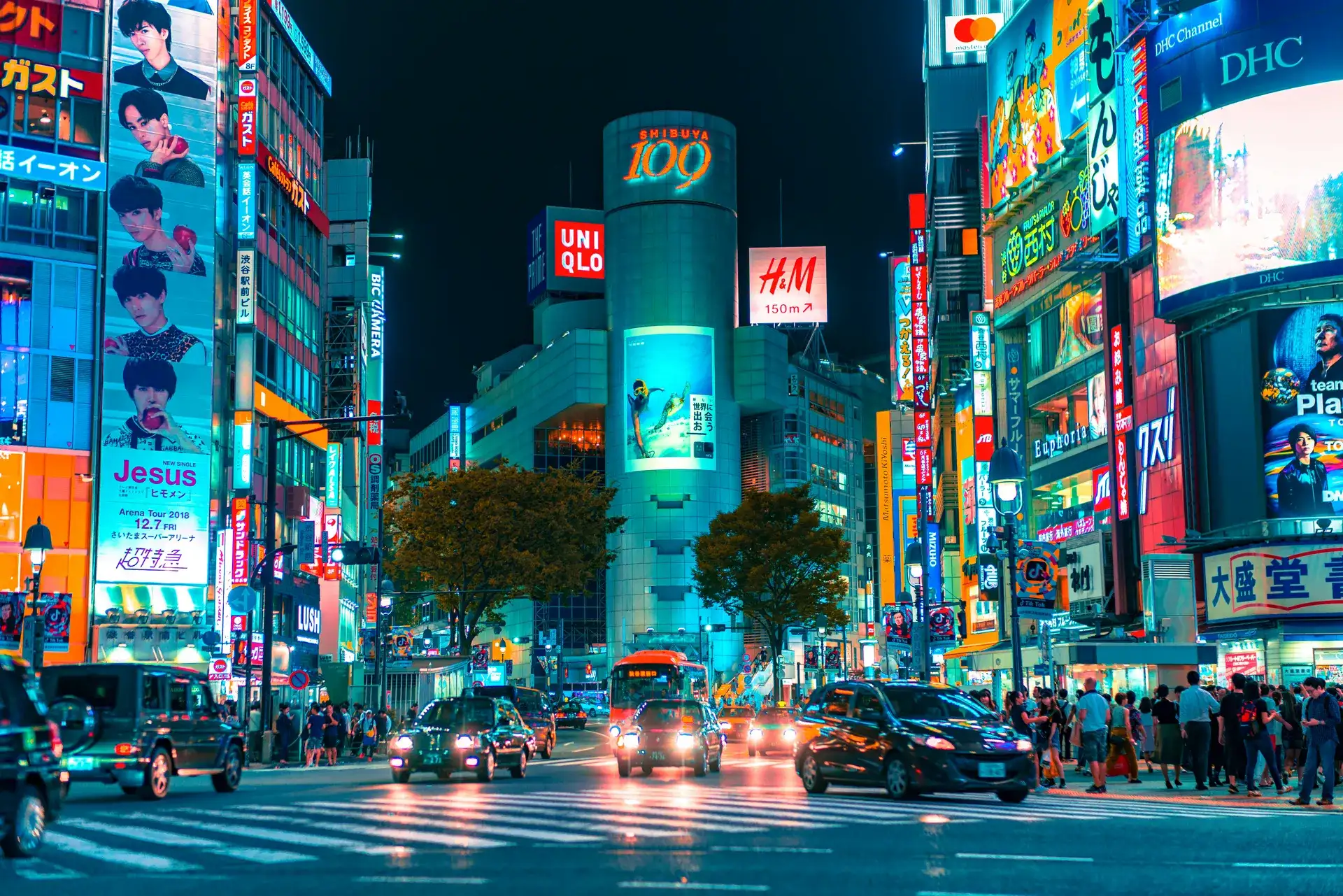
Allow ten days to visit Tokyo district by district, a week if the city is only one stop on your trip. More than the length, what matters is where you sleep. Tokyo has no single center: it is a string of districts that look nothing alike, and a badly placed hotel has you spending your mornings on the metro.
The most efficient method is to divide the city into three sectors, the east, the center and the west, and to change district as the stay goes on.
How many days to plan for Tokyo, depending on what you want to see
| Length | What you see | Where to sleep |
|---|---|---|
| Ten days | All three sectors without sacrificing anything, with half a day of rest | Asakusa, then Shinjuku, then Shibuya |
| One week | The essentials of the east and the west, plus two days of your choice | Asakusa, then Shinjuku or Shibuya |
| Five days | The great classics, one sector per day | Asakusa, then Shinjuku or Shibuya |
| Two more days | The two parks on the bay, in Maihama | Near the parks, on the Chiba side |
Add a few days if you want to see the Kantō around the city: Kawagoe, Sawara or the Chiba coast each take a day.
Where to stay in Tokyo: Asakusa in the east, Shinjuku in the center, Shibuya in the west
Changing district saves time. Each base holds three or four nights, each day fits within a short radius of the hotel, and by moving from east to west you never cross the city twice in the same day.
- Asakusa, for the east (three or four nights). The district of Sensō-ji, within reach of Ueno, Ryōgoku and Akihabara. Kappabashi, the kitchenware street, is a stone’s throw away.
- Shinjuku, for the center and the bay (three nights). Around the station’s east exit and Kabukichō, the densest nightlife district in Japan. It is the base for the palace, Ginza, Odaiba and Shinjuku itself.
- Shibuya, to finish in the west (three nights). As close to the station as possible, for Harajuku, Meiji-jingū, Aoyama and Roppongi. A hotel linked to the station by an indoor walkway gets you back without going out into the street, which matters in this district.
Tip: If you are going to the parks on the bay, sleep on site, in Urayasu near Shin-Urayasu JR station, rather than making the round trip from the city: they are two full days, from opening to evening.
What to see in Tokyo, sector by sector
The east. The Kaminarimon and its four-meter lantern, Nakamise, then Sensō-ji, the oldest temple in Tokyo. The Tokyo Skytree and its Tembō Galleria at 450 meters (1,480 ft). In Ueno, the Tokyo National Museum needs three hours minimum, then the park, the zoo and Shinobazu Pond with its Bentendō pavilion. In Ryōgoku, the Kokugikan and its free sumo museum, the Yasuda garden. Finish with Akihabara, the Confucian Yushima Seidō and Kanda-myōjin in the evening.
Tip: Go up the Skytree at dusk, the city lights up during the ascent. Under a cloudy sky the view loses all its interest: check the weather in the morning and postpone the visit if needed.
The center and the bay. The East Gardens of the Imperial Palace, Nijūbashi, the brick façade of Tokyo Station, then Ginza and the Kabuki-za, where you can buy a ticket for a single act at the fourth-floor counter. The Hama-rikyū garden, and in the evening the free observatory on the 46th floor of Caretta Shiodome. On the bay side, the Miraikan and the view of the Rainbow Bridge in Odaiba, teamLab Borderless at Azabudai Hills (two to three hours), then Tokyo Tower behind the roof of Zōjō-ji. Finally, two Edo gardens: Koishikawa Kōrakuen, the oldest garden in Tokyo, and Rikugi-en.
The west. In Shinjuku, Shinjuku Gyoen, the free view from the 45th floor of the city hall, with Fuji in clear weather, Kabukichō, Isetan, and Omoide Yokochō in the evening. Then the forest of Meiji-jingū, Harajuku and Omotesandō, the Nezu Museum, Shibuya Crossing and Shibuya Sky. Finally the ginkgo avenue of Meiji Jingū Gaien, the Mori Art Museum and Tokyo Midtown in Roppongi, then Shimokitazawa and Nakameguro.
The Warner Bros. studios in Nerima take three to four hours: half a day, with the other half free.
When to visit Tokyo: cherry blossoms in spring, maples in late November
Tokyo can be visited all year round. Late March and early April for the cherry blossoms of Ueno and Shinjuku Gyoen, late November for the maples of Rikugi-en, lit up in the evening, and the ginkgos of Aoyama, from mid-November to Christmas for the Roppongi illuminations. The month-by-month detail is in when to go to Japan.
Watch out: Summer is very heavy, around 33 °C (91 °F) with high humidity, ill-suited to the long days of walking that Tokyo demands, and the typhoon season runs from late August to October.
What to do around Tokyo: Kawagoe, Sawara, Sakura and the Chiba coast
What you miss by staying in the city fits into a few days, easier with a rental car:
- Kawagoe, little Edo, in Saitama: its clay-walled merchant storehouses and its wooden bell tower, whose bell rings at 6:00, 12:00, 15:00 and 18:00.
- Sawara, in Chiba: the Ono merchant canal and the house of Inō Tadataka, who drew the first accurate map of Japan.
- Sakura: the National Museum of Japanese History, at least three hours, one of the most complete in the country.
- Narita: Naritasan Shinshō-ji and its park, before or after a flight.
- The tip of Chiba: the Byōbugaura cliffs and the Inubōsaki lighthouse, at the easternmost point of the Kantō.
Kamakura and Yokohama, for their part, are in our stage Nagoya, Fuji and Hakone in 14 days.
Tokyo in a week or in five days: what to keep
We do not sell a Tokyo in five or seven days. The rule, if you have fewer than ten days: cut within the sectors, not a whole sector, and keep one base per sector rather than a single hotel for everything.
One week, with two nights in Asakusa and then the rest in Shinjuku or Shibuya:
- Asakusa, Sensō-ji and the Skytree.
- Ueno and the Tokyo National Museum (not on a Monday).
- The palace, Marunouchi and Ginza (neither Monday nor Friday).
- Shinjuku on foot, from Shinjuku Gyoen to Omoide Yokochō.
- Meiji-jingū, Harajuku and Shibuya.
- and 7. Your choice: Odaiba, teamLab and Tokyo Tower; the Edo gardens; Aoyama and Roppongi.
In five days, keep the first five days of this list. What goes first: the parks on the bay, which take two full days, then Nerima and the duplicate observatories. Between the Skytree, Shibuya Sky and the city hall, which is free, one is enough on a short trip.
This is a judgment call on our part, not a tested itinerary: ten days is the only split our travel books detail.
Practical information: transport, closures, car and bookings
- Suica or Pasmo card. Rechargeable, valid on the metro, JR trains and buses, and available in a phone wallet. Tokyo has two metro networks, Tokyo Metro and Toei, with separate tickets but the same card.
- Last train around midnight. There is nothing after that: get back before or plan on a taxi.
- Closing days. The East Gardens of the Imperial Palace close on Mondays and Fridays, as well as on days of official ceremonies. The Tokyo National Museum closes on Mondays, like most of the city’s museums.
- No car in the city. It is expensive and serves no purpose: hotels do not offer free parking, and in Asakusa you should allow ¥1,500 a night, booked by phone, at the time of writing in September 2026. If you rent one for the surroundings, return it on arrival, checking the one-way fees, which are sometimes high.
- Timed tickets. The two parks on the bay go on sale two months ahead, the Nerima studios several weeks before, teamLab Borderless and Shibuya Sky by time slot, with sunset going first. Lead times detailed in what to book in advance for a trip to Japan.
- Meals. Allow ¥900 to ¥1,500 at lunchtime in a neighborhood restaurant and ¥2,500 to ¥5,000 in the evening, in September 2026, to be checked again. Keep cash for the counters of Omoide Yokochō and the temples.
So, how many days in Tokyo?
Ten days if Tokyo is the heart of the trip, across three successive districts, Asakusa, Shinjuku then Shibuya, plus a few days around it if you want to see the Kantō. A week if the city is only one stop, provided you give up the parks on the bay. Below that, choose two sectors and do not try to see everything.
Our Kantō and Tokyo stage in 15 days details this split with its hotels and their booking links. It is also the fifth stage of Japan from north to south in 88 days. To place Tokyo within a wider trip, see how many days in Japan, or all our regions on the Japan page.
To place Tokyo among the other regions of the country, see what to see in Japan.
Is Tokyo a dangerous city?
No, Tokyo is one of the safest cities in the world. The only useful caution concerns the bar touts in Kabukichō and Roppongi, to be ignored every time. The instructions to follow in the event of an earthquake are posted in every hotel.
Can you visit the inside of Tokyo's Imperial Palace?
Not freely: the palace itself can only be seen on a guided tour, booked by request in advance. The East Gardens, on the other hand, are open and free through the Ōte-mon gate, with a token handed out at the entrance and returned on the way out.
Where can you see a sumo tournament in Tokyo?
At the Kokugikan in Ryōgoku, the eleven-thousand-seat national arena, which hosts three of the six annual tournaments, in January, May and September. It is also the district where most of the wrestlers' stables are based. Calendar noted in September 2026, to be checked again before you fix your dates.
What to do in Tokyo when it rains?
Go for the museums: the Tokyo National Museum, the Miraikan in Odaiba, teamLab Borderless or the Nerima studios can all be visited under cover. Avoid Shibuya Sky, however, whose open-air rooftop closes in rain, strong wind or storms, with no refund beyond a certain deadline.
Can you pay by card in Tokyo?
Yes, cards are accepted almost everywhere in Tokyo, except at the small counters of Omoide Yokochō and in temples. There is no tip to leave. To eat cheaply, the food halls in department store basements sell off their ready meals at a discount an hour before closing.
From research to departure
Travelling in Japan
This article comes out of a complete itinerary in Japan: the day-by-day program, hotels named with their booking link, and the tickets to book flagged in advance.
Module
Kantō and Tokyo in 15 days: day-by-day itinerary and hotels
Fifteen days from the Edo warehouses of Kawagoe and the Chiba cliffs to ten days of Tokyo, district by district: Asakusa, Ueno, the Imperial Palace, Odaiba, Shinjuku, Shibuya and Roppongi.
See the itinerary
Classic
Tokyo, Hakone, Kyoto in 12 days: a first trip to Japan, no car needed
Four days in Tokyo, one night in Hakone, five in Kyoto with a day trip to Nara, and a last one in Osaka, by train, subway and on foot.
See the itinerary
Module
Nagoya, Fuji and Hakone in 14 days: itinerary and hotels
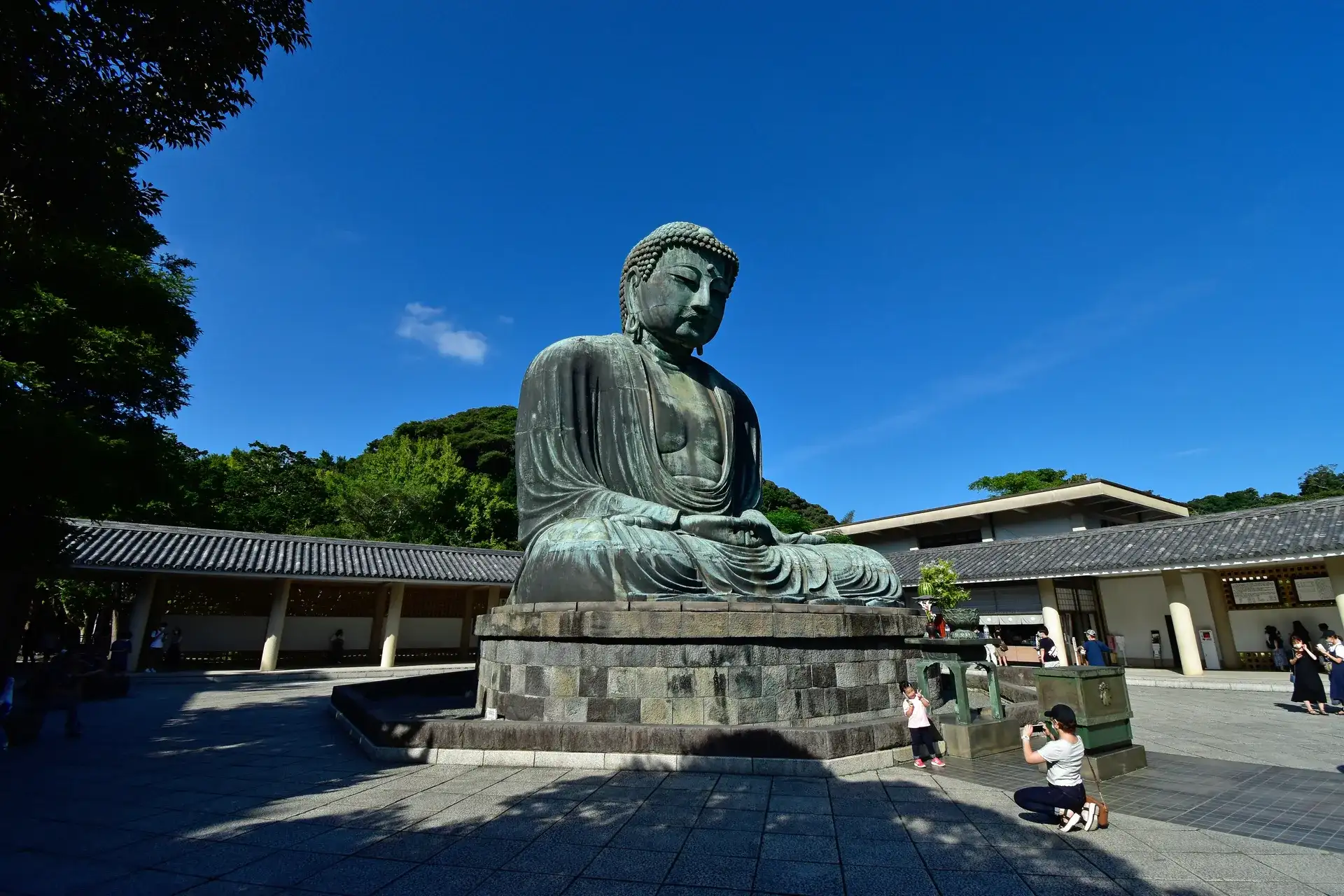
Fourteen days from the castles and museums of Nagoya to the five lakes of Fuji, then Hakone and its boiling valley, the great Buddha of Kamakura, Enoshima and the port of Yokohama.
See the itinerary
Also worth reading about Japan
Japan
Can ChatGPT plan a trip to Japan? What to check
An AI gives a good first draft of a Japan itinerary, not a guarantee. Hotels, timed tickets, closures, driving license: the checklist to follow.
Japan
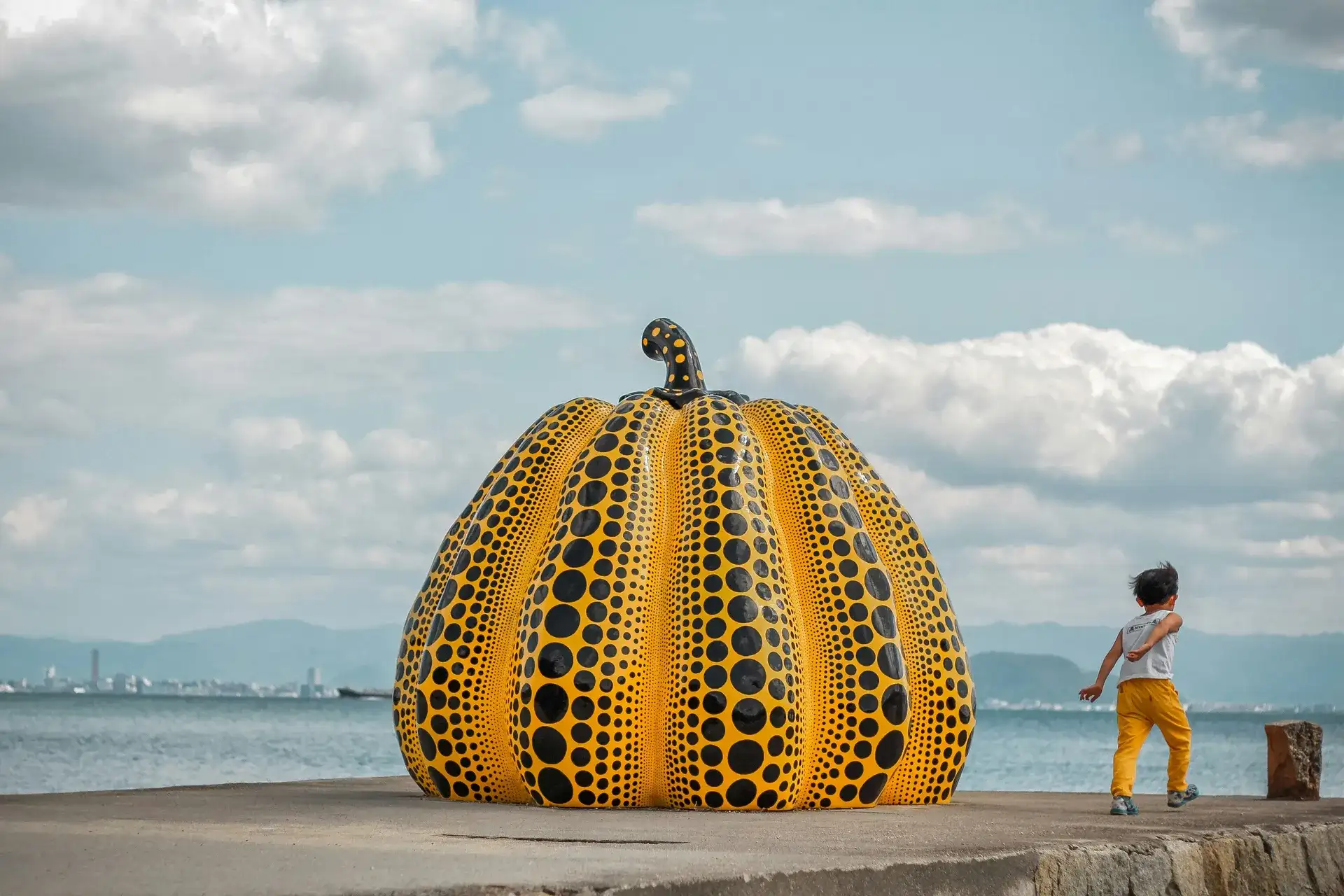
Visiting Naoshima and Teshima: ferries, museums, closed days
Allow two days, one per island, between Wednesday and Sunday: Naoshima closes on Mondays, Teshima on Tuesdays. Ferries, tickets to book, where to stay.
Japan
Shikoku: which itinerary and how many days to visit the island
Five days to cross Shikoku, eight with the upper Iya valley and the art islands, twelve for the full loop. By car, in April, May or November.