What to see in Japan: the must-see places, region by region
What to see in Japan: Tokyo, Mount Fuji, Kyoto, Nara, Osaka and Hiroshima for a first trip, then the Alps and the islands. Length and season by region.
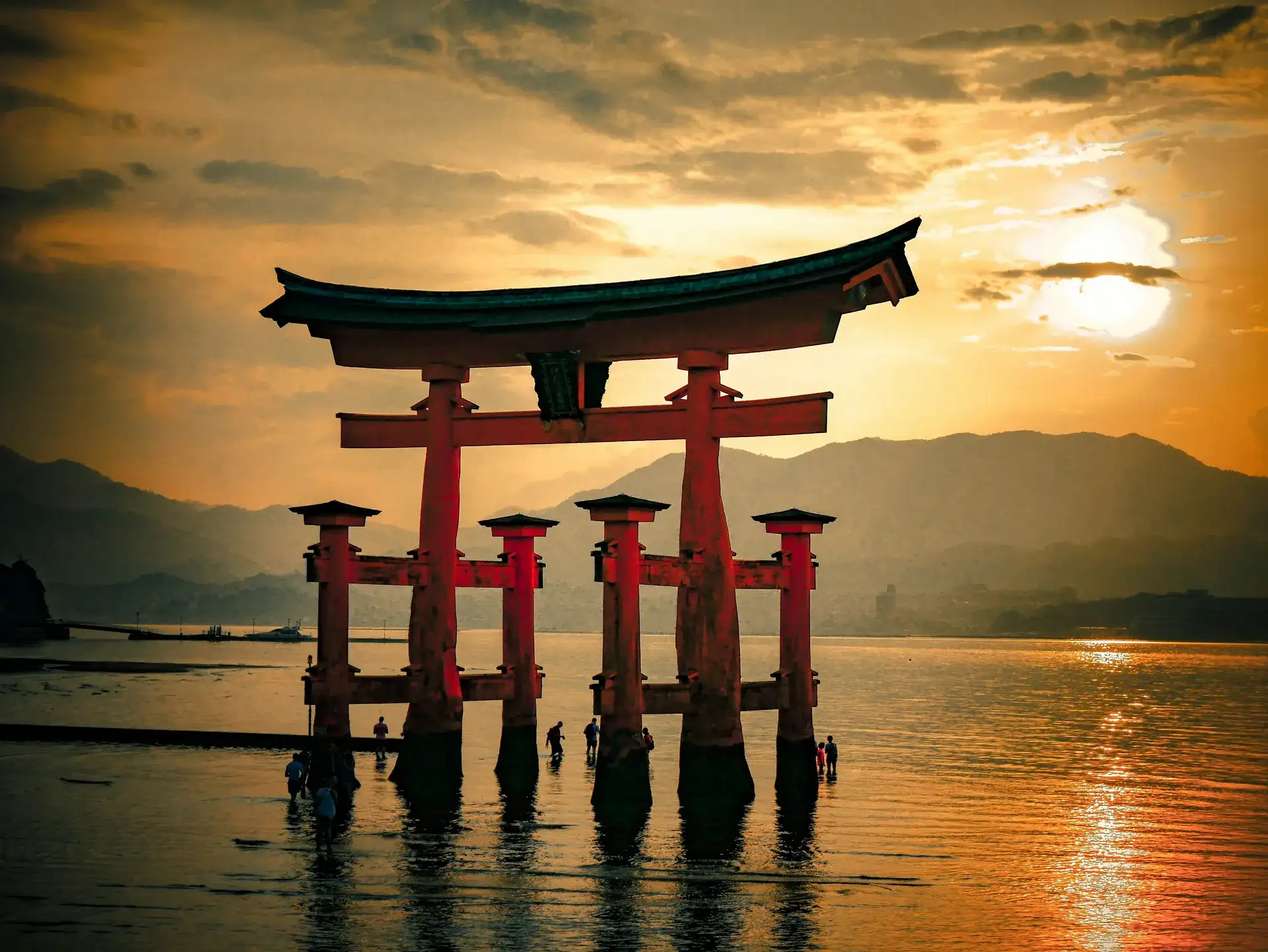
For a first trip to Japan, the must-see places sit along a single axis: Tokyo, Mount Fuji and Hakone, Kyoto and Nara, Osaka, then Hiroshima and Miyajima. Two weeks take you from Tokyo to Osaka; with three, add Hiroshima and Miyajima, or else the Japanese Alps and Kanazawa. Hokkaidō, Tōhoku, Shikoku, Kyūshū and Okinawa are best kept for a second trip: each of these regions fills one on its own.
What to see in Japan: the table of regions, lengths and seasons
| Region | What to see | Suggested length | Best time |
|---|---|---|---|
| Tokyo and its surroundings | Asakusa, Shibuya, Kamakura, Nikkō | 5 to 10 days | All year round, except July and August |
| Mount Fuji and Hakone | The Chūreitō pagoda, Lake Ashi | 2 to 4 days | November to February |
| Kyoto and Nara | Fushimi Inari, Kinkaku-ji, Tōdai-ji | 5 to 8 days | May and October |
| Osaka and the Kansai | Dōtonbori, Himeji, Mount Kōya | 2 to 5 days | March to May, October and November |
| Hiroshima and Miyajima | The Peace Memorial, the Itsukushima torii | 2 days | April to June, October and November |
| Japanese Alps and Kanazawa | Kamikōchi, Shirakawa-gō, Kenroku-en | 5 to 7 days | Late April to early November |
| Hokkaidō | Shiretoko, Furano, Hakodate | 14 days | June to September |
| Tōhoku | Hirosaki, Hiraizumi, Matsushima | 17 days | June to October |
| Shikoku | Dōgo Onsen, the Iya Valley, Naoshima | 12 days | April, May and November |
| Kyūshū | Nagasaki, Mount Aso, Beppu | 25 days | April, May, October and November |
| Okinawa and Yakushima | Shuri Castle, the cedars of Yakushima | 7 days | April and November |
The first six lengths are orders of magnitude, to be adjusted to your pace, for a trip of two or three weeks; the last five are those of a complete tour of the region. The prices quoted were noted at the time of writing, in October 2026: check them again on the official websites.
What to do in Tokyo and its surroundings
Tokyo is visited district by district:
- In the east, Asakusa and Sensō-ji, the oldest temple in the city, then the Tokyo National Museum in Ueno, closed on Mondays.
- In the center, the East Gardens of the Imperial Palace, free, closed on Mondays and Fridays, then Ginza.
- In the west, the forest of Meiji-jingū, Harajuku and Shibuya Crossing. The view from the 45th floor of the city hall is free.
Around the city, two excursions of one to two days: Kamakura, for its great bronze Buddha, 11.3 meters (37 ft) tall, and Nikkō, for Tōshō-gū, the mausoleum of the founder of the Tokugawa shogunate, and the Kegon Falls, 97 meters.
Length: five days for the great classics, ten for all the districts, detailed in how many days in Tokyo. Time of year: all year round, but summer is very heavy, around 33 °C (91 °F).
Mount Fuji and Hakone: when and where to see the volcano from
Fuji shows itself less often than you might think: very frequently from November to February, rarely in summer, when haze hides it for days on end. Aim for the early morning, and sleep several nights on the spot to multiply your chances. To plan the stop, see our guide to visiting Mount Fuji.
- On the Fuji side: the Chūreitō pagoda, at the top of 398 steps, which gives the most reproduced framing in Japan.
- On the Hakone side: the cruise on Lake Ashi, the torii in the water at Hakone-jinja and the fumaroles of Ōwakudani.
Watch out: Ōwakudani closes without notice depending on the level of volcanic gas, sometimes for several months. Check the status of the site the day before.
Length: two days, one per side, three or four if Fuji is your priority. Time of year: all year round apart from July and August.
Kyoto and Nara: which temples to visit first
In Kyoto, allow one day per district:
- Fushimi: Fushimi Inari and its torii, around ten thousand over four kilometers. Free site, open day and night.
- Higashiyama: the terrace of Kiyomizu-dera, the lanes of Sannenzaka, Gion.
- The north-west: Kinkaku-ji, the Golden Pavilion, and the dry garden of Ryōan-ji.
- The east: Ginkaku-ji, the Philosopher’s Path and Nanzen-ji.
- Arashiyama: the Sagano bamboo grove and the garden of Tenryū-ji.
Tip: Fushimi Inari, the bamboo grove and Kiyomizu-dera are bearable before 8:00 and unbearable after 10:00. Kinkaku-ji, which opens at 9:00, is best visited at opening time.
In Nara, a little over thirty minutes by train from Kyoto, one day is enough for the great bronze Buddha of Tōdai-ji, fifteen meters tall, and the free-roaming deer in the park. A second goes to Hōryū-ji, the oldest wooden buildings standing in the world.
Length: four to six days in Kyoto, one or two in Nara. Time of year: May and October. The cherry blossoms, in late March and early April, and the maples, from mid-November to early December, double the price of accommodation. See when to go to Japan.
Osaka and the Kansai: Himeji and Mount Kōya as excursions
Osaka is two and a half hours from Tokyo by shinkansen. There you see the castle ramparts, whose keep was rebuilt in concrete in 1931, and Dōtonbori in the evening for takoyaki. For the city itself, see what to do in Osaka. Two excursions can be added:
- Himeji: the White Heron Castle, eighty-two listed buildings, never burnt or bombed. Two hours to visit.
- Mount Kōya: one hundred and seventeen temples on a plateau at an altitude of 800 meters (2,620 ft), the Okunoin path, and the option of a night in a temple.
Length: two days in Osaka, one in Himeji, a day and a night on Mount Kōya. Time of year: from March to May, then October and November.
Hiroshima and Miyajima: two days, two visits
- Hiroshima: the Genbaku Dome, left standing beneath the explosion, then the Peace Memorial Park and Museum. The museum, which is harrowing, takes two to three hours: do not plan anything demanding afterwards. Admission ¥200; the first slot, from 7:30 to 8:30, is booked online.
- Miyajima: the Itsukushima shrine, built on stilts, its sixteen-meter torii, and Mount Misen, 535 meters (1,760 ft), by ropeway or on foot. A visitor tax of ¥100 is collected with the ferry ticket.
Tip: Check the tide table. At high tide the torii floats, at low tide you walk out to it: the ideal is to see both in the same day.
Length: two days. Time of year: April to June, October and November.
The Japanese Alps and Kanazawa: for a third week
- Kanazawa: Kenroku-en, one of the three great gardens of Japan, and the teahouse district of Higashi Chaya.
- Shirakawa-gō: around a hundred thatched farmhouses. Sleeping there lets you watch the village empty at 17:00.
- Takayama: the merchants’ houses of Sanmachi Suji.
- Kamikōchi: a valley at an altitude of 1,500 meters (4,900 ft), closed to cars.
- The Tateyama Kurobe Alpine Route: a six to eight-hour crossing, up to 2,450 meters.
Length: five to seven days. Time of year: from late April to early November. Kamikōchi closes from mid-November to mid-April, the Alpine Route from late November to mid-April.
What to do in Japan on a second trip: five regions apart
- Hokkaidō, from June to September: the Shiretoko Peninsula, the lavender of Furano from mid-July to early August, the night view from Mount Hakodate. See the tour of Hokkaidō.
- Tōhoku, from June to October: Hirosaki Castle, the golden hall of Hiraizumi, Ginzan Onsen, Matsushima Bay.
- Shikoku, in April, May and November: Dōgo Onsen, the oldest working bathhouse in Japan, the vine bridges of the Iya Valley, the art island of Naoshima. The island combines with the San’in coast.
- Kyūshū, in spring and autumn: Nagasaki, the crater of Mount Aso, the hells of Beppu, the Sakurajima volcano. Avoid August and September, the peak of the typhoons.
- Okinawa and Yakushima, in April and November: Shuri Castle and the Churaumi Aquarium, the moss forest of Yakushima. The typhoons pass from July to October.
So, what to see in Japan in two or three weeks?
- Two weeks, first trip: five nights in Tokyo, two in Hakone or at Lake Kawaguchi, at the foot of Fuji, five in Kyoto, including a day in Nara, and one in Osaka.
- Three weeks: the same base, plus Hiroshima and Miyajima, or else Kanazawa, Shirakawa-gō and Takayama, not both.
- Second trip: a single region, chosen according to the month.
These are suggestions for visiting Japan. For a first trip, Tokyo, Hakone, Kyoto in 12 days follows this route without a car; our other travel books detail each region separately, for example Kyoto or Tokyo and the Kantō, all brought together on the Japan page.
To get practical, our two-week itinerary links Tokyo, Kyoto and Osaka, how many days in Kyoto settles the length of the stay there, the budget puts figures on the trip and JR Pass or regional passes explains how to get around.
Can you climb to the summit of Mount Fuji?
Yes, but only in summer. In 2026, the Yoshida and Subashiri trails opened on July 1, the Gotemba and Fujinomiya trails on July 10, and all of them closed on September 10. That year, an access fee of ¥4,000 was charged on all four trails, and the entrance was closed from 14:00 to 3:00 in the morning to anyone who had not booked a mountain hut. The rules for 2027 had not been published at the time of writing, in October 2026: check them on the official climbing website.
What to see in Japan with children?
The free-roaming deer of Nara Park, the Kaiyūkan aquarium in Osaka and its whale shark, the Kyoto Railway Museum. Theme parks need preparing: tickets for the two parks on Tokyo Bay go on sale two months ahead, and at Universal Studios in Osaka the fast-track pass is booked weeks in advance. In Nara, the deer are still wild animals, which bite when you hold on to a cracker for too long.
Which Japanese castles are still original?
Himeji is the most complete, with eighty-two listed buildings. Matsumoto has the oldest five-tiered, six-story keep still standing, and Hikone and Matsue are both designated National Treasures. Matsuyama and Kōchi, on Shikoku, have also kept theirs. By contrast, the keeps of Osaka and Hiroshima are concrete reconstructions, and the one in Nagoya has been closed to the public since 2018.
How much does it cost to enter temples and castles in Japan?
Most temples in Kyoto charge between ¥300 and ¥600. Allow ¥500 at Kinkaku-ji, ¥800 at Tōdai-ji in Nara, ¥2,000 at Hōryū-ji and ¥2,500 at Himeji Castle, prices noted at the time of writing, in October 2026, to be checked again on the official websites. Many ticket offices only take cash.
From research to departure
Travelling in Japan
This article comes out of a complete itinerary in Japan: the day-by-day program, hotels named with their booking link, and the tickets to book flagged in advance.
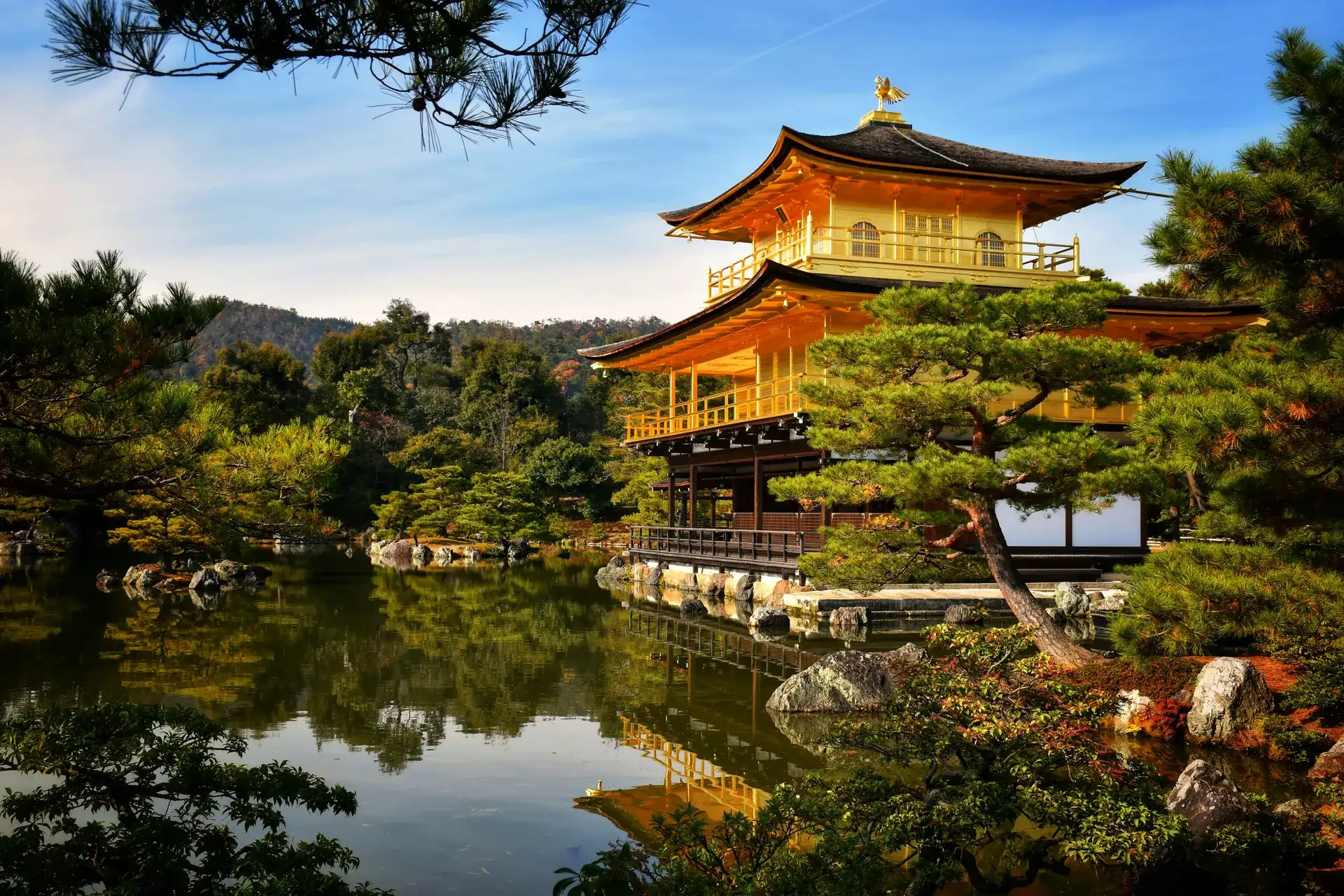
Classic
Tokyo, Hakone, Kyoto in 12 days: a first trip to Japan, no car needed
Four days in Tokyo, one night in Hakone, five in Kyoto with a day trip to Nara, and a last one in Osaka, by train, subway and on foot.
See the itinerary
Module
Kyoto in 14 days: day-by-day itinerary and hotel
Fourteen nights in a single base to cross a thousand years of capital, district by district: Fushimi Inari, Kiyomizu-dera, Kinkaku-ji, Arashiyama, the Katsura villa, Ōhara and Takao.
See the itinerary
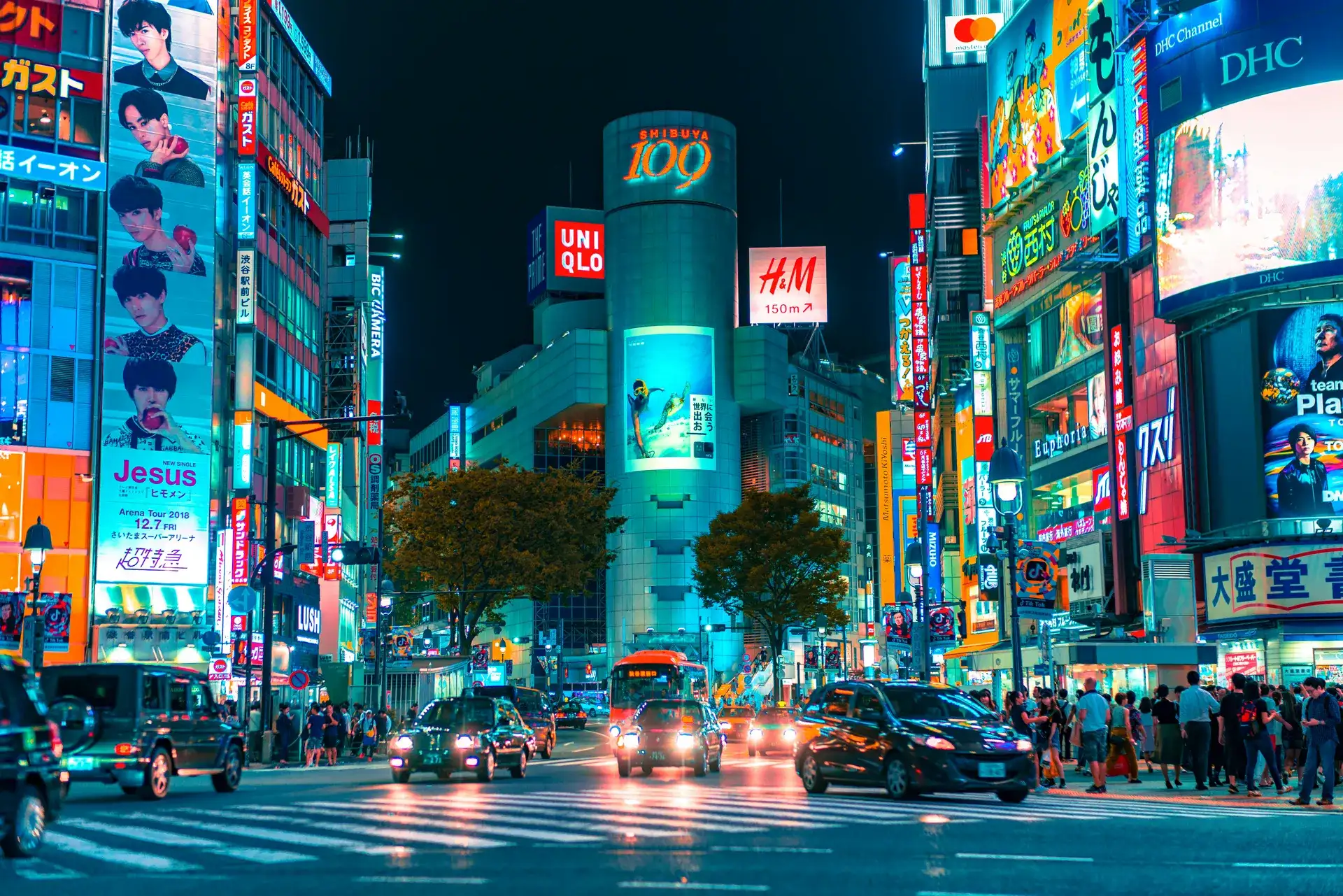
Module
Kantō and Tokyo in 15 days: day-by-day itinerary and hotels
Fifteen days from the Edo warehouses of Kawagoe and the Chiba cliffs to ten days of Tokyo, district by district: Asakusa, Ueno, the Imperial Palace, Odaiba, Shinjuku, Shibuya and Roppongi.
See the itinerary
Also worth reading about Japan
Japan
Can ChatGPT plan a trip to Japan? What to check
An AI gives a good first draft of a Japan itinerary, not a guarantee. Hotels, timed tickets, closures, driving license: the checklist to follow.
Japan
Visiting Naoshima and Teshima: ferries, museums, closed days
Allow two days, one per island, between Wednesday and Sunday: Naoshima closes on Mondays, Teshima on Tuesdays. Ferries, tickets to book, where to stay.
Japan
Shikoku: which itinerary and how many days to visit the island
Five days to cross Shikoku, eight with the upper Iya valley and the art islands, twelve for the full loop. By car, in April, May or November.