Japan itinerary in 2 weeks, 10 days or 3 weeks
Japan itinerary in 2 weeks: Tokyo 5 nights, Hakone or Fuji 2, Kyoto and Nara 5, Osaka 1. What to drop in 10 days, what to add in 3 weeks.
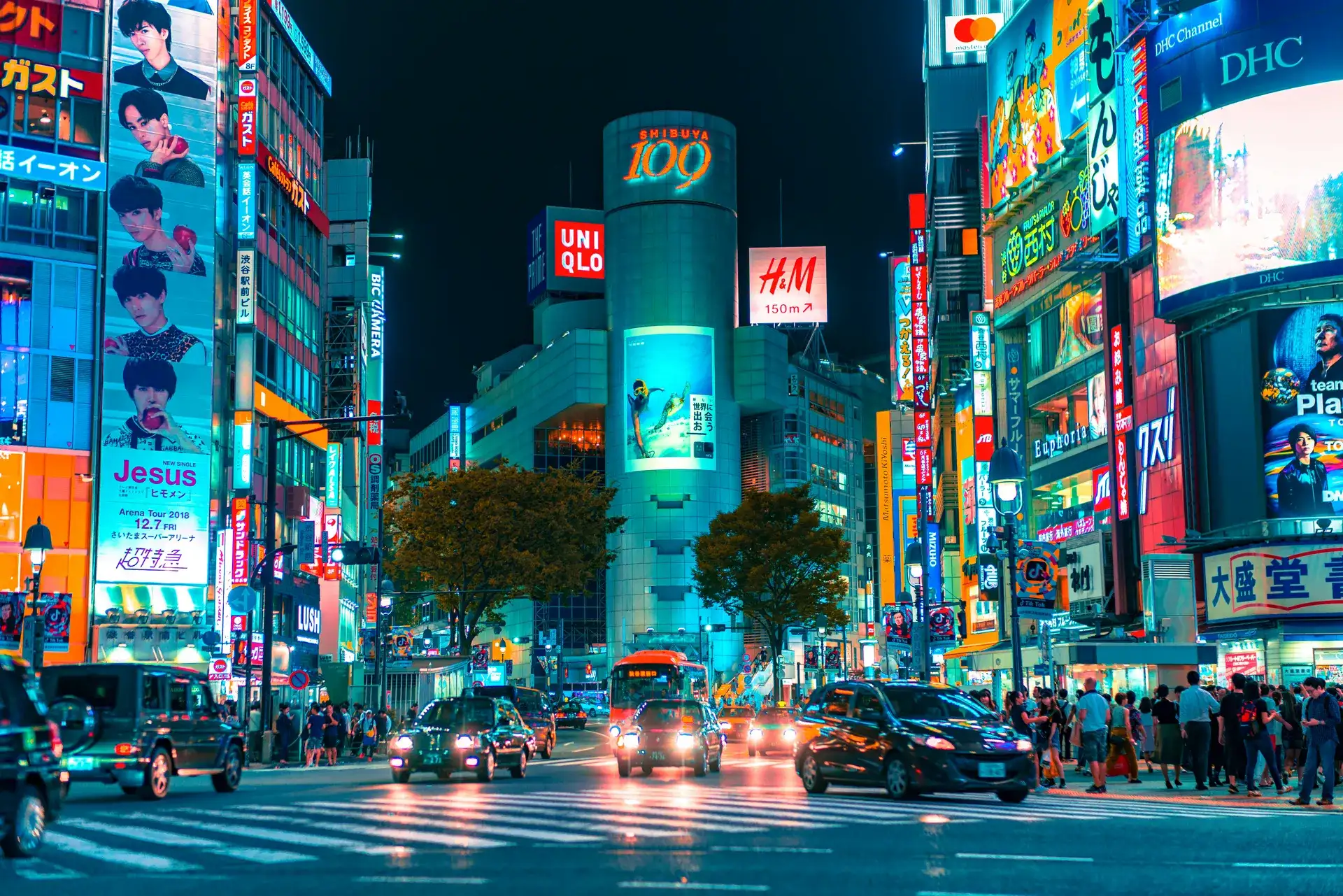
For a first trip, a 2-week Japan itinerary fits into four stops: five nights in Tokyo, two in Hakone or at the foot of Mount Fuji, five in Kyoto with a day in Nara, and a last one in Osaka, from where you fly home through Kansai Airport. In 10 days, drop the Fuji stop, one night in Tokyo and one night in Kyoto. In 3 weeks, add either Hiroshima and Miyajima, or Kanazawa and the Japanese Alps, not both in a rush.
It is a route in a straight line, from east to west, without a car. It skims each city more than it exhausts it, and you may as well know that.
Japan itinerary in 2 weeks: the day-by-day table
| Day | Stop | Nights | Journey to get there |
|---|---|---|---|
| 1 to 5 | Tokyo | 5 | International flight, arriving at Haneda or Narita |
| 6 and 7 | Hakone, or Lake Kawaguchi at the foot of Fuji | 2 | 1 hr 20 to 1 hr 30 by train from Shinjuku, about 2 hr for Kawaguchiko |
| 8 to 12 | Kyoto, including a day in Nara | 5 | Direct Hikari shinkansen from Odawara, about 2 hr |
| 13 | Osaka | 1 | About 30 minutes by JR rapid train |
| 14 | Flight home through Kansai Airport | 0 | Haruka train to the airport |
That makes thirteen nights and three changes of city. The journey times are those given by the Japanese railway companies and tourist offices at the time of writing, in October 2026: check them again before you book.
This route is a suggestion, not a product: Étaperia does not sell any 10, 14 or 21-day tour on this route. Our travel books detail each region crossed separately, on the Japan page.
Stop by stop: what to see, how many nights, how to get there
Tokyo, five nights. The first day is arrival day. That leaves four full days, one per sector:
- Asakusa and Sensō-ji, the oldest temple in the city;
- Ueno and the Tokyo National Museum, three hours minimum, closed on Mondays;
- Meiji-jingū, Harajuku and Shibuya Crossing;
- Shinjuku, its garden and the free observatory of the city hall, at 202 meters (660 ft).
A Suica or Pasmo card is enough for the metro, JR trains and buses. The center, from the Imperial Palace to Ginza, and the bay are left aside: how many days in Tokyo counts ten for the whole city.
Hakone or Mount Fuji, two nights. Hakone is reached from Shinjuku on the Odakyu line, in 1 hr 20 to 1 hr 30. The classic loop strings together a mountain train, a funicular, a ropeway above the fumaroles of Ōwakudani and a boat on Lake Ashi, a crossing of some forty minutes. A pass from the railway company covers the whole thing over two or three days. The other option is Kawaguchiko, on the shore of the five lakes, about two hours from Shinjuku by direct train, about 1 hr 45 by bus, for the Chūreitō pagoda and its 398 steps. Hakone has one advantage: its shinkansen station, Odawara, is on the way to Kyoto. To plan the stop, see our guide to visiting Mount Fuji.
Watch out: Fuji is visible far less often than people think: very frequently from November to February, rarely in summer, when haze hides it for days on end. That is the reason to sleep on site rather than come for the day. In Hakone, also check the day before on the status of Ōwakudani, which closes without notice depending on the level of volcanic gases.
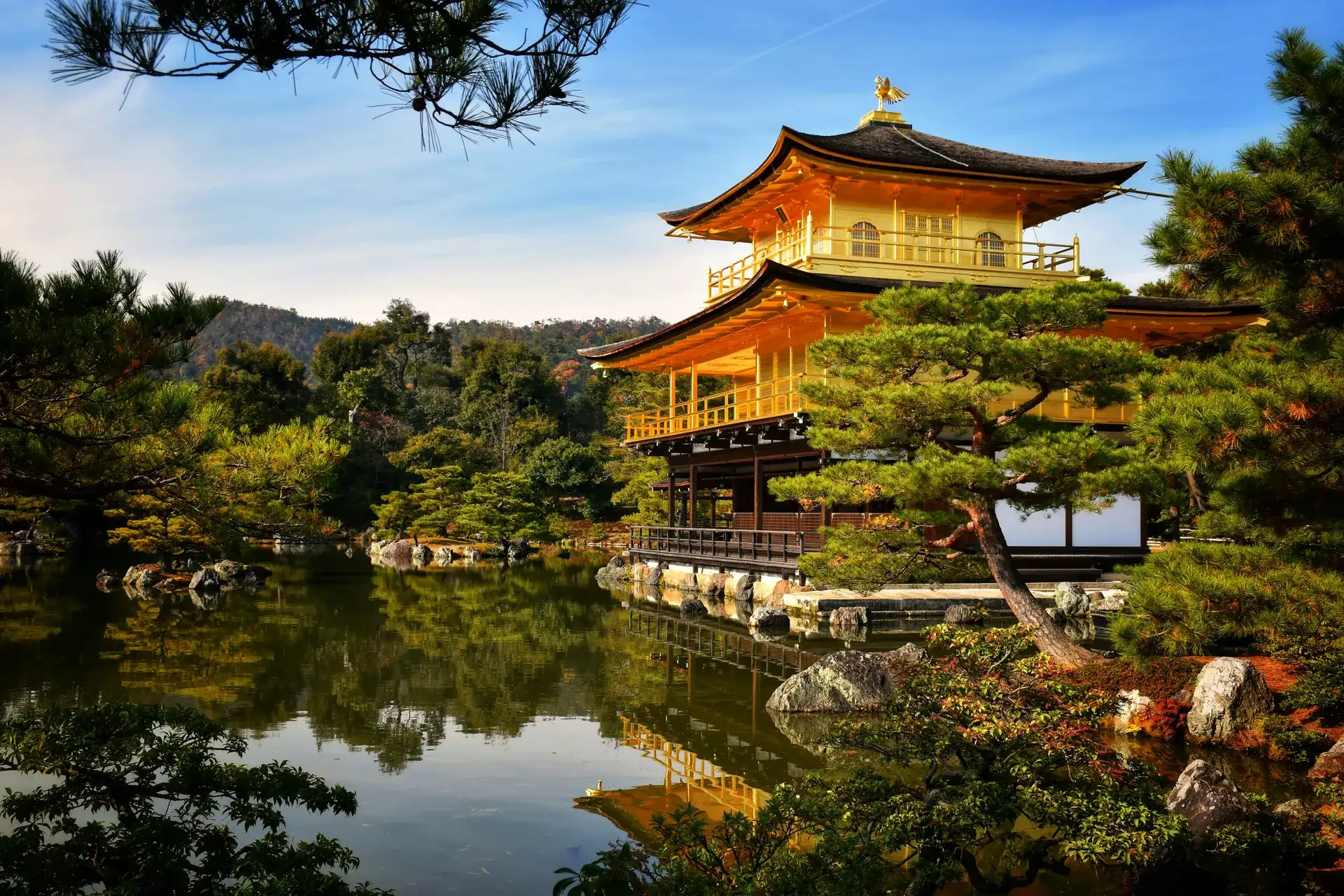
Kyoto, five nights. From Odawara, a direct Hikari shinkansen reaches Kyoto in about two hours, at the rate of one train every two hours. Three and a half days for the city: Fushimi Inari, open day and night and free, Kiyomizu-dera and the lanes of Higashiyama as far as Gion, Kinkaku-ji and the dry garden of Ryōan-ji, Arashiyama and its bamboo grove. Kyoto is covered by bus and metro. It is a glimpse, not the city: how many days in Kyoto sets the threshold at a week and says what to keep if you have fewer days.
Nara, a day from Kyoto. A little over thirty minutes on the Kintetsu line, whose station is a five-minute walk from the park. The Great Buddha of Tōdai-ji, an hour and a half’s visit, the deer, the lanterns of Kasuga-taisha and Kōfuku-ji are done on foot. Leave early: Nara’s temples often close at 16:30 or 17:00. It is a full day, and it only shows the park: Hōryū-ji, Asuka and Yoshino need a stop of their own.
Osaka, one night. About thirty minutes by JR rapid train from Kyoto. An afternoon for the castle and its ramparts, an evening in Dōtonbori for takoyaki and okonomiyaki. It is a glimpse here too: the city and its day trips easily fill two to three days. For the city itself, see what to do in Osaka.
Japan in 10 days: what to drop
Ten days means nine nights: four in Tokyo, four in Kyoto with the day in Nara, one in Osaka. At that length, how many days in Japan recommends a single region instead. If you are set on the three cities:
- The Fuji stop goes first. It takes two nights for a result that depends on the sky. The shinkansen then links Tokyo directly to Kyoto in about 2 hr 15 on the Nozomi, the fastest trains, for ¥13,970 with a reserved seat on the official smartEX service (regular-season fare, fare table dated April 1, 2025, to be checked again).
- One day in Tokyo and one in Kyoto go next. In Tokyo, keep a single observatory: in clear weather, the one at the city hall lets you see Fuji to the south-west.
- Nara stays, because it costs neither a suitcase nor a change of hotel.
Japan in 3 weeks: Hiroshima and Miyajima, or Kanazawa and the Alps
Three weeks give seven more nights. Add a single region and give the rest back to Tokyo and Kyoto.
Heading west: Hiroshima and Miyajima, three nights. Hiroshima is about 90 minutes from Osaka by shinkansen, 1 hr 40 from Kyoto on the direct Nozomi, and the tram does everything there. Allow two to three hours for the Peace Memorial Museum, a harrowing visit: plan nothing demanding afterwards. Miyajima takes a day: some thirty minutes by train to Miyajimaguchi, then ten minutes by ferry. At high tide the great torii floats, at low tide you walk out to it: consult the tide table.
Heading north: Kanazawa and the Japanese Alps, four nights. Kanazawa is about 2 hr 30 from Tokyo on the Hokuriku shinkansen. Two nights for the Kenroku-en garden, the Higashi Chaya teahouse district and Ōmichō market. An express bus, to be booked, then reaches Shirakawa-gō and its thatched farmhouses in about 1 hr 20, then Takayama in 50 minutes, for two nights in its merchant streets. From Takayama, the train runs down to Nagoya in 2 hr 20, from where Kyoto is some forty minutes away by shinkansen. Hakone is then done as a return trip from Tokyo.
The classic mistakes of a first Japan itinerary
- Too many stops. Each change of city eats half a day: suitcase, station, room rarely available before 14:00 or 15:00. Four stops already means three half-days in transit.
- Arriving and leaving through the same airport. Going back from Kyoto to Tokyo costs about 2 hr 15 by shinkansen, then about an hour by train to Narita. Kansai Airport, for its part, is 80 minutes from Kyoto on the Haruka train.
- Visiting Kyoto’s major sights in the middle of the day. Fushimi Inari, the bamboo grove and Kiyomizu-dera are bearable before 8:00 and unbearable after 10:00.
- Buying a rail pass out of habit. On a one-way trip from Tokyo to Osaka, count your tickets first: the method is in JR Pass or regional passes.
- Choosing your dates without looking at the season. The calendar is in when to go to Japan.
Tip: Look for a plane ticket arriving in Tokyo and returning from Osaka, what is known as a multi-city ticket. You gain the last half-day of the trip.
So, which itinerary for 2 weeks in Japan?
- 10 days: Tokyo 4 nights, Kyoto 4 with Nara, Osaka 1.
- 2 weeks: Tokyo 5 nights, Hakone or Fuji 2, Kyoto 5 with Nara, Osaka 1.
- 3 weeks: the same base, plus Hiroshima and Miyajima in three nights, or Kanazawa, Shirakawa-gō and Takayama in four, the rest as extra nights in Tokyo and Kyoto.
In every case, come in through Tokyo, go out through Osaka, and resist the extra stop. The 12-day, car-free version of this route exists as a travel book: Tokyo, Hakone, Kyoto in 12 days. If one of these cities makes you want to stay longer, our travel books detail it day by day, for Tokyo and the Kantō as well as for Kyoto.
To put figures on this route, see the budget for a trip to Japan; to compare it with the other regions, what to see in Japan.
Do you need a Japan Rail Pass for a 2-week Japan itinerary?
No, not on this one-way route. At the time of writing, in October 2026, the official pass website lists ¥50,000 for 7 days, ¥80,000 for 14 days and ¥100,000 for 21 days, and the Nozomi trains, the fastest ones, require a special ticket on top. By comparison, a Tokyo-Kyoto trip on a Nozomi, with a reserved seat, costs ¥13,970 on the official smartEX service, whose fare table is dated April 1, 2025. Even adding Kyoto-Hiroshima at ¥11,740 and Hiroshima-Osaka at ¥10,750, the total stays at ¥36,460, which is ¥13,540 less than the 7-day pass. These fares change: redo the sum ticket by ticket before you buy.
Can you see Mount Fuji without sleeping in Hakone or Kawaguchiko?
Yes, but it is a gamble. Kawaguchiko can be reached on a day trip, about two hours from Shinjuku, but the volcano shows itself mostly in the early morning, before the air thickens, and a day trip arrives after that window. Sleeping on site remains the best insurance of seeing it at least once.
What is the best season for a Tokyo, Kyoto, Osaka itinerary?
May and October are the best compromises. In late March and early April for the cherry blossoms, then from mid-November to early December for the maples, Kyoto goes through its two peaks of visitor numbers and accommodation there doubles in price. July and August are stifling, 33 °C (91 °F) in Tokyo and 35 °C in Kyoto with high humidity, and the typhoon season runs from late August to October.
Do you need to rent a car for this Japan itinerary?
No. Tokyo, Kyoto and Osaka are covered by metro and bus with a rechargeable card, Nara on foot from the station, Hiroshima by tram. In the city, a car is expensive and serves no purpose: narrow streets, scarce and paid parking. It only becomes useful if you leave this route for the countryside.
From research to departure
Travelling in Japan
This article comes out of a complete itinerary in Japan: the day-by-day program, hotels named with their booking link, and the tickets to book flagged in advance.
Classic
Tokyo, Hakone, Kyoto in 12 days: a first trip to Japan, no car needed
Four days in Tokyo, one night in Hakone, five in Kyoto with a day trip to Nara, and a last one in Osaka, by train, subway and on foot.
See the itinerary
Module
Kantō and Tokyo in 15 days: day-by-day itinerary and hotels
Fifteen days from the Edo warehouses of Kawagoe and the Chiba cliffs to ten days of Tokyo, district by district: Asakusa, Ueno, the Imperial Palace, Odaiba, Shinjuku, Shibuya and Roppongi.
See the itinerary
Module
Kyoto in 14 days: day-by-day itinerary and hotel
Fourteen nights in a single base to cross a thousand years of capital, district by district: Fushimi Inari, Kiyomizu-dera, Kinkaku-ji, Arashiyama, the Katsura villa, Ōhara and Takao.
See the itinerary
Also worth reading about Japan
Japan
Can ChatGPT plan a trip to Japan? What to check
An AI gives a good first draft of a Japan itinerary, not a guarantee. Hotels, timed tickets, closures, driving license: the checklist to follow.
Japan
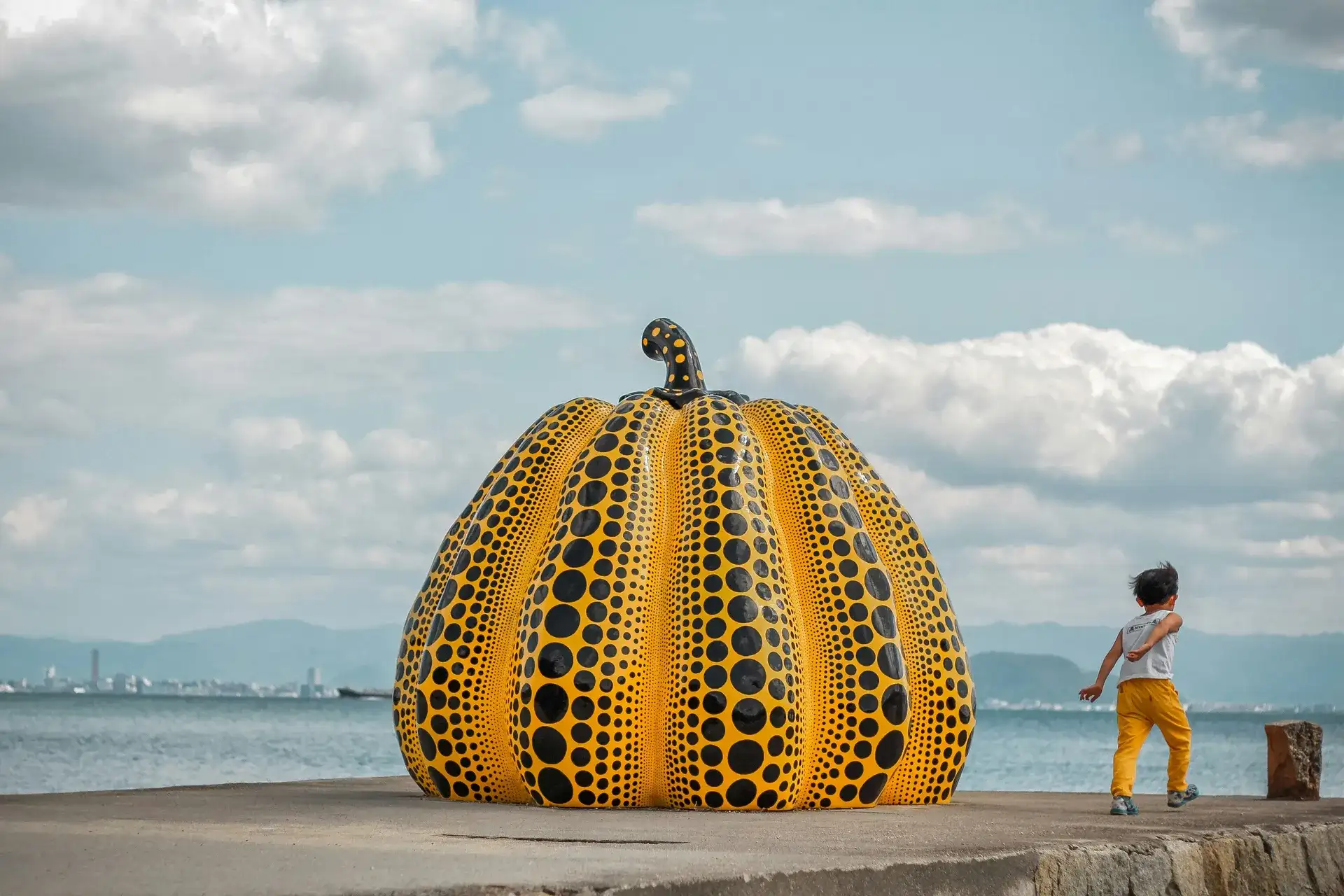
Visiting Naoshima and Teshima: ferries, museums, closed days
Allow two days, one per island, between Wednesday and Sunday: Naoshima closes on Mondays, Teshima on Tuesdays. Ferries, tickets to book, where to stay.
Japan
Shikoku: which itinerary and how many days to visit the island
Five days to cross Shikoku, eight with the upper Iya valley and the art islands, twelve for the full loop. By car, in April, May or November.